
Why Small Business Marketing Fails and How to Fix It
Why Generic Marketing Fails in 2026
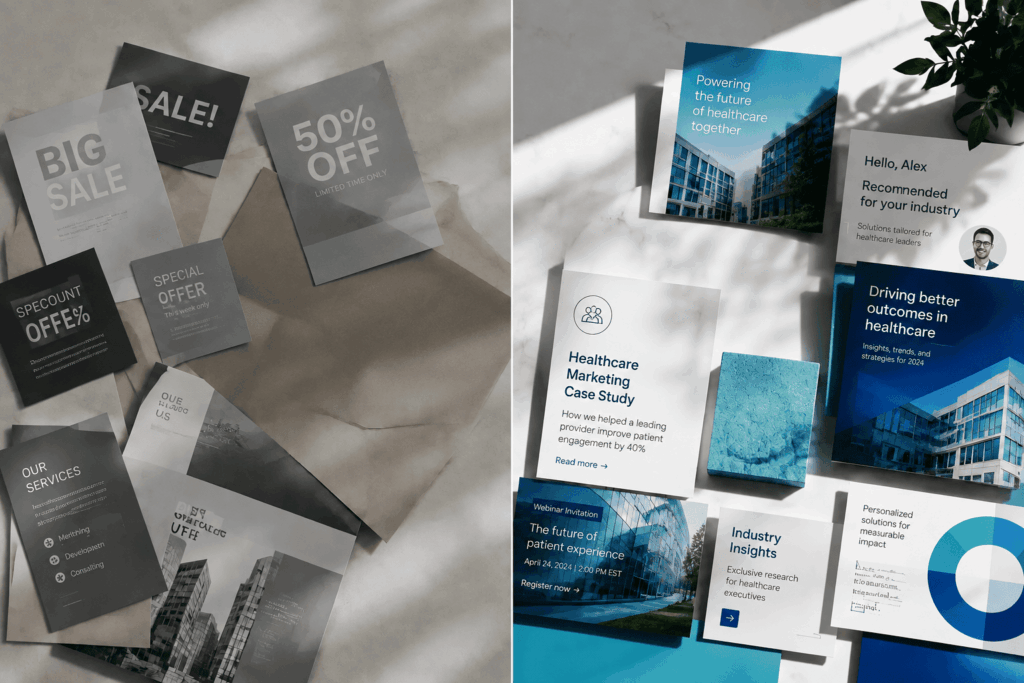
Generic marketing fails because it treats all prospects the same when buyers now expect personalized experiences that demonstrate understanding of their specific challenges. When your marketing message could apply to any business in any industry, it connects with none of them.
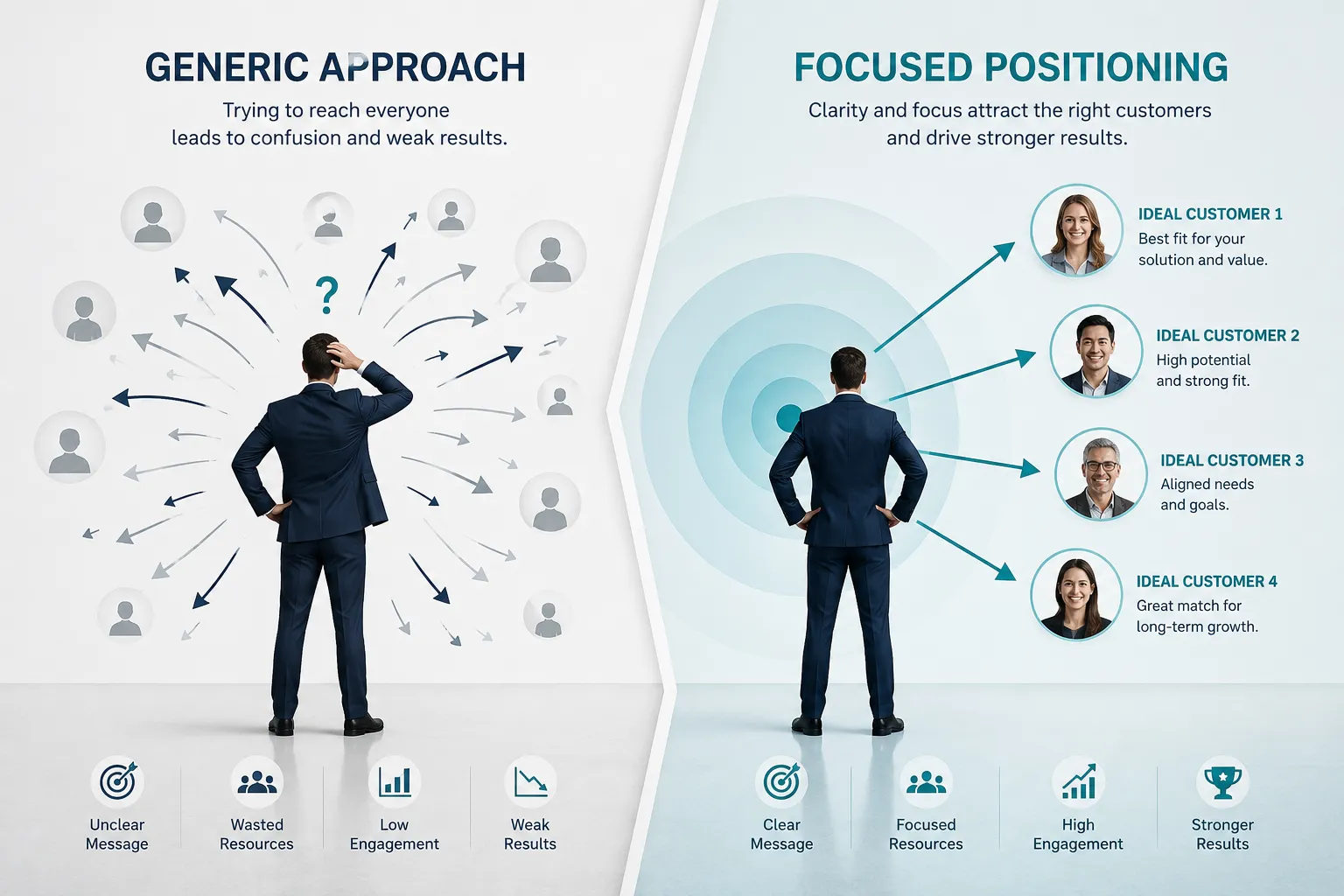
We see this constantly with small business owners who come to us frustrated that their marketing “isn’t working.” They’re running ads that say things like “We help businesses grow” or “Quality service at competitive prices.” These messages are so broad that prospects scroll right past them because they don’t feel like the business understands their particular situation.
The attention problem has gotten worse. Your prospects receive hundreds of marketing messages every day. The only ones that break through are those that immediately demonstrate relevance to their specific world. When someone sees a message that could have been written for any business, their brain automatically categorizes it as noise.
Buying behavior has shifted toward research and specificity. Today’s buyers research extensively before making contact. They’re looking for businesses that clearly understand their industry, their role, and their specific challenges. Generic messaging signals that you probably don’t have deep expertise in their area.
Competition for attention is fierce. In most markets, prospects can choose from dozens of similar businesses. The ones that win are those that position themselves as specialists who truly understand the buyer’s world, not generalists trying to serve everyone.
The businesses we work with that make this shift from generic to focused messaging typically see immediate improvements in response rates, even before we build out their complete automated follow-up systems.
What Is Positioning in Marketing and Why It Matters
Positioning in marketing means choosing how you want to be known in the marketplace and consistently communicating that focus across all customer interactions. It’s the specific problem you solve for a specific type of customer, expressed in language that immediately resonates with your ideal prospects.
Effective positioning has three components: the specific customer you serve, the particular problem you solve for them, and the unique way you solve it. For example, instead of “we provide IT services,” strong positioning might be “we eliminate downtime for manufacturing companies by implementing redundant systems and 24/7 monitoring.”
Positioning creates mental shortcuts for prospects. When someone has a specific problem, they want to work with a business that specializes in solving that exact issue. Clear positioning makes it easy for the right prospects to recognize that you’re built for their situation.
We help businesses implement this positioning across their entire lead generation system. Once you’re clear on your positioning, we build the website and content that communicates it effectively, then set up AI-powered lead capture and automated follow-up systems that reinforce your specialized focus at every touchpoint.
Strong positioning also improves referrals. When people understand exactly what you do and who you do it for, they can easily identify referral opportunities. Weak positioning makes it hard for others to know when to recommend you.
The businesses that come to us often know they need better positioning but struggle with implementation across all their marketing channels. That’s where our all-in-one platform becomes valuable; we build and implement the complete system so your positioning works consistently from day one.
The Difference Between Generic and Niche Marketing
Generic marketing tries to appeal to the broadest possible audience with messages that could apply to anyone, while niche marketing focuses on a specific segment with tailored messages that address their particular needs and circumstances.
Generic marketing spreads resources thin. When you try to speak to everyone, you end up speaking to no one effectively. Your budget gets diluted across multiple audiences, none of whom feel like you truly understand their situation.
Niche marketing concentrates impact. By focusing on a specific type of customer, you can craft messages that immediately resonate, choose marketing channels where those prospects actually spend time, and develop expertise that makes you the obvious choice for that segment.
Consider these examples:
- Generic: “We provide accounting services for businesses”
- Niche: “We handle tax compliance and financial reporting for construction contractors”
The niche version immediately tells construction contractors that this accountant understands their industry’s specific challenges like job costing, equipment depreciation, and contractor licensing requirements.
Niche marketing works better with smaller budgets. Most small businesses can’t afford to compete for broad keywords or reach massive audiences. But they can afford to dominate a specific niche where their expertise and focused messaging create clear advantages.
When we build marketing systems for our clients, we help them identify the most profitable niche based on their existing strengths and market opportunities. Then we build the website and content that speaks directly to that audience, with lead capture and nurturing systems designed around their specific buying process.
The fear of “limiting” your market is usually unfounded. Most businesses that focus on a niche actually grow faster because they become known for something specific, which leads to more referrals and higher conversion rates.
How to Find Your Niche Market
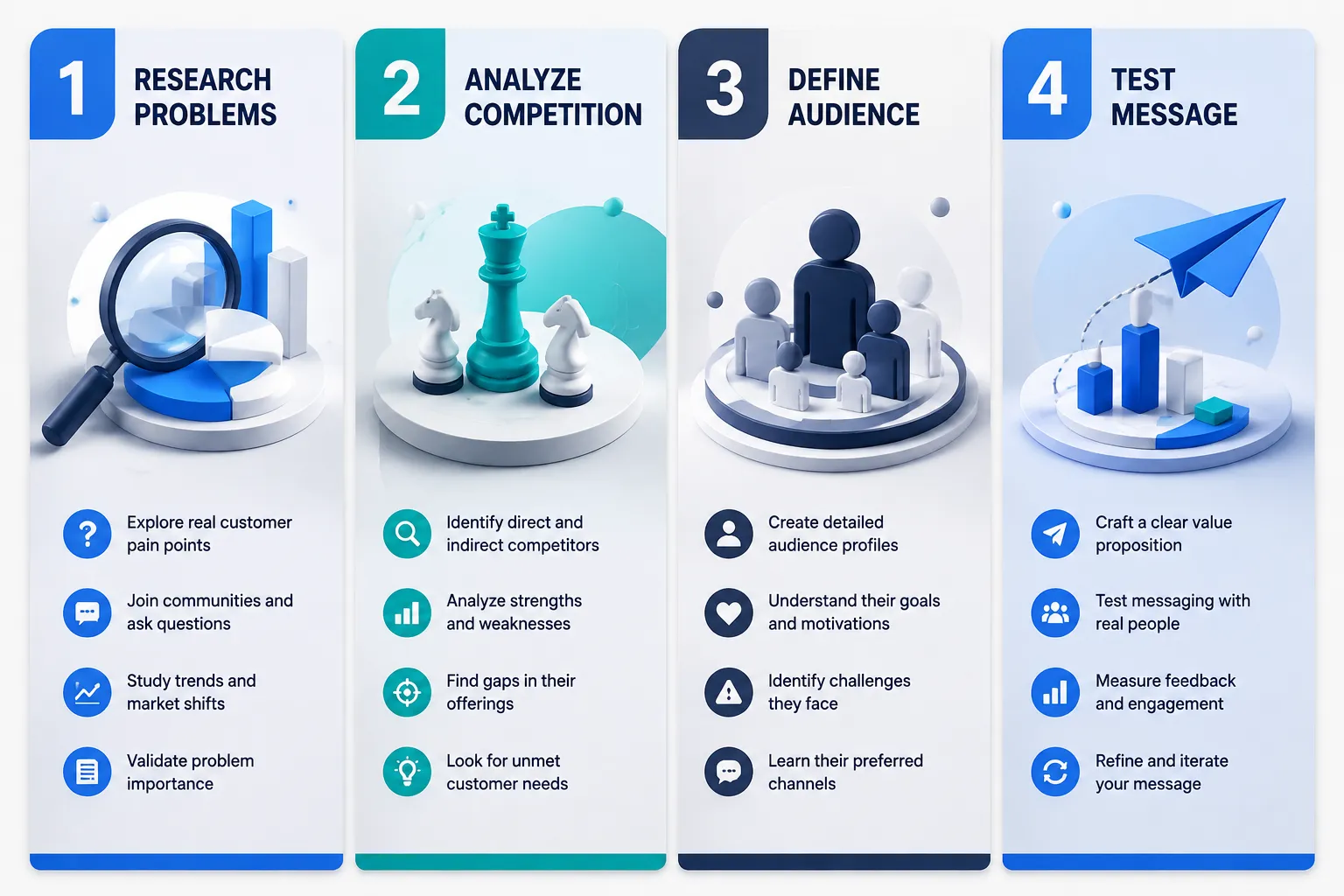
Finding your niche market starts with analyzing your most successful existing customers to identify patterns in their industry, size, challenges, and what made them choose you over competitors.
Start with your best current customers. Look at the clients who pay well, refer others, and are easiest to work with. What do they have in common? What specific problems did you solve for them? What industry or role do they share?
Research their specific pain points. Once you identify a potential niche, dig deeper into their challenges. What keeps them up at night? What processes frustrate them? What outcomes do they need to achieve? This research becomes the foundation for positioning that resonates.
Evaluate market size and accessibility. Your niche needs to be large enough to support your growth goals but specific enough that you can become known within it. You also need to be able to reach these prospects through identifiable channels.
Test your positioning with real prospects. Before committing fully to a niche, test your messaging with actual potential customers. Do they immediately understand how you help people like them? Do they engage with your content and respond to your outreach?
We help businesses through this entire process, then build the complete system to reach and convert that niche market. Our clients get a free smart website built specifically for their chosen niche, with content that speaks their prospects’ language and systems that capture and nurture leads automatically.
Consider these niche identification questions:
- Which customers refer the most business to you?
- What type of project or problem do you solve most effectively?
- Where do you have existing relationships or industry knowledge?
- What size company or budget range works best for your business model?
The goal is finding the intersection between what you do well, what a specific market needs, and where you can realistically compete and win.
How to Identify Your Ideal Customer
Your ideal customer is the specific type of person or business that gets the most value from what you offer, pays well, and is easiest for you to reach and serve effectively.
Demographics and firmographics provide the basic framework. For B2B businesses, this includes company size, industry, revenue range, and geographic location. For the decision-maker, it includes their role, experience level, and typical responsibilities.
Psychographics reveal motivation and behavior. What are their goals, fears, and frustrations? How do they prefer to research and buy? What other solutions have they tried? Understanding their mindset is often more important than basic demographics.
Situational factors create urgency. What circumstances make them actively look for your solution? Are they experiencing rapid growth, facing new regulations, or dealing with a specific challenge? These trigger events often determine timing.

Create a detailed profile that includes:
- Company characteristics (size, industry, location, growth stage)
- Decision-maker details (title, experience, responsibilities, goals)
- Current challenges and pain points they’re experiencing
- How they currently try to solve these problems
- What success looks like to them
- Where they go for information and recommendations
When we build marketing systems for clients, this ideal customer profile drives every decision. The website content speaks directly to their situation, the lead magnets address their specific challenges, and the automated follow-up sequences guide them through their typical buying process.
Your ideal customer should be specific enough that you can easily identify them. If your description could fit half the businesses in your city, it’s too broad. You should be able to name specific companies that fit your profile and identify exactly where these people spend time online and offline.
The businesses that succeed with focused marketing can describe their ideal customer so clearly that their team members can spot them at networking events and their referral sources know exactly who to send their way.
Small Business Marketing Strategy on a Budget
Small business marketing strategy on a budget succeeds by concentrating resources on a specific niche rather than trying to compete broadly, then using focused messaging and systematic follow-up to maximize conversion from every lead.
Focus creates efficiency. When you know exactly who you’re trying to reach, you can choose the most cost-effective channels to reach them. Instead of spreading your budget across multiple platforms hoping something works, you can invest in the specific places your ideal customers actually spend time.
Content marketing works better with focus. Creating valuable content for a specific niche is easier and more effective than trying to write for everyone. You can address their specific challenges, use their industry language, and become known as an expert in their area.
Systematic follow-up multiplies results. Most small businesses lose potential customers because they don’t have consistent follow-up processes. A complete done-for-you system that nurtures leads automatically can dramatically improve conversion rates without requiring additional time investment.
Our approach combines focus with automation:
- We help identify the most profitable niche for your business
- We build a free smart website optimized for that specific audience
- We create content that addresses their particular challenges and goals
- We implement AI-powered lead capture that works 24/7
- We set up automated follow-up systems that nurture prospects until they’re ready to buy
Budget-friendly tactics that work with focus:
- LinkedIn outreach to specific roles in your target industry
- Local networking in groups where your ideal customers participate
- Content marketing that addresses niche-specific challenges
- Referral systems that make it easy for others to identify good prospects for you
- Email marketing that nurtures relationships over time
The key is building systems that work consistently rather than relying on sporadic marketing efforts. When everything is automated and working together, you can focus on running your business while leads are captured and nurtured automatically in the background.
Common Mistakes in Positioning Your Business
The biggest mistake in positioning your business is trying to appeal to everyone instead of becoming known for solving specific problems for specific types of customers.
“We serve everyone” actually serves no one effectively. When your positioning is so broad that any business could be a prospect, none of them feel like you truly understand their situation. This leads to lower response rates, longer sales cycles, and more price competition.
Copying competitor positioning without differentiation. Many businesses look at successful competitors and try to replicate their positioning exactly. This creates a “me too” message that doesn’t give prospects a clear reason to choose you over established alternatives.
Focusing on features instead of outcomes. Weak positioning talks about what you do or how you do it rather than the specific results customers achieve. Your prospects care more about the problems you solve than the methods you use.
Being too vague about who you help. Positioning that says “small businesses” or “growing companies” doesn’t help prospects determine if you’re right for their specific situation. Strong positioning identifies the exact type of customer and situation where you excel.
Inconsistent messaging across channels. Even good positioning fails if it’s not implemented consistently across your website, social media, sales conversations, and marketing materials. Mixed messages confuse prospects and weaken your market position.
We see these mistakes constantly with businesses that come to us for help. They know their current marketing isn’t working, but they’re not sure why. Usually, the problem is positioning that’s either too broad or not implemented systematically across all customer touchpoints.
Our complete done-for-you system solves this by:
- Helping clarify positioning that differentiates you in the market
- Building consistent messaging across your website and all content
- Implementing lead capture and follow-up that reinforces your positioning
- Creating systems that work together rather than sending mixed messages
The businesses that fix these positioning mistakes typically see improvements in lead quality and conversion rates within the first few months of consistent, focused messaging.
How to Stand Out in a Crowded Market
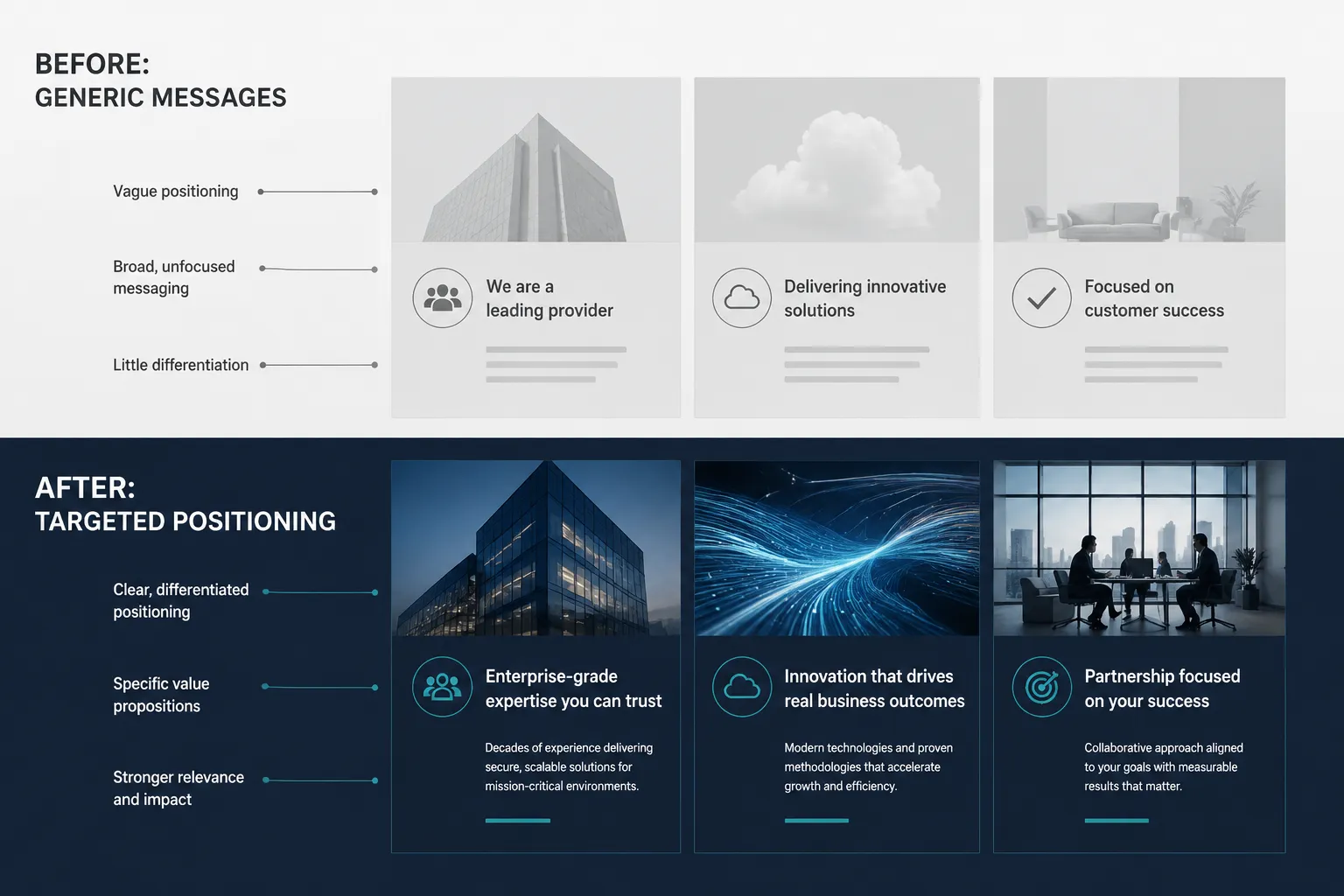
Standing out in a crowded market requires becoming known for solving a specific problem better than anyone else rather than trying to compete on general capabilities or price.
Specialization beats generalization in crowded markets. When prospects have many similar options, they gravitate toward businesses that clearly specialize in their type of situation. Being the best choice for a specific niche is more valuable than being an okay choice for everyone.
Deep expertise creates natural differentiation. When you focus on a particular market segment, you develop insights and capabilities that generalists can’t match. This expertise becomes your competitive advantage and justifies premium pricing.
Thought leadership builds market position. Consistently sharing valuable insights about your niche’s specific challenges positions you as the expert in that area. This makes prospects more likely to choose you when they need help with those issues.
Practical differentiation strategies:
- Become the go-to expert for a specific industry or business type
- Develop proprietary processes or tools that solve common problems
- Create educational content that demonstrates deep understanding of your niche
- Build case studies that show specific results for similar businesses
- Establish partnerships that enhance your specialized capabilities
Avoid competing primarily on price. In crowded markets, price competition usually leads to a race to the bottom. Instead, compete on value, expertise, and results for your specific target market.
When we build marketing systems for clients, differentiation is built into every element. The website positioning, content strategy, lead magnets, and automated follow-up all reinforce why you’re the best choice for your specific type of customer.
The goal is to be the obvious choice for your niche. When someone in your target market has the problem you solve, they should immediately think of your business. This level of market position takes consistent, focused effort, but it creates sustainable competitive advantages.
Our all-in-one platform helps implement this differentiation systematically. Instead of hoping your positioning comes through in scattered marketing efforts, everything works together to reinforce why you’re uniquely qualified to help your ideal customers succeed.
What Does It Mean to Be Too Generic
Being too generic means your marketing message could apply to any business in your industry, making it impossible for prospects to understand why they should choose you over alternatives or even whether you’re relevant to their specific situation.
Generic positioning lacks specificity about who you serve. Messages like “we help businesses succeed” or “quality service for all your needs” don’t help prospects determine if you understand their particular challenges or have experience with their type of situation.
Generic messaging avoids taking a position. Businesses often try to avoid “limiting” their market by keeping messages broad, but this actually limits their effectiveness because no one feels like the message was written specifically for them.
Signs your positioning is too generic:
- Your marketing message could work for any competitor
- Prospects frequently ask “do you work with businesses like mine?”
- You compete primarily on price rather than expertise
- Referral sources aren’t sure when to recommend you
- Your sales conversations start with extensive education about what you do
Generic positioning creates several problems:
- Lower response rates because messages don’t resonate
- Longer sales cycles because prospects don’t immediately see relevance
- More price competition because you haven’t differentiated your value
- Difficulty with referrals because others don’t know your specialty
- Inefficient marketing because you’re trying to reach everyone
The solution is choosing a specific focus and consistently communicating it across all customer interactions. This doesn’t mean turning away business outside your niche, but it means being known for something specific that makes you the obvious choice for certain types of customers.
When we help businesses clarify their positioning, we often find they’re afraid of being “too narrow.” But the businesses that grow fastest are those that become known for solving particular problems exceptionally well rather than trying to be everything to everyone.
How Specific Should My Target Audience Be
Your target audience should be specific enough that you can easily identify where these people spend time, what language they use, and what specific challenges they face, but broad enough to support your growth goals.
The right level of specificity allows for focused marketing. You should be able to name the publications your ideal customers read, the events they attend, the LinkedIn groups they join, and the specific terms they use when discussing their challenges.
Too broad makes marketing inefficient. If your target audience is “small business owners,” you can’t create focused content or choose effective marketing channels because small business owners have vastly different needs depending on their industry, size, and situation.
Too narrow limits growth potential. If your target audience is “manufacturing companies in Atlanta with 50-100 employees that use SAP systems,” you might struggle to find enough prospects to sustain growth, depending on your business model and goals.
Good target audience specificity includes:
- Industry or business type (manufacturing, professional services, retail)
- Company size range (revenue, employees, or other relevant metrics)
- Geographic scope (local, regional, national, or international)
- Specific role of the decision-maker (owner, CFO, operations manager)
- Situational factors that create need (growth, compliance, efficiency challenges)
Test your specificity with these questions:
- Can you name 20 companies that fit your target profile?
- Do you know where these people go for information and networking?
- Can you identify the specific language they use to describe their challenges?
- Is the market large enough to support your growth goals?
- Can you realistically compete and win in this space?
When we build marketing systems for clients, we help find the sweet spot between focus and opportunity. The target audience should be specific enough for highly relevant messaging but broad enough for sustainable growth.
Our complete done-for-you system works best when your target audience is clearly defined because we can build website content, lead magnets, and automated follow-up sequences that speak directly to their specific situation and buying process.
Examples of Successful Niche Positioning
Successful niche positioning focuses on specific customer types and problems rather than trying to serve broad markets, creating clear differentiation and making it easy for the right prospects to recognize you’re built for their situation.
Industry-specific positioning works well: Instead of “IT services for businesses,” successful positioning might be “cybersecurity and compliance for healthcare practices” or “cloud migration for manufacturing companies.” This immediately tells prospects you understand their specific regulatory requirements, operational challenges, and technology needs.
Role-specific positioning creates relevance: Rather than targeting “business owners,” effective positioning might focus on “CFOs at growing companies who need better financial reporting” or “operations managers dealing with supply chain challenges.” This speaks directly to someone’s daily responsibilities and concerns.
Situation-specific positioning addresses timing: Examples include “marketing systems for businesses preparing to scale” or “financial planning for business owners approaching retirement.” This connects with prospects who are experiencing specific circumstances that create urgency.
Problem-specific positioning demonstrates expertise: Instead of broad capabilities, focus on particular outcomes like “eliminating manual data entry for accounting firms” or “reducing employee turnover for restaurants.” This shows you understand exactly what success looks like.
Geographic positioning can create advantages: “Digital marketing for Pacific Northwest outdoor gear companies” or “commercial lending for Texas construction contractors” combines location with industry knowledge for powerful local positioning.
The businesses we work with that implement focused positioning like these examples typically see immediate improvements in lead quality. When your positioning clearly identifies who you serve and what problems you solve, the right prospects recognize themselves in your message and respond accordingly.
Our all-in-one platform helps implement this focused positioning across every customer touchpoint. We build the website content, lead capture systems, and automated follow-up that consistently reinforces why you’re the best choice for your specific niche.
How to Test If Your Positioning Works
Testing your positioning involves measuring whether your target audience immediately understands your value and responds positively when they encounter your message across different channels and interactions.
Start with direct feedback from existing customers. Ask your best clients how they would describe what you do to someone else in their situation. If they struggle to articulate your value or use generic terms, your positioning needs work.
Test your elevator pitch with prospects. When you explain what you do, do people immediately understand who you help and how? Do they ask relevant follow-up questions, or do they seem confused about whether you’re relevant to their situation?
Measure response rates to focused messaging. Compare response rates between generic outreach and messages tailored to your specific positioning. Focused positioning should generate higher response rates and more qualified conversations.
Monitor website engagement metrics. Visitors should spend more time on your site and engage with multiple pages when your positioning clearly communicates relevance. High bounce rates often indicate positioning that doesn’t immediately connect with visitors.
Track referral quality and quantity. Strong positioning makes it easier for others to identify good referral opportunities for you. You should see more referrals that are a good fit for your services when your positioning is clear and specific.
Analyze sales conversation efficiency. With good positioning, prospects should come to sales conversations already understanding your basic value proposition. If you’re spending significant time explaining what you do rather than exploring their specific needs, your positioning may be too vague.
Key metrics to monitor:
- Response rates to outreach and marketing campaigns
- Website time on page and pages per session
- Quality and quantity of inbound leads
- Length of sales cycles from first contact to close
- Referral volume and fit with your ideal customer profile
When we build complete marketing systems for clients, we include tracking and optimization to continuously improve positioning effectiveness. Our AI-powered lead capture and automated follow-up systems provide data on what messages resonate most with your target audience.
The goal is positioning that makes prospects immediately think “this business was built for someone like me.” When that happens consistently across channels, you know your positioning is working effectively.
Can a Small Business Do Both Niche and Broad Marketing
Small businesses can serve customers outside their primary niche, but their marketing and positioning should focus on one specific area to build expertise and market recognition before expanding to additional segments.
Lead with your strongest positioning. Your primary marketing message, website, and content should focus on the niche where you have the most expertise and can demonstrate the clearest value. This becomes your market position and what you’re known for.
Accept other business opportunistically. You don’t need to turn away customers who fall outside your primary niche, especially in the early stages of business development. However, these shouldn’t drive your marketing strategy or positioning decisions.
Build expertise systematically. Once you’ve established strong positioning in one niche, you can gradually expand to adjacent markets or customer types. But trying to market to multiple segments simultaneously usually dilutes your message and reduces effectiveness.
Consider the resource requirements. Effective marketing to different niches requires different messages, content, channels, and expertise. Most small businesses lack the resources to do this well across multiple segments simultaneously.
Practical approach for managing both:
- Choose one primary niche for all marketing and positioning
- Develop deep expertise and strong case studies in that area
- Accept other business but don’t feature it prominently in marketing
- Consider expanding to additional niches only after establishing a strong position in the first
- Use different marketing channels or campaigns for different segments if you do expand
When we build marketing systems for clients, we recommend starting with a clear focus on one niche. Our complete done-for-you system works best when it’s built around a specific target audience because the messaging, content, and automated follow-up can be highly relevant and effective.
The risk of trying to do both simultaneously is ending up with generic positioning that doesn’t strongly appeal to any segment. It’s better to dominate one niche and gradually expand than to be mediocre across multiple markets.
Once you have predictable lead generation and strong market position in your primary niche, you can consider building separate marketing systems for additional segments. But the foundation should be expertise and recognition in one specific area.
How Long Does It Take to See Results from Focused Marketing
Most businesses see initial improvements in lead quality and response rates within 30-60 days of implementing focused marketing, with more substantial results in lead volume and conversion rates typically appearing within 60-90 days of consistent messaging.
Immediate improvements often include better lead quality. When your messaging becomes more specific and relevant, the prospects who do respond are usually a better fit for your services. This can happen within the first few weeks of focused positioning.
Response rates typically improve within 30-45 days. As you implement focused messaging across outreach, content, and advertising, you should see higher response rates because your message resonates more strongly with your target audience.
Organic visibility takes 60-90 days to build. Search engines need time to recognize your focused content and positioning. Similarly, building recognition in your target market through networking and content marketing requires consistent effort over several months.
Full system optimization requires 90-120 days. This includes time to test different messages, optimize conversion processes, and refine your ideal customer profile based on actual results. Complete marketing systems work best when all elements are aligned and optimized together.
Factors that affect timeline:
- How dramatically you’re changing from previous positioning
- Consistency of implementation across all marketing channels
- Quality and frequency of content and outreach efforts
- Size and accessibility of your target market
- Existing relationships and market recognition
When we implement complete done-for-you systems for clients, we typically see the fastest results because everything launches together with consistent messaging. The website, content, lead capture, and automated follow-up all reinforce the same focused positioning from day one.
Realistic expectations for different timeframes:
- 30 days: Improved lead quality and higher response rates to outreach
- 60 days: Increased website engagement and more qualified inbound leads
- 90 days: Better conversion rates and shorter sales cycles
- 120+ days: Strong market position and consistent lead generation
The key is maintaining consistency throughout this period. Businesses that switch strategies frequently or implement positioning inconsistently across channels typically take longer to see results and may not achieve the full benefits of focused marketing.

