
Why Small Business Buyers Avoid Risky Websites in 2026
The Trust Deficit: Why Customers Don’t Trust Businesses Online
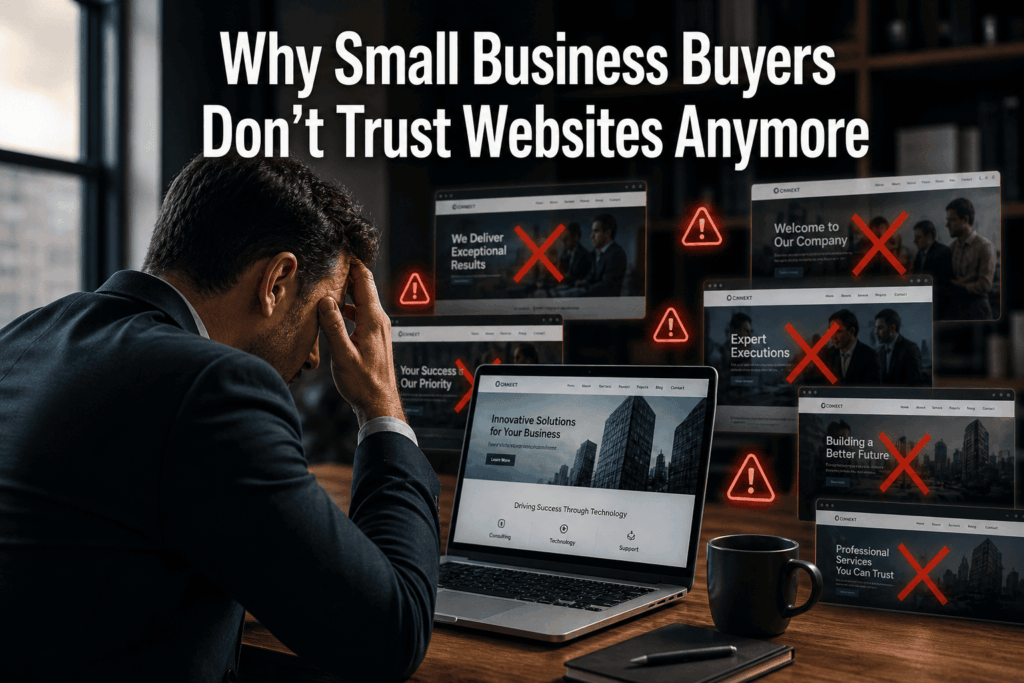
Modern buyers have developed a sixth sense for spotting fake, generic, or misleading business websites. After years of encountering overhyped promises and cookie-cutter marketing messages, they’ve become skeptical by default.
We see this pattern repeatedly with our clients at SalesHubHQ. Business owners come to us frustrated because their websites aren’t converting visitors into leads. When we audit their sites, the problem becomes clear immediately; their messaging sounds exactly like every other business in their industry.
The reality is harsh but simple: Buyers don’t trust websites that feel manufactured or impersonal. They’re looking for authentic businesses they can rely on, not polished marketing speak that says nothing meaningful.
Here’s what we’ve learned from building hundreds of websites and content systems for small businesses: Trust isn’t built through clever copywriting or flashy design. It’s earned through transparency, consistency, and genuine value.
The Cost of Lost Trust
When visitors don’t trust your website, they don’t just leave—they actively avoid your business. They’ll scroll past your ads, ignore your social media posts, and choose competitors who feel more authentic and reliable.
This creates a compounding problem. The longer your website fails to build trust, the more potential customers you lose to competitors who have figured out how to connect authentically with their audience.
What Kills Website Credibility: The Trust-Destroying Elements
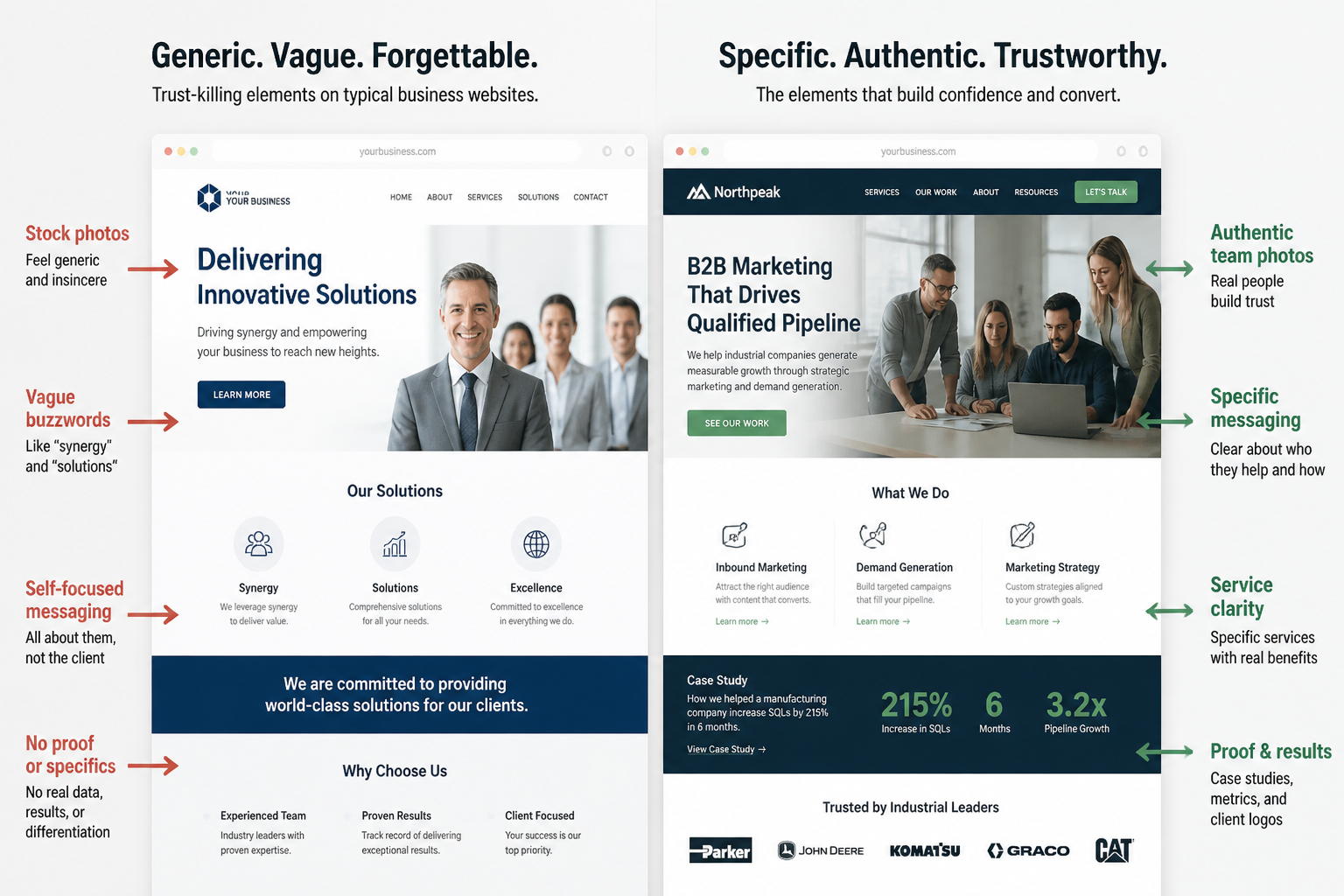
Generic stock photos and templated messaging immediately signal to visitors that you haven’t invested in an authentic representation of your business. When every business in your industry uses the same handshake photos and talks about “exceeding expectations,” you blend into the background noise.
The Generic Messaging Problem
Most small business websites read like they were written by the same person. They use phrases like:
- “We provide world-class solutions”
- “Your success is our priority”
- “Leveraging cutting-edge technology”
- “Committed to excellence”
These phrases mean nothing to your prospects. They’ve read identical language on dozens of other websites. Instead of building trust, generic messaging creates doubt about whether you understand their specific problems.
Overpromising Without Substance
Many businesses make bold claims without backing them up with evidence. Statements like “guaranteed results” or “industry-leading performance” without specific examples or proof points actually damage credibility.
Your prospects are smart. They know that real businesses face challenges and limitations. When you present yourself as perfect, they assume you’re either inexperienced or dishonest.
Poor Website Maintenance
Nothing destroys trust faster than outdated information. We regularly see business websites with:
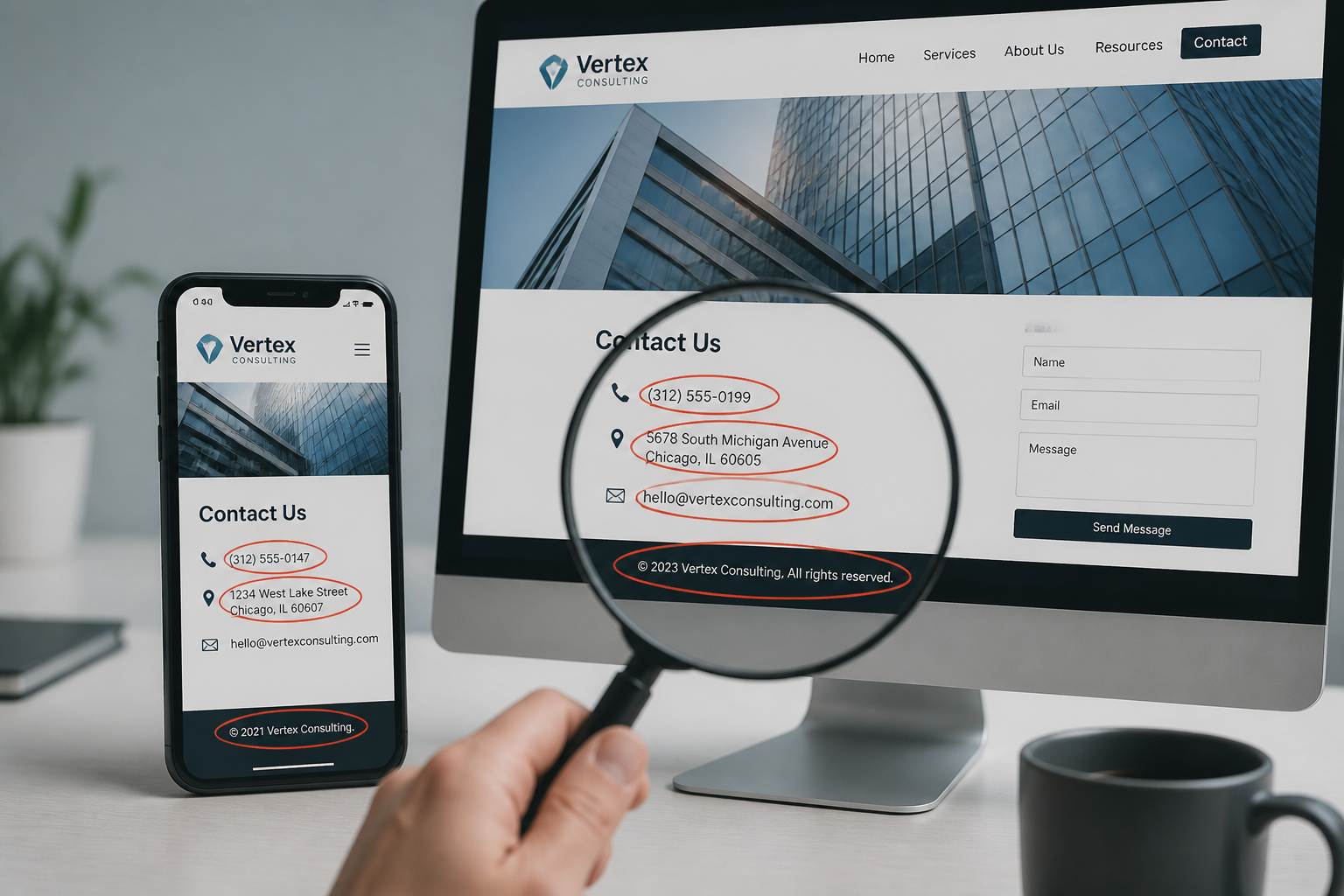
- Copyright dates from 2019
- “Recent” blog posts from two years ago
- Broken links and missing images
- Outdated team photos and bios
- Old contact information
These details matter more than you think. If you can’t maintain your website, prospects wonder what else you neglect in your business operations.
Online Credibility Problems: The Transparency Gap
Buyers expect transparency about your processes, team, and approach—but most small business websites hide behind vague descriptions and corporate speak. This transparency gap creates immediate suspicion and drives potential customers to look elsewhere.
The Hidden Information Problem
Your prospects want to know:
- Who they’ll actually work with
- How your process works step-by-step
- What results can they realistically expect
- How much your services cost (at least ballpark ranges)
- What happens if something goes wrong
Most business websites avoid these topics entirely. They focus on features and benefits instead of addressing the real concerns buyers have before making a decision.
Missing Social Proof
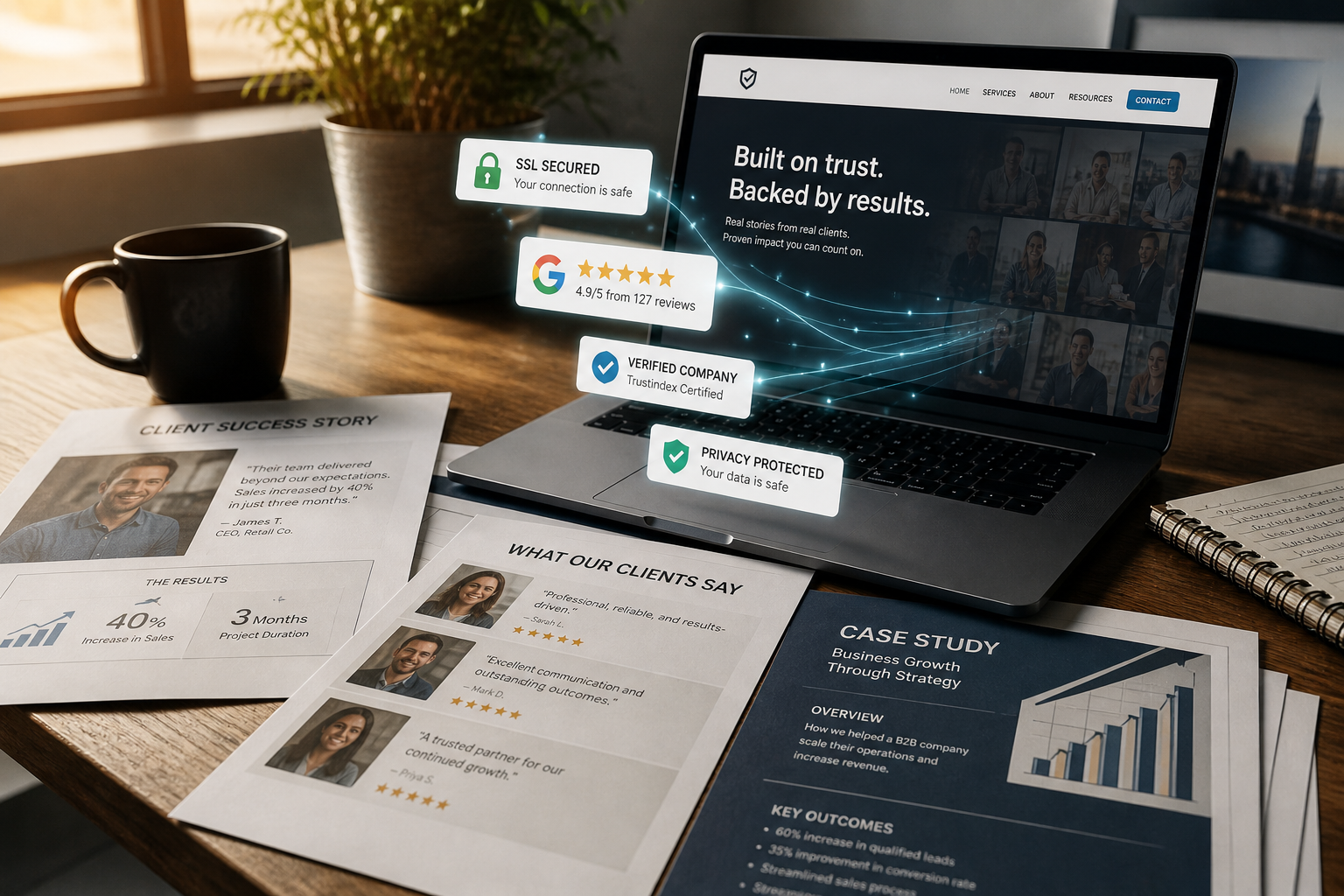
Testimonials and case studies aren’t just nice-to-have content—they’re essential trust signals that modern buyers expect to see. Without them, your claims have no validation.
But generic testimonials don’t work either. Statements like “Great service, highly recommend!” tell prospects nothing useful. Effective social proof includes:
- Specific results and outcomes
- Details about the client’s situation
- Names and companies (when possible)
- Photos of real clients
- Video testimonials, when available
The Team Visibility Factor
Buyers want to know who’s behind the business. Generic “about us” pages with stock photos and corporate bios create distance between you and your prospects.
Authentic team information builds trust by showing the real people behind your business. This includes genuine photos, personal backgrounds, and specific expertise areas for each team member.
The Consistency Crisis: Why Mixed Messages Destroy Trust
Inconsistent information across your website pages, social media, and marketing materials creates immediate doubt about your attention to detail and reliability. Small discrepancies signal bigger problems to cautious buyers.
Common Consistency Problems
We find these trust-killing inconsistencies on most small business websites:
- Different phone numbers on different pages
- Mismatched business addresses
- Conflicting service descriptions
- Varying company names or taglines
- Different pricing information
- Inconsistent brand colors and fonts
Each inconsistency chips away at credibility. Prospects notice these details, even if they don’t consciously realize it. Their subconscious registers that something feels “off” about your business.
The Mobile Experience Gap
Many businesses have websites that work fine on desktops but fall apart on mobile devices. Since most prospects browse on their phones, a poor mobile experience immediately damages trust.
Common mobile trust-killers include:
- Slow loading times
- Difficult navigation
- Unreadable text
- Broken contact forms
- Missing information on mobile versions
Social Media Disconnects
Your website and social media presence should reinforce each other. When they tell different stories or show different personalities, prospects get confused about who you really are.
Consistent messaging across all platforms builds confidence that you’re organized and professional. Disconnected messaging suggests poor communication and planning.
Building Real Website Trust: The Authentic Approach
Trust is built through specific, authentic content that addresses real customer concerns and demonstrates genuine expertise. This means moving beyond marketing speak to provide actual value and transparency.
At SalesHubHQ, we build trust into every website and content system we create for our clients. Our complete done-for-you system includes authentic messaging that speaks directly to your prospects’ specific situations and concerns.
The Specificity Principle
Instead of saying “we help businesses grow,” explain exactly how you help and what growth looks like. For example:
- “We help accounting firms reduce client onboarding time from 3 weeks to 5 days”
- “Our process typically generates 15-20 qualified leads per month for HVAC contractors”
- “We’ve helped 47 law firms increase their case value by an average of 23%”
Specific claims with numbers feel more credible than vague promises. They show you understand your impact and track your results.
Process Transparency
Explain your process in detail. Walk prospects through exactly what happens when they work with you:
- Initial consultation and assessment
- Strategy development and planning
- Implementation timeline and milestones
- Ongoing support and optimization
- Performance measurement and reporting
This transparency reduces anxiety and builds confidence in your professionalism.
Authentic Content Creation
Your website content should sound like you wrote it, not like you hired a generic copywriter. This means:
- Using your natural voice and personality
- Sharing real experiences and examples
- Addressing common objections honestly
- Explaining your unique approach and philosophy
- Including personal stories that illustrate your expertise
Authentic content connects with prospects on a human level. It shows there are real people behind your business who understand their challenges.
The Trust-Building Technology Solution
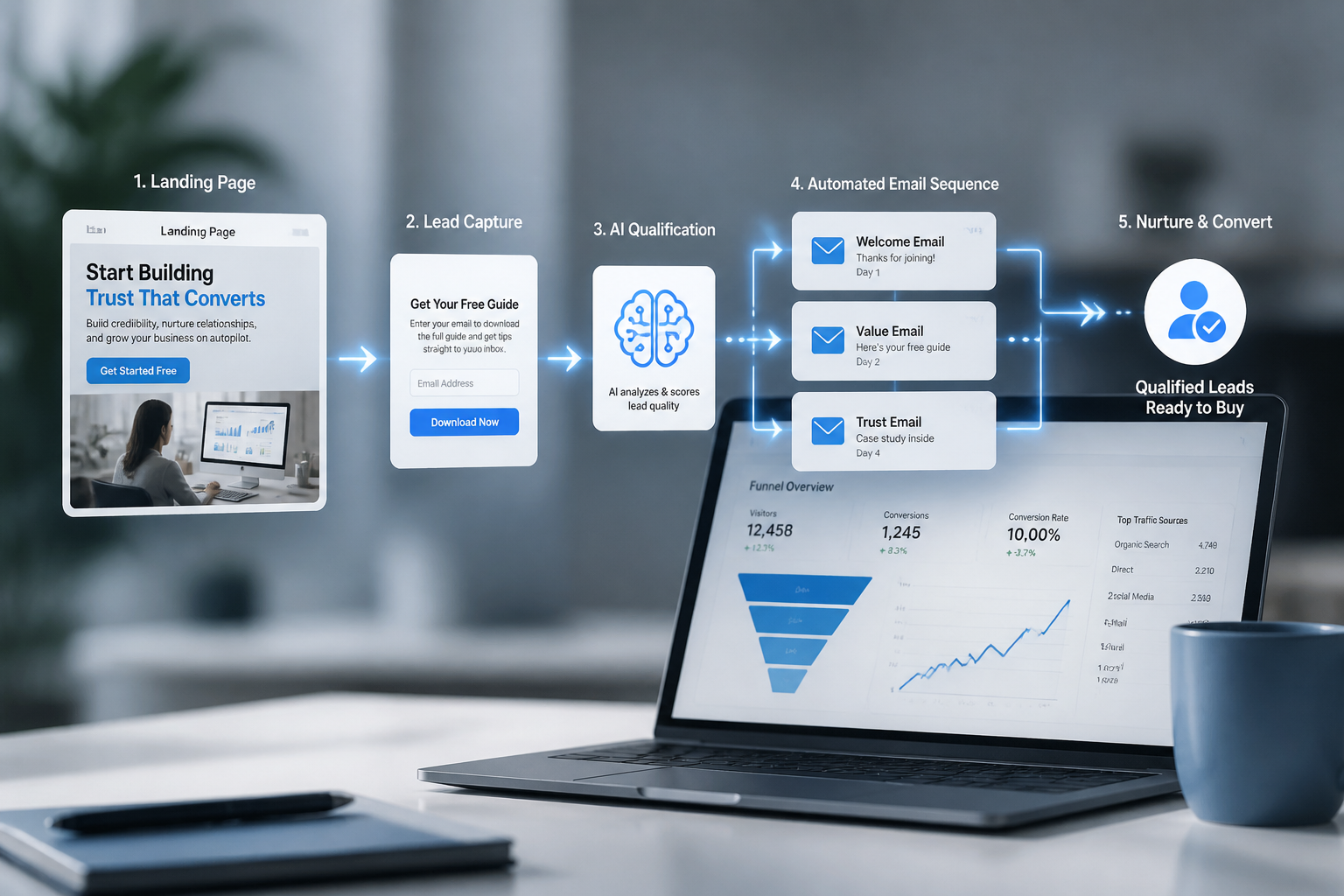
Modern trust-building requires more than good content—it needs systems that capture leads and nurture relationships automatically while maintaining personal authenticity. This is where most small businesses struggle with the technical complexity.
The All-in-One Platform Advantage
Scattered marketing tools create inconsistent experiences that damage trust. When your contact forms, email sequences, and follow-up systems don’t work together smoothly, prospects notice the disconnects.
Our all-in-one platform eliminates these consistency problems by managing your entire lead generation and nurturing process from a single system. Everything works together seamlessly because we build and implement the complete system for your business.
AI-Powered Lead Capture That Builds Trust
Our AI-powered lead capture systems don’t just collect contact information; they start building relationships immediately. The automated follow-up sequences we create include:
- Immediate value delivery (not just “thanks for signing up”)
- Educational content that demonstrates expertise
- Personal stories and case studies
- Clear next steps and expectations
- Consistent messaging that reinforces your brand
These systems work because they’re built around trust-building, not just lead collection. Every interaction is designed to increase confidence in your business.
The “Ready from Day One” Advantage
Most businesses struggle to build trust online because they’re trying to manage multiple systems while running their business. The technical complexity overwhelms them, so nothing gets implemented properly.
Our complete done-for-you system solves this problem by delivering everything ready to use from day one. You get:
- A free smart website built specifically for your business
- All content is written to address your prospects’ specific concerns
- Automated systems that capture and nurture leads
- Follow-up sequences that build trust over time
- No tech knowledge required on your part
This approach works because it removes the barriers that prevent most businesses from building effective trust-building systems.
Common Trust-Building Mistakes to Avoid
Even businesses that understand the importance of trust often make implementation mistakes that undermine their efforts. Here are the most common problems we see and how to avoid them.
Mistake 1: Trying to Appeal to Everyone
When you try to speak to everyone, you connect with no one. Generic messaging that could apply to any business in your industry fails to build trust with your specific ideal customers.
Instead, focus on your ideal client’s specific situation and challenges. The more precisely you describe their problems and your solution, the more trust you’ll build with the right prospects.
Mistake 2: Hiding Behind Corporate Language
Professional doesn’t mean impersonal. Using corporate buzzwords and formal language creates distance between you and your prospects.
Write as you talk. Use conversational language that sounds natural and authentic. Your prospects want to work with real people, not corporate entities.
Mistake 3: Neglecting Mobile Experience
More than half of your website visitors are browsing on mobile devices. If your site doesn’t work perfectly on phones and tablets, you’re losing trust with the majority of your prospects.
Test your website regularly on different devices. Make sure all forms work, all content is readable, and navigation is intuitive on mobile.
Mistake 4: Inconsistent Follow-Up
Building trust doesn’t end when someone visits your website. The follow-up experience is just as important for maintaining and building on that initial trust.
Create consistent, valuable follow-up sequences that continue building the relationship. This is where our automated follow-up systems make a huge difference for our clients.
FAQ: Website Trust and Credibility
Q: How quickly do visitors decide whether to trust a website?
Most visitors form an opinion about your website’s trustworthiness within 3-5 seconds of landing on your page. This means your headline, design, and initial message must immediately communicate credibility and relevance.
Q: What’s the most important trust signal for small business websites?
Authentic testimonials with specific results and real client names are the strongest trust signals. They provide third-party validation that your claims are legitimate and that your services deliver real value.
Q: Should I include pricing on my website to build trust?
Including at least price ranges or starting prices builds trust by showing transparency. Hiding all pricing information makes prospects suspicious and forces them to contact competitors who are more upfront about costs.
Q: How often should I update my website content to maintain trust?
Update your website at least quarterly with fresh content, current copyright dates, and recent testimonials. Regular blog posts or news updates show your business is active and engaged.
Q: Do professional photos really matter for trust?
Yes, authentic professional photos of your actual team and workspace significantly increase trust. Stock photos, especially overused ones, immediately signal that you haven’t invested in authentic representation.
Q: What’s the biggest trust mistake small businesses make online?
Using generic, templated messaging that sounds identical to competitors. This makes your business appear unoriginal and suggests you don’t understand your unique value proposition.
Q: How important are security certificates and trust badges?
SSL certificates and legitimate trust badges are essential for basic credibility, but they won’t overcome poor content or messaging. They’re necessary but not sufficient for building real trust.
Q: Should I address negative reviews or complaints on my website?
Acknowledging challenges and explaining how you’ve improved shows maturity and transparency. This actually builds more trust than pretending problems never occur.
Q: How can I build trust if I’m a new business without testimonials?
Focus on transparency about your process, showcase your team’s experience and credentials, provide valuable free content, and offer low-risk ways for prospects to test your services.
Q: What role does website speed play in trust?
Slow-loading websites immediately create negative impressions and suggest poor attention to detail. Fast, responsive sites signal professionalism and respect for visitors’ time.
Q: How do I know if my website is building trust effectively?
Track metrics like time on site, pages per visit, contact form submissions, and conversion rates. Low engagement often indicates trust issues that need addressing.
Q: Is it better to have a simple website or a complex one for trust?
Simple, clean websites typically build more trust than complex ones. Visitors should be able to find information quickly and understand your value proposition without confusion.
Conclusion
The trust crisis facing small business websites isn’t going away; it’s getting worse as buyers become more skeptical and selective. Generic messaging, poor maintenance, and lack of transparency are driving potential customers to your competitors who have figured out how to build authentic credibility online.
The solution isn’t just better content or prettier design. You need systems that actually work to capture leads and nurture relationships while maintaining the authentic, personal touch that builds real trust.
This is exactly why we created our complete done-for-you system at SalesHubHQ. We build the website and content that addresses your prospects’ specific concerns, implement AI-powered lead capture that starts building relationships immediately, and create automated follow-up systems that continue nurturing trust over time.
The result is a predictable growth system that works from day one without requiring you to become a marketing expert or manage complex technology. Your leads are captured and nurtured automatically while you focus on running your business and closing deals.
If you’re tired of watching prospects visit your website and leave without taking action, it’s time to implement systems that actually build trust and convert visitors into customers. Our all-in-one platform eliminates the guesswork and technical complexity, delivering everything you need to establish credibility and generate consistent leads.
Ready to build a website that prospects actually trust? Let us show you how our complete system can transform your online presence and create the predictable lead flow your business needs to grow.

