
The Hidden Reasons Buyers Don’t Trust Your Website
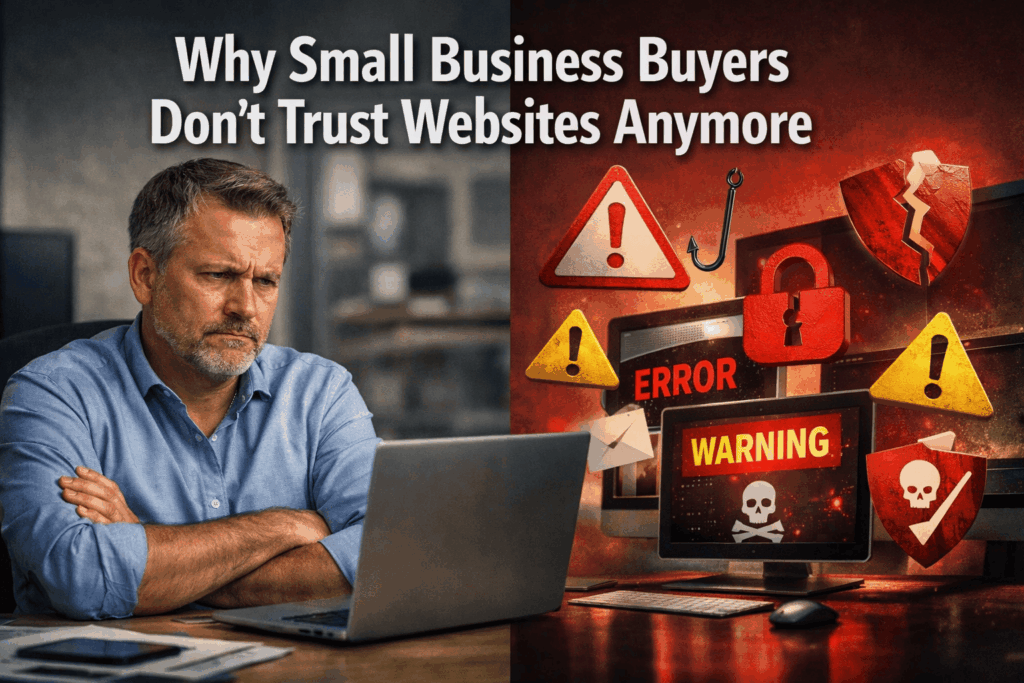
Split-screen image: a worried man with arms crossed at a laptop on the left, and a collage of warning icons and a red 'ERROR' display on the right, illustrating distrust in websites.

Article Summary

Who this is for:
B2B service providers, MSPs, and small business owners are relying on their website for lead generation but struggling with low conversion and buyer skepticism

The challenge:
Buyers distrust most business websites within seconds due to generic messaging, lack of proof, and overpromising, resulting in high bounce rates, lost leads, and stalled sales pipelines

Key insights covered:

  • Generic, vague messaging immediately signals “just another vendor” and kills trust
  • Proof is the new currency—specific case studies, real results, and named clients outperform generic testimonials
  • Transparency wins—clear process, real team, and visible contact details reduce skepticism
  • Overpromising backfires—buyers reject “best” and “guaranteed” claims without evidence
  • Local and authentic signals (real people, real presence) significantly increase credibility

Your outcome:
You’ll learn how to reposition your website into a trust-building asset that converts using specific messaging, documented results, and transparent processes to generate more qualified leads and close higher-quality clients consistently

Seventy-three percent of potential customers will leave a business website within the first ten seconds if they sense something feels “off” about the messaging or presentation. This isn’t just about slow loading times or poor design anymore. Buyers don’t trust websites because most small businesses have fallen into the same trap of generic promises and vague value propositions that scream “just another vendor trying to sell me something.”

The online credibility problems facing small businesses in 2026 have reached a tipping point. Customers have become sophisticated skeptics who can spot hollow marketing speak from a mile away, and they’re increasingly unwilling to engage with businesses that can’t prove their worth upfront.

Key Takeaways

• Generic messaging kills trust instantly – Vague promises like “industry-leading solutions” or “your success partner” signal to buyers that you don’t understand their specific problems
• Lack of proof points drives customers away – Websites without real testimonials, specific case studies, or verifiable results fail to build credibility
• Poor transparency creates immediate skepticism – Hidden contact information, stock photos instead of real team members, and unclear pricing make buyers question legitimacy
• Overpromising without substance backfires – Claims about being “the best” or delivering “guaranteed results” without evidence trigger buyer defense mechanisms
• Trust must be earned within seconds – Modern buyers make credibility judgments faster than ever, requiring immediate proof of authenticity
• Authentic content builds lasting relationships – Businesses that share real stories, specific outcomes, and transparent processes create genuine connections with prospects
• Local credibility signals matter more – Buyers increasingly value local presence, real addresses, and community connections over generic corporate messaging

🚀 Ready to see how this works for your business?

We'll build your complete review generation system in 14 days. No setup fees, no technical headaches. Just a system that works from day one.

📅 Book Your Free Consultation

The Trust Erosion: Why Customers Don’t Trust Businesses Online

Buyers have developed an almost automatic skepticism toward business websites because they’ve been burned too many times by companies that overpromise and underdeliver. This isn’t paranoia; it’s a learned response to years of encountering websites that all sound the same and fail to provide real value.

() image showing close-up of business person's hands hovering over laptop keyboard with multiple browser tabs open

We see this pattern constantly when we build websites for our clients. Before we create their complete done-for-you system, we analyze what their competitors are doing online. The results are almost always the same: page after page of meaningless buzzwords and empty promises.

Here’s what’s actually happening in buyers’ minds when they land on most small business websites:

The Generic Message Red Flag
When a potential customer sees headlines like “Empowering Your Success” or “Industry-Leading Excellence,” their internal alarm bells go off. These phrases could apply to any business in any industry, which immediately signals that the company either doesn’t understand its specific challenges or doesn’t care enough to address them directly.

The Stock Photo Problem
Buyers can instantly recognize stock photography, and it sends a clear message: “This business isn’t real enough to show you who actually works here.” When someone is considering spending money with your company, they want to see the actual people they’ll be working with, not models from a photo shoot.

The Vague Value Proposition Issue
Most small business websites fail to answer the fundamental question: “What exactly will you do for me, and how will I know it worked?” Instead, they’re filled with corporate speak about “solutions” and “partnerships” without any concrete details about outcomes or processes.

The reality is that website trust issues have become so prevalent that buyers now approach every new business website with their guard up. They’re looking for reasons to leave rather than reasons to stay.

The Psychology Behind Online Credibility Problems

Modern buyers make trust decisions within the first few seconds of landing on a website, and they’re using completely different criteria than they did even five years ago. The shift toward remote work and digital-first interactions has made people both more dependent on online information and more skeptical of it.
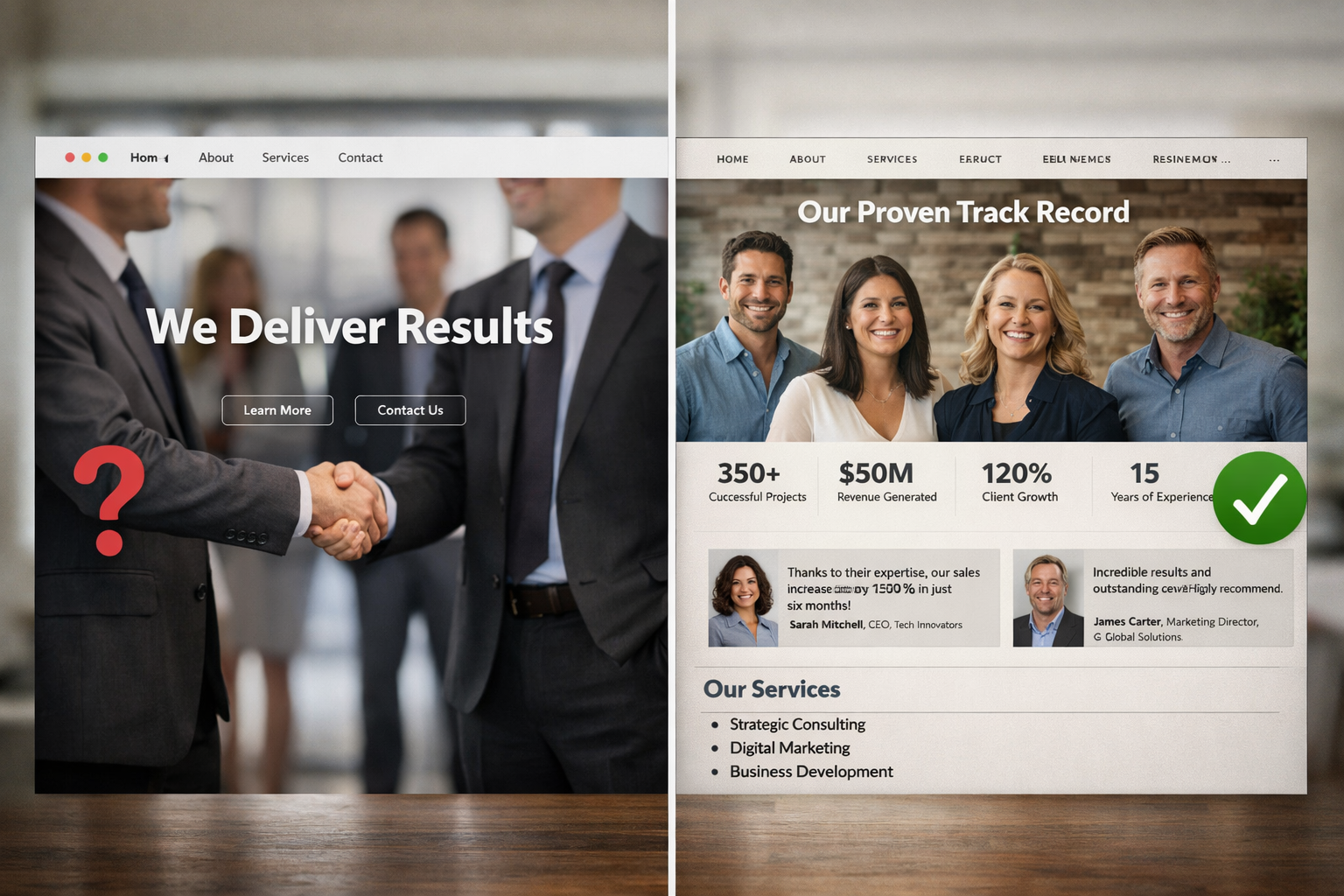
() split-screen comparison image showing two website mockups side by side. Left side displays a generic business website

This psychological shift affects how we approach building websites and content for our clients. When we create a free smart website built for you, we’re not just thinking about design and functionality; we’re addressing the deep-seated trust barriers that prevent potential customers from taking the next step.

The Authenticity Test
Buyers now perform what we call “authenticity tests” on every business website they visit. They’re looking for signs that real people run this business and that those people understand their industry well enough to provide genuine value.

These tests include:

  • Scanning for specific, detailed information rather than general statements
  • Looking for real names, faces, and credentials of team members
  • Checking whether the business can articulate problems in terms they recognize from their own experience
  • Verifying that contact information includes real addresses and direct phone numbers

The Proof Standard
The bar for what constitutes “proof” has risen dramatically. Buyers want to see specific numbers, named clients (when possible), and detailed case studies that show exactly how the business delivered results for others facing similar challenges.

Generic testimonials like “Great service, highly recommended!” no longer carry weight. Buyers want testimonials that include:

  • The client’s full name and company (or at least their role and industry if privacy is needed)
  • Specific challenges the client faced before working with the business
  • Concrete results or outcomes achieved through the partnership
  • Details about the process or experience of working together

The Transparency Expectation
Today’s buyers expect unprecedented levels of transparency from the businesses they’re considering. This goes beyond just listing services; they want to understand how you work, what the process looks like, and what they can realistically expect.

This is why our all-in-one platform approach resonates so strongly with business owners. We don’t just tell them we’ll help with lead generation, we explain exactly how the AI-powered lead capture works, what the automated follow-up systems include, and what results they can expect to see in their first 30, 60, and 90 days.

What Triggers Buyer Skepticism: The Red Flags That Kill Trust

Certain website elements and messaging patterns have become so associated with low-quality or dishonest businesses that they trigger immediate skepticism, regardless of the actual company’s credibility. Understanding these triggers is crucial for any business owner who wants to build genuine trust online.
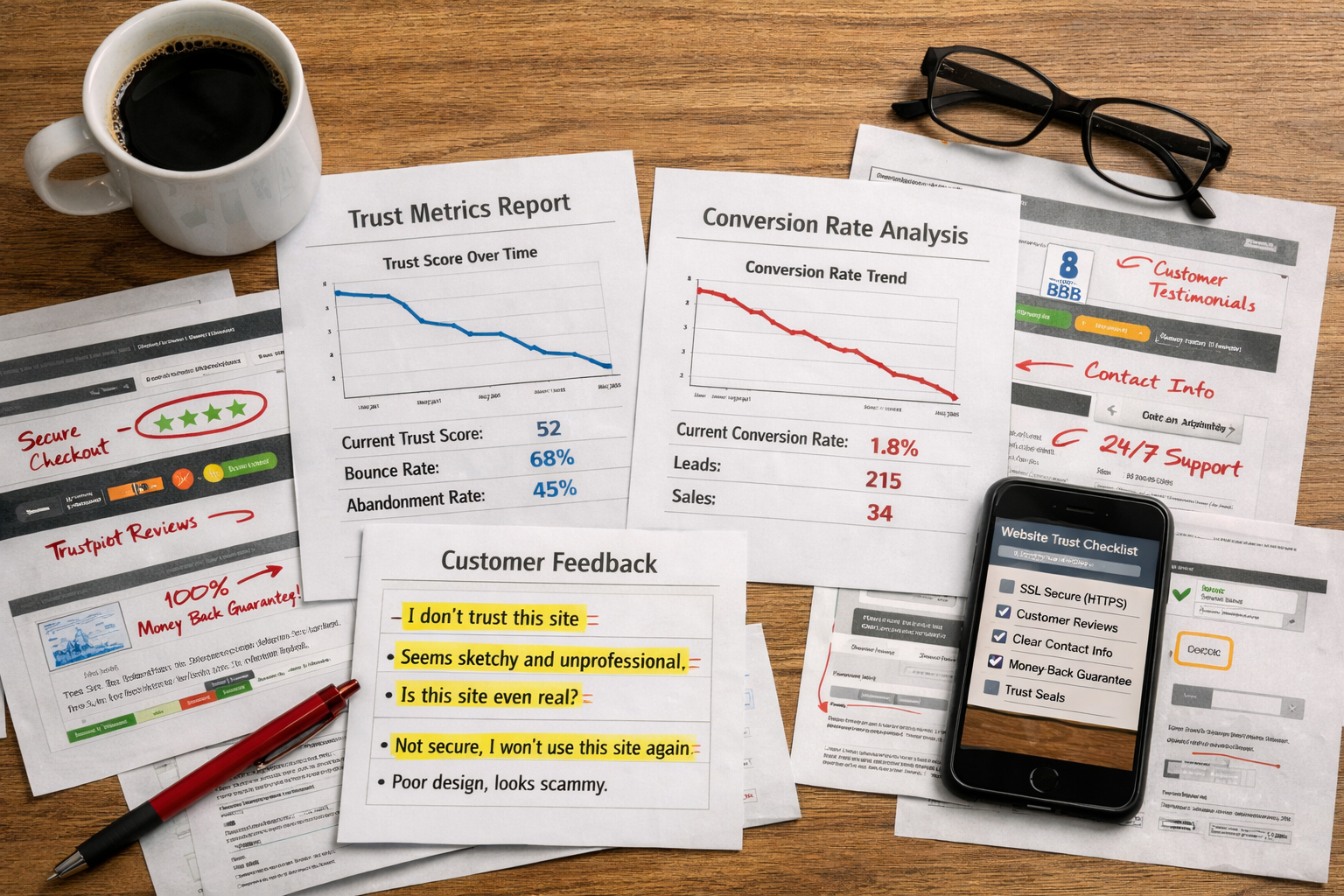
() overhead view of a business owner's desk showing printed website analytics reports with declining trust metrics,

After building hundreds of websites and analyzing what works versus what drives people away, we’ve identified the specific elements that make buyers hit the back button within seconds of arriving on a site.

The “Best in Industry” Trap
Claims about being the “best,” “leading,” or “#1” provider in an industry immediately raise red flags unless they’re backed by specific, verifiable proof. Buyers have learned that these superlatives are usually meaningless marketing speak.

Instead of claiming to be the best, successful businesses focus on being the most suitable for their specific target audience. They explain exactly who they serve best and why, rather than trying to appeal to everyone.

The Mysterious Team Problem
Websites that don’t show real team members or provide specific information about who runs the business create instant trust issues. Buyers want to know who they’re potentially working with, what qualifications those people have, and whether they seem like real humans rather than corporate entities.

This is particularly important for service-based businesses where the relationship between client and provider directly impacts results. When we build the website and content for our clients, we always include authentic team information because it’s one of the fastest ways to establish credibility.

The Contact Information Test
Buyers have learned to immediately check contact information as a credibility indicator. Websites that only offer contact forms, use generic email addresses, or don’t provide physical addresses trigger skepticism about whether the business is legitimate or accessible.

The most trusted businesses provide:

  • Direct phone numbers (not just contact forms)
  • Physical business addresses (not just P.O. boxes)
  • Individual email addresses for key team members
  • Clear information about business hours and response times

The Social Proof Vacuum
Websites without genuine social proof, real testimonials, case studies, client logos, or industry recognition leave buyers wondering whether anyone has actually had success working with the business.

But fake or generic social proof is worse than no social proof at all. Buyers can often tell when testimonials are fabricated or when case studies are too vague to be real.

The Overpromising Epidemic: When Marketing Messages Backfire

The biggest trust killer in small business marketing is the gap between what companies promise and what they can actually deliver. This overpromising epidemic has trained buyers to be skeptical of any claim that sounds too good to be true, even when the business genuinely can deliver exceptional results.

The challenge for legitimate businesses is learning how to communicate their value without triggering the skepticism that overpromising competitors have created in the marketplace.

The “Guaranteed Results” Problem
Promises of guaranteed outcomes, overnight success, or risk-free results have become so associated with scams and low-quality providers that even legitimate guarantees are often viewed with suspicion.

Trustworthy businesses focus on explaining their process, sharing realistic timelines, and providing evidence of past results rather than making blanket guarantees about future outcomes.

The “Revolutionary Solution” Red Flag
Marketing messages that position a business as having discovered some revolutionary new approach or secret method immediately trigger buyer skepticism. Most buyers understand that good business results come from consistent execution of proven strategies, not from magic bullets.

This is why our approach focuses on being straightforward about what we do: we build and implement proven lead generation and sales systems for businesses that don’t have the time or expertise to do it themselves. There’s nothing revolutionary about it; it just works because we handle the implementation details that most business owners struggle with.

The Unrealistic Timeline Trap
Promising immediate results or extremely fast turnaround times often backfires because buyers have learned to associate these promises with poor quality or unsustainable outcomes.

Businesses that build genuine trust are honest about realistic timelines and explain why certain processes take the time they do. They focus on delivering sustainable, long-term value rather than quick fixes.

Building Authentic Trust: What Actually Works in 2026

The businesses that successfully build trust online in 2026 focus on authenticity, transparency, and specific value delivery rather than trying to impress prospects with marketing sophistication. The most effective approach is often the most straightforward one.

() image showing a modern business website displayed on a large desktop monitor with clear trust elements highlighted:

Based on our experience building systems that actually work for small businesses, here are the trust-building strategies that consistently produce results:

Specific Problem Articulation
Instead of talking about general “pain points” or “challenges,” successful businesses demonstrate their expertise by articulating the specific, detailed problems their target customers face. This immediately signals that they understand the industry and have worked with similar clients before.

For example, rather than saying “We help businesses grow,” a trustworthy business might say, “We help Metro Atlanta B2B service companies that are tired of juggling five different marketing tools generate 15-20 qualified leads per month through a single, integrated system.”

Process Transparency
Buyers trust businesses that explain exactly how they work, what the client experience looks like, and what’s involved in delivering results. This transparency helps set appropriate expectations and demonstrates confidence in the methodology.

When we work with clients, we explain that our predictable growth system includes specific components: a custom website optimized for their target market, automated follow-up systems that nurture leads without manual effort, and AI-powered lead capture that works right away from day one with no tech knowledge required.

Real Results Documentation
The most powerful trust builder is specific documentation of real results achieved for actual clients. This goes beyond testimonials to include detailed case studies that show the before-and-after transformation.

Effective results documentation includes:

  • The client’s situation before working together
  • Specific challenges or obstacles that needed to be overcome
  • The exact process or strategy implemented
  • Measurable outcomes achieved within specific timeframes
  • The client’s own words about their experience

Authentic Team Presentation
Businesses that build strong trust show real team members, include their actual credentials and experience, and help prospects understand who they’ll be working with throughout the engagement.

This authentic presentation extends to how team members communicate on the website, in content, and during initial conversations. The goal is to come across as competent professionals rather than polished salespeople.

The Local Credibility Factor: Why Geographic Trust Matters More Than Ever

In an increasingly digital world, local credibility signals have become more important, not less, for building trust with potential customers. Buyers often prefer working with businesses that have a real presence in their geographic area, even when the services can be delivered remotely.

This trend reflects a desire for accountability and accessibility that purely digital businesses often can’t provide. When something goes wrong or when clients need hands-on support, they want to know they’re working with a business they could theoretically visit in person.

Physical Presence Indicators
Businesses that include real office addresses, local phone numbers, and references to their geographic area tend to build trust more quickly than those that present themselves as purely digital entities.

Even businesses that serve clients nationally or internationally benefit from establishing clear local credibility before expanding their perceived reach.

Community Connection
References to local business organizations, community involvement, or regional industry knowledge help establish credibility with prospects who value businesses that are invested in their local area.

This doesn’t mean every business needs to limit itself to local clients, but establishing local credibility first often makes it easier to expand into broader markets while maintaining trust.

Regional Expertise
Businesses that demonstrate understanding of regional business conditions, local regulations, or area-specific challenges often build trust more quickly than those that use generic, location-neutral messaging.

For example, a business serving the Metro Atlanta market might reference an understanding of the specific business environment, growth patterns, or industry concentrations in the region.

Website Trust Assessment Tool

Website Trust Assessment Tool

Evaluate how well your website builds credibility

1. How specific is your main value proposition?
2. Team transparency?
3. Testimonials?
4. Contact info?
5. Claims realism?
6. Expertise?

🚀 Ready to see how this works for your business?

We'll build your complete review generation system in 14 days. No setup fees, no technical headaches. Just a system that works from day one.

📅 Book Your Free Consultation

The Content Authenticity Challenge: Moving Beyond Marketing Speak

The most significant shift in building online trust has been the move away from polished marketing content toward authentic, helpful information that demonstrates real expertise. Buyers can now easily distinguish between content created to sell and content created to genuinely help.

Educational Value Over Sales Pitches
Websites that build strong trust focus primarily on educating prospects about their options, helping them understand their situation better, and providing genuinely useful information, even if that information might help them solve problems without hiring the business.

This educational approach demonstrates confidence and expertise while building goodwill with prospects who may not be ready to buy immediately but will remember the business that provided helpful guidance.

Industry-Specific Insights
Generic business advice or broadly applicable tips don’t build the same level of trust as content that demonstrates a deep understanding of specific industries, roles, or business situations.

Businesses that consistently create content addressing the particular challenges their target customers face establish themselves as genuine experts rather than general service providers.

Process Documentation
Some of the most trust-building content involves explaining how things work, what’s involved in achieving certain outcomes, and what prospects should expect from working with different types of providers.

This process-focused content helps buyers make better decisions while positioning the business as a knowledgeable guide rather than just another vendor.

Technology and Trust: How Modern Tools Can Help or Hurt Credibility

The technology choices businesses make for their websites and customer interactions significantly impact how trustworthy they appear to potential customers. Some technological approaches enhance credibility, while others inadvertently undermine it.

Security and Privacy Signals
Modern buyers expect businesses to take security seriously, and they look for visual indicators that their information will be protected. SSL certificates, privacy policy links, and secure contact forms are now baseline requirements rather than nice-to-have features.

Businesses that don’t invest in basic security measures signal that they either don’t understand modern business requirements or don’t prioritize protecting customer information.

Professional Communication Tools
The tools businesses use for communication, from email systems to scheduling platforms to customer management, affect how professional and reliable they appear to prospects.

Generic email addresses, unprofessional communication tools, or systems that create friction in the customer experience can undermine trust even when the core business offering is solid.

Integration and Consistency
Businesses that use multiple disconnected tools often create inconsistent experiences that make them appear less professional or organized than they actually are.

This is one reason why our all-in-one platform approach resonates with both business owners and their customers. When leads are captured and nurtured automatically through integrated systems, the entire customer experience feels more professional and trustworthy.

Measuring and Monitoring Trust: Key Indicators to Track

Building trust isn’t just about implementing the right strategies—it’s about consistently monitoring how well those strategies are working and making adjustments based on real feedback from prospects and customers.

Behavioral Trust Indicators
The most reliable indicators of website trust are behavioral: how long people stay on the site, which pages they visit, whether they engage with contact forms or scheduling tools, and how they progress through the sales process.

Businesses that track these behavioral indicators can identify trust barriers and address them before they impact too many potential customers.

Direct Feedback Collection
Regular surveys of prospects and customers about their initial impressions, concerns, and decision-making process provide valuable insights into trust-building effectiveness.

This feedback often reveals trust barriers that businesses don’t realize they’re creating, such as confusing navigation, unclear value propositions, or missing information that prospects need to feel comfortable moving forward.

Conversion Rate Analysis
Trust issues typically show up as declining conversion rates at specific points in the customer journey. Businesses that monitor these conversion points can identify where trust barriers are preventing prospects from taking the next step.

Competitive Trust Analysis
Regular analysis of how competitors are building trust and how prospects respond to different approaches—helps businesses stay current with evolving trust expectations and identify opportunities to differentiate themselves through superior credibility building.

Frequently Asked Questions

Why do buyers immediately distrust websites with generic messaging?
Buyers have learned that generic messages like “industry-leading solutions” usually indicate a business doesn’t understand their specific problems or has nothing unique to offer. Specific, detailed messaging demonstrates real expertise and understanding.

What’s the biggest trust killer on small business websites?
Overpromising without proof is the biggest trust killer. Claims about guaranteed results, being “the best,” or revolutionary approaches trigger skepticism unless backed by specific, verifiable evidence of past success.

How quickly do buyers make trust decisions about websites?
Most buyers form initial trust impressions within 10 seconds of landing on a website. They’re looking for immediate signals of authenticity, professionalism, and relevance to their specific needs.

Why don’t testimonials work as well as they used to?
Generic testimonials like “great service” are easily faked and don’t provide useful information. Modern buyers want detailed testimonials with specific results, challenges overcome, and verifiable client information.

What contact information builds the most trust?
Direct phone numbers, physical business addresses, individual team member emails, and clear response time expectations build more trust than generic contact forms or P.O. box addresses.

How important are real team photos versus stock photography?
Real team photos significantly increase trust because buyers want to see the actual people they’ll potentially work with. Stock photos immediately signal that the business isn’t confident enough to show its real team.

Why do local credibility signals matter for online businesses?
Local presence indicates accountability and accessibility. Even businesses serving national markets build more trust by establishing clear local credibility first, showing they’re real businesses with physical presence.

What’s the difference between confidence and overpromising?
Confidence involves explaining your process, sharing specific past results, and setting realistic expectations. Overpromising involves guaranteeing outcomes, claiming to be the best, or promising unrealistic timelines without supporting evidence.

How can businesses prove their expertise without revealing proprietary methods?
Businesses can demonstrate expertise by articulating client problems in specific detail, sharing case study results, explaining general methodologies, and creating educational content that helps prospects understand their options.

What role does website security play in building trust?
Basic security measures like SSL certificates and privacy policies are now baseline requirements. Businesses without these security signals appear either unprofessional or potentially risky to work with.

How often should businesses update their trust-building content?
Trust-building elements like testimonials, case studies, and team information should be updated quarterly to stay current. Educational content should be refreshed regularly to maintain relevance and demonstrate ongoing expertise.

What’s the most effective way to address buyer skepticism directly?
The most effective approach is transparency about process, realistic timeline expectations, and specific documentation of past results. Addressing common concerns proactively shows understanding of buyer psychology and builds confidence.

Conclusion

The erosion of trust in business websites isn’t just a marketing problem—it’s a fundamental shift in how buyers evaluate potential partners and vendors. Buyers don’t trust websites because too many businesses have fallen into the trap of generic messaging, empty promises, and inauthentic presentation.

But this trust crisis also represents an opportunity. Businesses that focus on authenticity, transparency, and specific value delivery can stand out dramatically in a marketplace full of generic competitors. The key is understanding that trust must be earned immediately through concrete proof rather than built gradually through relationship development.

The most successful businesses in 2026 will be those that:

  • Replace generic messaging with specific problem articulation
  • Provide real proof of results rather than empty testimonials
  • Show authentic teams instead of hiding behind corporate facades
  • Explain their processes transparently instead of claiming proprietary secrets
  • Set realistic expectations rather than overpromising outcomes

At SalesHubHQ, we’ve built our entire approach around addressing these trust barriers. When we create a complete done-for-you system for our clients, we’re not just building websites and implementing lead generation tools; we’re creating authentic, trustworthy presentations that help businesses connect with prospects who are tired of being disappointed by vendors who overpromise and underdeliver.

The businesses that thrive in this environment will be those that understand trust isn’t about perfection; it’s about authenticity, competence, and genuine care for customer outcomes. Systems that actually work, combined with honest communication about what those systems can and can’t do, will always outperform flashy promises that can’t be kept.

If your website is struggling with trust issues, the solution isn’t better marketing; it’s better authenticity. Focus on proving your value through specific examples, transparent processes, and genuine expertise rather than trying to impress prospects with polished sales messages that sound like everyone else’s.

🚀 Ready to see how this works for your business?

We'll build your complete review generation system in 14 days. No setup fees, no technical headaches. Just a system that works from day one.

📅 Book Your Free Consultation
author avatar
Danillo

Leave a Reply

Your email address will not be published. Required fields are marked *