
How to Build a Website That Converts More Leads

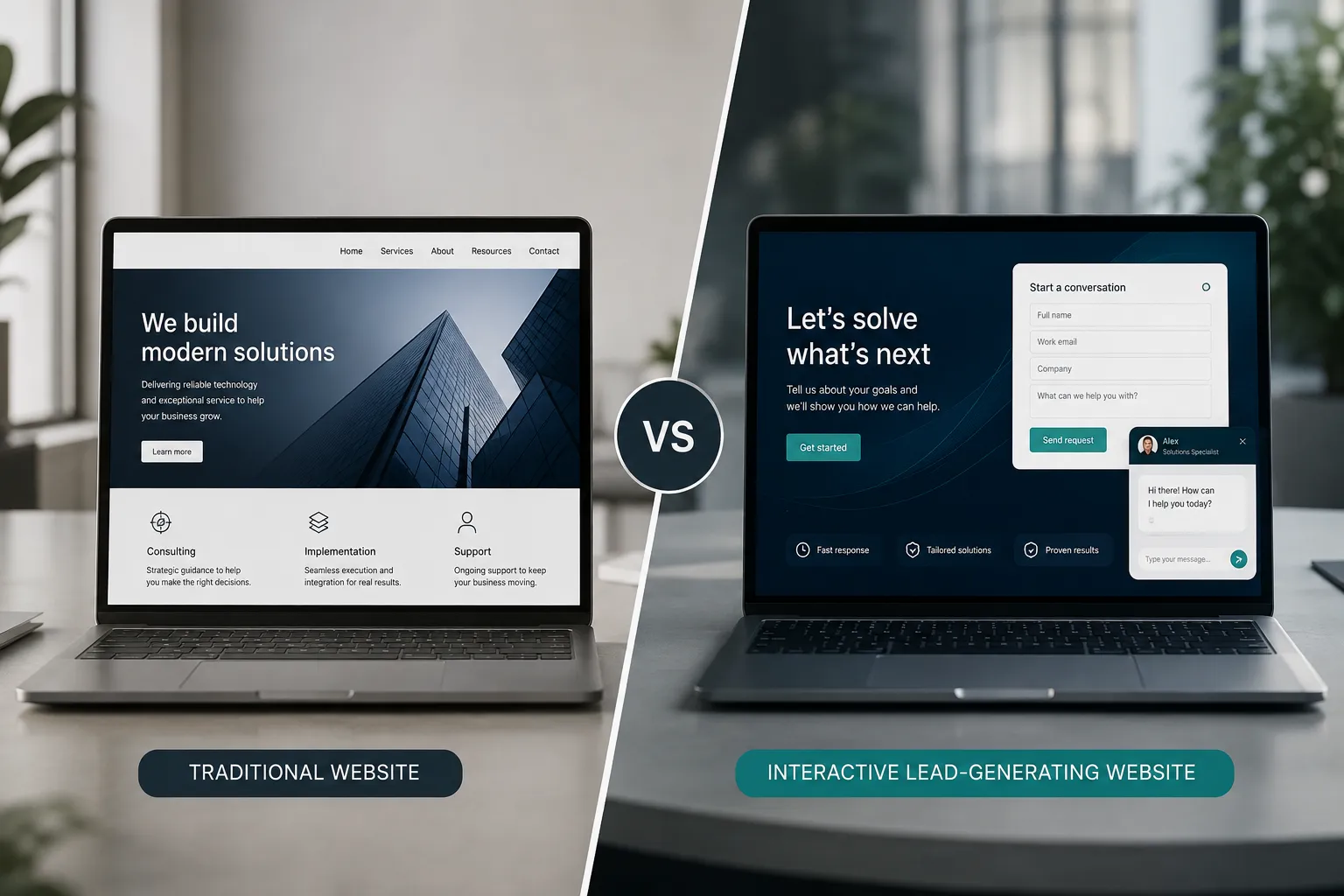
How Websites Generate Leads for Sales
Websites generate leads for sales by capturing visitor information through strategic forms, compelling offers, and clear calls-to-action that encourage prospects to share their contact details in exchange for valuable content or consultations. The most effective lead generation happens when your website addresses specific pain points and offers solutions that visitors actually want.
We’ve seen countless small businesses transform their results once they understand this fundamental shift. Your website isn’t just a digital business card; it’s a lead generation machine that should work around the clock.
Primary Lead Generation Methods:
- Contact forms with compelling offers: Free consultations, assessments, or valuable resources
- Email newsletter signups: Industry insights, tips, or exclusive content
- Download gates: Whitepapers, guides, checklists, or templates
- Live chat integration: Real-time engagement when prospects have questions
- Webinar registrations: Educational sessions that demonstrate expertise
- Quote request forms: Direct path to sales conversations
The key difference between websites that generate leads and those that don’t comes down to value exchange. Visitors won’t share their information unless they receive something worthwhile in return. We build websites that offer genuine value upfront, which naturally leads to higher conversion rates.
Common Lead Magnets That Actually Work:
- Industry-specific calculators or assessment tools
- Step-by-step guides solving common problems
- Templates or checklists that save time
- Exclusive industry reports or research
- Free trials or consultations
Your website generates leads most effectively when it speaks directly to your ideal customer’s challenges. Generic “Contact Us” buttons rarely convert. Instead, specific offers like “Get Your Free Marketing Assessment” or “Download Our Client Onboarding Checklist” give visitors a clear reason to engage.
What Makes a Website Effective at Converting Visitors
An effective website converts visitors by focusing on user experience, building trust quickly, and providing clear paths to action rather than overwhelming visitors with information or confusing navigation. The most successful business websites prioritize what visitors need to know and make it easy for them to take the next step.

Essential Conversion Elements:
- Clear value proposition: Visitors understand what you do and how you help within 5 seconds
- Trust signals: Client testimonials, case studies, certifications, and professional credentials
- Simple navigation: Easy-to-find information without hunting through multiple pages
- Mobile optimization: Seamless experience across all devices
- Fast loading speed: Pages load in under 3 seconds to prevent visitor abandonment
- Strategic calls-to-action: Prominent buttons that stand out and use action-oriented language
The biggest mistake we see is businesses trying to cram everything onto their homepage. Effective websites guide visitors through a logical flow that builds confidence and leads to conversion. Start with the problem your visitors face, demonstrate your solution, provide proof it works, then ask for action.
Trust-Building Components:
- Client logos and testimonials from recognizable companies
- Detailed case studies with specific results
- Professional headshots and team bios
- Industry certifications and awards
- Clear contact information and business address
Your website converts visitors when it removes friction from the decision-making process. This means answering common objections before they arise, providing social proof, and making it incredibly easy to take the next step. We build systems that anticipate visitor concerns and address them proactively.
Website Sales Funnel Best Practices
Effective website sales funnels guide visitors through awareness, consideration, and decision stages by providing the right information at each step and removing barriers to conversion. The best funnels feel natural and helpful rather than pushy or sales-focused.
Top-of-Funnel (Awareness Stage):
- Educational blog content addressing common industry challenges
- Free resources like guides, templates, or tools
- Social media content that drives traffic to valuable website pages
- SEO-optimized pages that answer questions prospects are searching for
Middle-of-Funnel (Consideration Stage):
- Detailed case studies showing results for similar businesses
- Comparison guides helping prospects evaluate options
- Email sequences that nurture leads with valuable insights
- Webinars or demos that demonstrate expertise
Bottom-of-Funnel (Decision Stage):
- Clear pricing information or consultation offers
- Client testimonials and success stories
- Risk-free trials or guarantees
- Simple contact forms with quick response promises
The most effective sales funnels we build focus on education over selling. When prospects feel informed and confident about their decision, they’re more likely to choose your business. This approach works especially well for B2B service companies where trust and expertise matter more than price.
Funnel Optimization Strategies:
- A/B testing different headlines and call-to-action buttons
- Tracking where visitors drop off and improving those pages
- Personalizing content based on visitor source or behavior
- Following up quickly with new leads through automated sequences
Your sales funnel should feel like a helpful conversation rather than a high-pressure sales pitch. We design funnels that provide genuine value at each stage, building trust and positioning your business as the obvious choice when prospects are ready to buy.
How to Optimize Your Website for Lead Generation
Website optimization for lead generation focuses on improving conversion rates through strategic placement of forms, compelling offers, and clear messaging that addresses visitor needs. Small improvements in conversion rates can dramatically increase the number of leads your website generates.
Lead Generation Optimization Checklist:
- Above-the-fold clarity: Visitors immediately understand what you offer and who it’s for
- Strategic form placement: Lead capture forms on high-traffic pages without being intrusive
- Compelling headlines: Clear, benefit-focused headlines that grab attention
- Reduced form fields: Only ask for essential information to reduce friction
- Social proof placement: Testimonials and logos near conversion points
- Mobile optimization: Forms and buttons work perfectly on smartphones
The biggest opportunity most businesses miss is optimizing their existing traffic rather than just driving more visitors. If your website gets 1,000 monthly visitors and converts 1%, that’s 10 leads. Improving conversion to 3% triples your leads without spending more on marketing.
High-Converting Page Elements:
- Benefit-focused headlines that address specific pain points
- Bullet points highlighting key advantages
- Client success stories with measurable results
- Clear, action-oriented button text like “Get My Free Assessment”
- Contact information prominently displayed
- Professional photography that builds credibility
We focus on conversion rate optimization because it’s often the fastest way to improve results. Small businesses can compete effectively with larger competitors by converting a higher percentage of their website visitors into leads.
Testing and Improvement Process:
- Track current conversion rates as baseline metrics
- Test one element at a time (headlines, buttons, forms)
- Measure results over statistically significant periods
- Implement winning variations and test new elements
- Continuously monitor and refine based on performance data
What Features Should a Sales Website Have
A sales website should include lead capture forms, clear calls-to-action, trust signals like testimonials, mobile optimization, and content that educates prospects while guiding them toward conversion. These features work together to create a system that generates leads automatically.

Essential Sales Website Features:
- Lead capture system: Multiple opportunities for visitors to share contact information
- CRM integration: Automatic lead routing and follow-up sequences
- Live chat functionality: Real-time engagement for immediate questions
- Content management system: Easy updates for blog posts and landing pages
- Analytics tracking: Detailed data on visitor behavior and conversion rates
- Email marketing integration: Automated nurture sequences for new leads
The most important feature is a system that captures leads and follows up automatically. We build complete done-for-you systems that handle everything from initial contact to nurturing prospects until they’re ready to buy.
Advanced Sales Features:
- Personalized content based on visitor source or behavior
- Automated email sequences triggered by specific actions
- Lead scoring to prioritize follow-up efforts
- Integration with scheduling tools for easy appointment booking
- Social media integration for broader reach
- SEO optimization for organic traffic generation
Your sales website should work even when you’re not actively managing it. This means having systems in place that capture leads, send immediate responses, and continue nurturing prospects through automated sequences. We build these systems so they’re ready from day one with no tech knowledge required.
Performance Tracking Capabilities:
- Conversion rate monitoring by traffic source
- Lead quality scoring and tracking
- ROI measurement for different marketing channels
- A/B testing capabilities for continuous improvement
- Detailed reporting on sales pipeline progression
Website Conversion Rate Optimization Tips
Website conversion rate optimization involves systematically testing and improving elements like headlines, forms, and calls-to-action to increase the percentage of visitors who become leads. Even small improvements can significantly impact your business growth.
Proven Conversion Optimization Strategies:
- Headline testing: Try different value propositions and benefit statements
- Form optimization: Reduce fields and test different form placements
- Button improvements: Test colors, text, and positioning of call-to-action buttons
- Page speed optimization: Ensure fast loading times across all devices
- Trust signal placement: Position testimonials and logos strategically
- Mobile experience: Optimize specifically for smartphone users
The most effective approach is testing one element at a time so you can measure the specific impact of each change. We’ve seen conversion rates double just by changing a headline or repositioning a contact form.
Common Conversion Killers to Avoid:
- Too many form fields that create friction
- Unclear value propositions that confuse visitors
- Slow loading pages that cause abandonment
- Hidden contact information that reduces trust
- Generic calls-to-action that don’t motivate action
- Poor mobile experience that frustrates users
Successful optimization requires consistent testing and measurement. We implement tracking systems that show exactly which changes improve results and which don’t, so you can make data-driven decisions about your website.
How Much Can a Website Increase Sales
A well-optimized sales website can increase lead generation by 200-500% compared to a basic informational site, with some businesses seeing even higher improvements when implementing comprehensive lead capture and nurturing systems. The actual increase depends on your current website performance and industry.
Factors That Influence Sales Impact:
- Current conversion rate: Lower starting rates have more room for improvement
- Traffic volume: More visitors provide more opportunities for conversion
- Lead quality: Better-qualified leads convert to sales at higher rates
- Follow-up systems: Automated nurturing improves conversion rates
- Industry type: B2B services often see higher impact than retail
- Competition level: Unique positioning can dramatically improve results
We typically see small businesses double or triple their lead generation within the first few months of implementing a proper sales website strategy. The key is having systems that work together rather than just hoping visitors will contact you.
Realistic Timeline Expectations:
- Month 1-2: Website optimization and lead capture system setup
- Month 3-4: Initial lead generation improvements become visible
- Month 6-12: Significant sales impact as systems mature and optimize
- Year 2+: Compound growth as content and SEO efforts build momentum
The businesses that see the biggest impact are those that commit to the complete system rather than just making cosmetic changes. This includes lead capture, automated follow-up, content marketing, and ongoing optimization.
Common Mistakes That Hurt Website Conversions
The most common website conversion mistakes include focusing on design over functionality, using generic messaging instead of specific value propositions, and failing to provide clear next steps for interested visitors. These mistakes can cut conversion rates in half or worse.
Critical Mistakes to Avoid:
- Design-first thinking: Pretty websites that don’t convert visitors into leads
- Generic messaging: Vague descriptions that don’t address specific problems
- Hidden contact information: Making it difficult for interested prospects to reach you
- No clear calls-to-action: Leaving visitors unsure what to do next
- Overwhelming navigation: Too many options that confuse rather than guide
- Slow loading speeds: Technical issues that cause visitor abandonment
The biggest mistake we see is treating websites like online brochures instead of sales tools. Your website should actively guide visitors toward becoming leads, not just display information and hope for the best.
Messaging and Content Mistakes:
- Talking about features instead of benefits
- Using industry jargon that confuses prospects
- Focusing on company history instead of customer results
- Providing too much information without clear organization
- Failing to address common objections and concerns
Most businesses underestimate how quickly visitors make decisions about their website. You have seconds to communicate value and build interest. Generic messaging and confusing navigation kill conversions before visitors even consider your services.
Technical and User Experience Issues:
- Forms that don’t work properly on mobile devices
- Contact forms that don’t send confirmation emails
- Broken links or missing pages that frustrate visitors
- No clear privacy policy or trust signals
- Inconsistent branding that reduces credibility
Website vs Hiring a Salesperson Cost Comparison
A sales-optimized website typically costs $5,000-$15,000 to build and optimize initially, then generates leads 24/7 without ongoing salary costs, while hiring a salesperson costs $50,000-$100,000+ annually in salary and benefits with limited working hours. The website provides better ROI for most small businesses.

Website Investment Breakdown:
- Initial development: $5,000-$15,000 for a professional sales-focused site
- Monthly maintenance: $200-$500 for hosting, updates, and optimization
- Annual costs: $2,400-$6,000 plus initial investment
- Lead generation capacity: 24/7 operation with unlimited scalability
- Payback period: Typically 3-6 months for most small businesses
Salesperson Employment Costs:
- Annual salary: $40,000-$80,000 depending on experience and location
- Benefits and taxes: Additional 20-30% of salary costs
- Training and onboarding: $5,000-$10,000 in time and resources
- Office space and equipment: $3,000-$6,000 annually
- Total annual cost: $50,000-$100,000+ for most markets
The math strongly favors investing in a proper sales website first, then adding salespeople as your business grows. A website that generates 20-30 qualified leads monthly often produces better results than a single salesperson, especially for service-based businesses.
Long-term Value Comparison:
- Website: Builds value as an asset, improves with optimization
- Salesperson: Ongoing expense with no residual value if they leave
- Scalability: Website handles unlimited traffic, salespeople have capacity limits
- Consistency: Website delivers the same message every time
- Availability: Website works nights, weekends, and holidays
We recommend starting with a sales-optimized website, then hiring salespeople to handle the leads it generates. This approach gives you predictable lead flow before adding payroll expenses.
How to Track if Your Website Actually Generates Sales
Track website sales generation by monitoring conversion rates, lead quality scores, and revenue attribution from website-generated leads using analytics tools and CRM integration. The key is connecting website activity directly to closed sales, not just measuring traffic or form submissions.
Essential Tracking Metrics:
- Conversion rate: Percentage of visitors who become leads
- Lead-to-customer rate: How many leads actually become paying clients
- Revenue per lead: Average value of customers from website leads
- Cost per lead: Marketing spend divided by leads generated
- Time to conversion: How long from first visit to becoming a customer
- Traffic source performance: Which channels generate the best leads
Most businesses track the wrong metrics and miss the connection between their website and actual sales. We set up tracking systems that show the complete customer journey from first website visit to closed sale.
Implementation Requirements:
- Google Analytics with goal tracking and e-commerce setup
- CRM integration that captures lead source information
- Phone call tracking for businesses that rely on phone inquiries
- Email marketing analytics that connect to sales outcomes
- Regular reporting that connects website activity to revenue
The most important metric is revenue attribution, knowing which website visitors eventually become paying customers and how much they spend. This data helps you optimize for quality leads rather than just quantity.
Tracking Tools and Setup:
- Google Analytics 4: Free website traffic and conversion tracking
- CRM systems: Lead management and sales pipeline tracking
- Call tracking software: Attribution for phone-based inquiries
- Email marketing platforms: Nurture sequence performance monitoring
- Heat mapping tools: Understanding visitor behavior on key pages
Best Website Design for B2B Lead Generation
B2B lead generation websites should prioritize clear messaging, professional credibility, and strategic lead capture over flashy design elements. The most effective designs focus on building trust quickly and guiding visitors toward conversion through logical information architecture.
B2B Design Principles:
- Professional appearance: Clean, credible design that builds trust immediately
- Clear value proposition: Visitors understand your offering within seconds
- Strategic white space: Uncluttered layout that focuses attention on key elements
- Consistent branding: Professional colors, fonts, and imagery throughout
- Mobile-first design: Seamless experience across all devices
- Fast loading speed: Technical performance that supports user experience
B2B buyers are typically more analytical and risk-averse than consumer buyers. Your website design should reflect this by emphasizing credibility, expertise, and proven results rather than flashy graphics or trendy layouts.
Essential B2B Page Elements:
- About page with team credentials: Establishing expertise and trustworthiness
- Detailed service descriptions: Clear explanations of what you deliver
- Case studies with specific results: Proof of success with similar businesses
- Client testimonials and logos: Social proof from recognizable companies
- Clear contact information: Multiple ways for prospects to reach you
- Resource library: Valuable content that demonstrates expertise
The best B2B websites feel like professional consultations rather than sales pitches. They provide valuable information, address common concerns, and make it easy for qualified prospects to start conversations.
Call to Action Examples That Actually Convert
High-converting calls-to-action use specific, benefit-focused language that tells visitors exactly what they’ll receive and what happens next, rather than generic phrases like “Contact Us” or “Learn More.” The most effective CTAs create urgency and reduce perceived risk.
High-Converting CTA Examples:
- “Get Your Free Marketing Assessment” – Specific offer with clear value
- “Download Our Client Success Blueprint” – Valuable resource with immediate benefit
- “Schedule Your 15-Minute Strategy Call” – Time-specific with low commitment
- “Claim Your Competitive Analysis Report” – Exclusive offer with personalized value
- “Start Your Risk-Free Trial Today” – Removes barriers with risk reversal
- “Reserve Your Spot for Next Week’s Workshop” – Creates urgency with limited availability
The key difference between CTAs that convert and those that don’t is specificity. Generic buttons don’t give visitors a compelling reason to act. Specific offers with clear benefits motivate immediate action.
CTA Optimization Best Practices:
- Action-oriented language: Start with verbs like “Get,” “Download,” “Schedule,” “Claim”
- Benefit-focused copy: Emphasize what the visitor receives, not what you want
- Urgency elements: Time-sensitive offers or limited availability when appropriate
- Risk reduction: Free trials, assessments, or consultations lower barriers
- Visual prominence: Contrasting colors and strategic placement that draws attention
We test different CTA variations to find what resonates with your specific audience. Small changes in wording can double or triple conversion rates, making this one of the highest-impact optimizations you can make.
How Long Does It Take for a Website to Generate Leads
A properly optimized sales website typically begins generating leads within 2-4 weeks of launch, with significant lead flow usually developing within 2-3 months as content marketing and SEO efforts gain traction. The timeline depends on your traffic sources and conversion optimization efforts.
Timeline Expectations:
- Week 1-2: Website launch and initial traffic from existing marketing
- Week 3-8: First leads from optimized conversion elements and paid traffic
- Month 3-6: Steady lead flow as SEO and content marketing build momentum
- Month 6-12: Significant lead generation as organic traffic and authority grow
- Year 2+: Compound growth as content library and search rankings mature
The fastest results come from optimizing existing traffic sources rather than waiting for new traffic to develop. If you already have website visitors, proper conversion optimization can generate leads immediately.
Factors That Accelerate Lead Generation:
- Existing website traffic: More visitors provide more conversion opportunities
- Paid advertising: Immediate traffic to optimized landing pages
- Email marketing: Promoting new lead magnets to existing contacts
- Social media promotion: Driving followers to valuable website content
- Referral programs: Encouraging existing clients to share resources
Businesses that see the fastest results typically have multiple traffic sources and focus on conversion optimization from day one. We build systems that are ready to convert visitors immediately rather than waiting for perfect conditions.
Website Sales Strategy for Small Business
Small business website sales strategy should focus on competing through superior customer experience and targeted messaging rather than trying to outspend larger competitors on marketing. The most successful small businesses use their websites to demonstrate expertise and build personal relationships at scale.
Small Business Advantages:
- Personal attention: Highlighting direct access to owners and decision-makers
- Specialized expertise: Focusing on specific niches or industries
- Local market knowledge: Emphasizing community connections and local understanding
- Flexible service: Customized solutions that larger companies can’t provide
- Faster response times: Quick turnaround and personal communication
Small businesses win by being more responsive and personal than larger competitors. Your website should emphasize these advantages rather than trying to look like a big corporation.
Effective Small Business Strategies:
- Niche positioning: Becoming the obvious choice for specific types of businesses
- Local SEO optimization: Dominating search results in your geographic area
- Content marketing: Sharing expertise through valuable blog posts and resources
- Social proof: Showcasing results and testimonials from local businesses
- Partnership development: Building referral relationships with complementary businesses
The key is focusing your limited resources on strategies that provide the highest return. We help small businesses identify their unique advantages and build websites that amplify those strengths.
Resource Allocation Priorities:
- Conversion optimization: Making the most of existing traffic first
- Content creation: Building authority and attracting organic traffic
- Local SEO: Capturing nearby prospects searching for your services
- Referral systems: Leveraging satisfied clients for new business
- Paid advertising: Scaling successful campaigns once fundamentals are solid

