
Why Prospects Suddenly Ghost You (Intent vs Interest)


Your phone used to ring more often. Those promising conversations from last month? Radio silence. The prospects who seemed so excited about your services have vanished, leaving you wondering what went wrong. If prospects not calling back has become your biggest frustration, you’re dealing with a fundamental misunderstanding that costs businesses thousands in lost revenue every year.
Here’s what we’ve learned after helping hundreds of small businesses fix their lead follow-up systems: most business owners can’t tell the difference between interest and intent. This confusion leads to the wrong message at the wrong time, which makes prospects stop responding entirely.
We see this pattern constantly. A business owner gets excited because someone downloaded their guide or attended a webinar. They immediately shift into “closing mode” and start pushing for meetings or proposals. The prospect feels pressured and disappears. Sound familiar?
The solution isn’t to chase harder or send more emails. It’s to understand where each prospect sits in their decision process and communicate accordingly. When you match your message to their mindset, leads stop disappearing and start converting.
What Really Happens When Leads Disappear
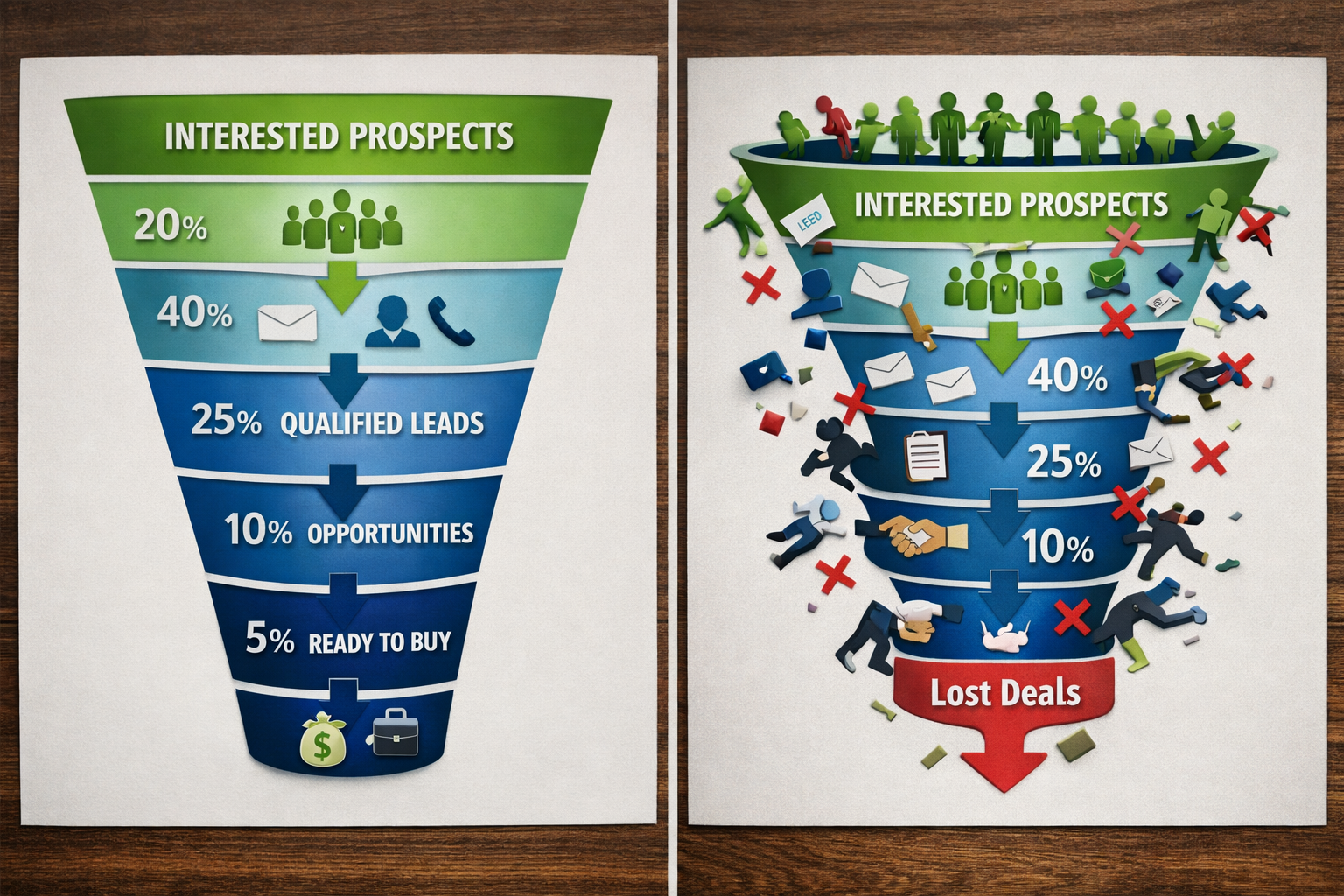
When prospects stop responding, it’s rarely because they lost interest in solving their problem. They stop responding because something in your communication made them uncomfortable or confused. Understanding this difference changes everything about how you follow up.
Interest looks like engagement without commitment. Someone downloads your free guide, attends your webinar, or asks questions about your services. They’re exploring options and gathering information. They like what they’re hearing, but they’re not ready to buy.
Intent looks like specific questions about implementation. They ask about pricing, timelines, or how you work with businesses like theirs. They want to understand the next steps and decision criteria. They’re moving from “Should I solve this problem?” to “Should I solve it with you?”
Why Prospects Go Silent
Most lost prospects disappear for one of these reasons:
You pushed too hard, too fast. They showed interest, so you immediately started talking about pricing, contracts, or implementation. This feels like pressure when they’re still in exploration mode.
Your message was unclear. They couldn’t quickly understand what you do, how you help, or what makes you different. Confusion kills momentum faster than anything else.
You overwhelmed them with information. You sent a 47-slide presentation when they just wanted to understand your basic approach. Too much detail early on feels like work.
You didn’t follow up consistently. One email isn’t enough. Most prospects need multiple touchpoints over weeks or months before they’re ready to move forward.
You treated everyone the same. The person just learning about their problem needs different information than someone ready to choose a vendor.
The Real Cost of Lost Prospects
When leads disappear, you lose more than just that potential sale. You lose the time invested in generating that lead, the marketing dollars spent to attract them, and the opportunity cost of not serving someone who actually needed your help.
More importantly, you lose momentum. Each disappearing prospect makes you question your approach, your pricing, and your value. This self-doubt shows up in your next prospect conversations, creating a cycle that gets harder to break.
How to Keep Prospects Engaged Instead of Lost

The key to preventing prospects from disappearing is matching your communication to their current mindset. This means different messages for different stages of their decision process.
For Interested Prospects (Not Ready to Buy)
Focus on education and value. Share insights about their industry, common challenges, or trends they should know about. Position yourself as a helpful resource, not a salesperson.
Ask about their situation. Instead of pitching your services, ask questions about their current challenges, what they’ve tried before, and what success would look like.
Provide next steps that don’t require commitment. Invite them to a webinar, send a relevant case study, or offer a brief consultation to discuss their specific situation.
Follow up consistently but gently. Space your communications 1-2 weeks apart. Share something valuable each time, not just “checking in.”
For Prospects with Intent (Ready to Evaluate)
Get specific about solutions. They want to know exactly how you would help their business. Share relevant case studies, detailed processes, and expected outcomes.
Address their decision criteria. Ask what factors they’re considering, who else is involved in the decision, and what their timeline looks like.
Make the next steps clear and easy. Propose specific meeting times, send a clear agenda, and explain exactly what happens next.
Follow up more frequently. When someone has intent, they expect more communication. Every 3-5 days is appropriate for active prospects.
Building Trust Without Pressure
Share client stories that match their situation. Instead of generic testimonials, tell specific stories about how you helped businesses facing similar challenges.
Be transparent about your process. Explain how you work, what clients can expect, and what success typically looks like. Mystery creates hesitation.
Acknowledge their concerns. Most prospects have specific worries about making the wrong choice. Address these directly rather than pretending they don’t exist.
Permit them to say no. When prospects feel they can easily walk away, they’re more likely to engage honestly about their real situation.
Why Your Current Follow-Up System Isn’t Working
Most small businesses lose prospects because they don’t have a real system for follow-up. They rely on memory, sticky notes, or basic CRM tools that don’t actually guide the conversation.
The problem with manual follow-up: You forget to follow up, you send the same message to everyone, or you don’t track what you’ve already shared. Prospects notice this lack of organization, and it affects their confidence in your business.
The problem with generic email sequences: Most automated systems send the same messages to everyone, regardless of their interest level or where they are in the decision process. This creates mismatched communication that drives people away.
The problem with scattered tools: When your website, email system, CRM, and scheduling tools don’t work together, prospects get confused by inconsistent experiences. They might fill out a form but never get added to your follow-up sequence, or they might get duplicate messages from different systems.
What Actually Works
A complete done-for-you system that handles the entire prospect journey. From the moment someone visits your website to the point where they become a client, every interaction should be planned and purposeful.
AI-powered lead capture that identifies interest level. Not all website visitors are the same. Your system should recognize the difference between casual browsers and serious prospects, then communicate accordingly.
Automated follow-up systems that feel personal. The right technology can send the right message at the right time, based on what each prospect has done and how they’ve responded.
All-in-one platform that eliminates confusion. When everything works together seamlessly, prospects have a smooth experience that builds confidence in your business.
How SalesHubHQ Solves the Lost Prospect Problem

We built SalesHubHQ specifically for small business owners who are tired of watching prospects disappear. Our complete done-for-you system handles the entire process from first website visit to closed sale.
We Build Everything For You
Free smart website built for you. We create a professional website designed specifically to capture leads and guide prospects through your sales process. No tech knowledge required on your part.
We build the website and content. Our team creates all the pages, writes the copy, and sets up the lead capture systems. You get a complete marketing presence that’s ready from day one.
AI-powered lead capture built in. Your website automatically identifies prospect interest level and captures contact information at the right moment in their visit.
Automated Systems That Actually Work
Follow-up sequences for different prospect types. Interested prospects get educational content and gentle nurturing. Prospects with intent get detailed information and clear next steps.
Leads captured and nurtured automatically. Every website visitor gets added to the appropriate follow-up sequence based on their behavior and interests.
Built and implemented for your business. We don’t just give you software to figure out. We build the entire system specifically for your business and make sure it works before you launch.
Why This Approach Works
Prospects get the right message at the right time. Instead of a generic follow-up, they receive communication that matches their current mindset and needs.
Nothing falls through the cracks. Every lead gets consistent follow-up, whether you’re busy with client work or out of the office.
You focus on closing, not chasing. When prospects are ready to talk, they’re already educated about your services and confident in your expertise.
Predictable growth system. Instead of wondering where your next client will come from, you have systems that consistently generate and nurture qualified leads.
The Real Difference This Makes
When you stop confusing interest with intent and start communicating appropriately for each, several things happen immediately:
Prospects stop disappearing. They stay engaged because they’re getting valuable information without feeling pressured to buy before they’re ready.
Conversations become easier. When prospects do reach out, they’re already educated about your services and understand how you can help them.
Your confidence increases. You stop second-guessing your value or your approach because you have a system that consistently works.
Revenue becomes predictable. Instead of feast-or-famine cycles, you have a steady flow of qualified prospects moving through your sales process.
The businesses we work with typically see a 40-60% improvement in prospect engagement within the first 60 days. More importantly, they stop losing sleep about where their next client will come from.
Conclusion
The difference between interest and intent isn’t just academic—it’s the key to stopping prospects from disappearing and building a predictable growth system for your business. When you match your communication to where prospects are in their decision process, they stay engaged instead of going silent.
Most small business owners try to solve this problem by chasing harder or sending more emails. The real solution is having systems that automatically deliver the right message to the right prospect at the right time. This requires more than just good intentions—it requires a complete platform that handles lead capture, nurturing, and follow-up seamlessly.
FAQ
Q: How long should I wait before following up with an interested prospect?
A: For interested prospects, wait 1-2 weeks between follow-ups. They need time to process information without feeling pressured. For prospects with intent, follow up every 3-5 days since they’re actively evaluating options.
Q: What’s the biggest mistake businesses make with prospect follow-up?
A: Treating all prospects the same. Sending sales-focused messages to someone who’s just exploring creates pressure and drives them away. Match your message to their current mindset.
Q: How many times should I follow up before giving up?
A: For interested prospects, continue gentle follow-up for 6-12 months with valuable content. For prospects with intent, follow up more frequently for 30-60 days, then shift to longer-term nurturing if they’re not ready.
Q: What type of content works best for interested prospects?
A: Educational content that helps them understand their problem better. Industry insights, trend reports, how-to guides, and case studies work well. Avoid anything that feels like a sales pitch.
Q: How can I tell if a prospect has moved from interest to intent?
A: They start asking specific questions about pricing, implementation, timelines, or your process. They may also request consultations, proposals, or references from other clients.
Q: What should I do if prospects stop responding completely?
A: First, review your recent communications for anything that might have felt pushy or confusing. Then send a brief, helpful message with no sales pressure. If still no response, move them to a longer-term nurturing sequence.
Q: Is it worth investing in automated follow-up systems?
A: Yes, but only if they’re sophisticated enough to send different messages based on prospect behavior and interest level. Generic automated sequences often do more harm than good.
Q: How do I build trust with prospects who seem hesitant?
A: Share specific stories about how you’ve helped similar businesses, be transparent about your process, and acknowledge their concerns directly. Permit them to say no, which paradoxically makes them more likely to engage.
Q: What’s the best way to re-engage prospects who went silent?
A: Send valuable content related to their industry or challenges without any sales message. A helpful article, relevant case study, or industry update can restart the conversation naturally.
Q: How important is timing in prospect communication?
A: Critical. The right message at the wrong time feels like pressure or irrelevance. Understanding where each prospect is in their decision process allows you to communicate at the right moment with the right information.

