
How to Make Your Business Feel Safe to Buyers
What Makes Prospects Question “Is This Business Safe to Contact?”
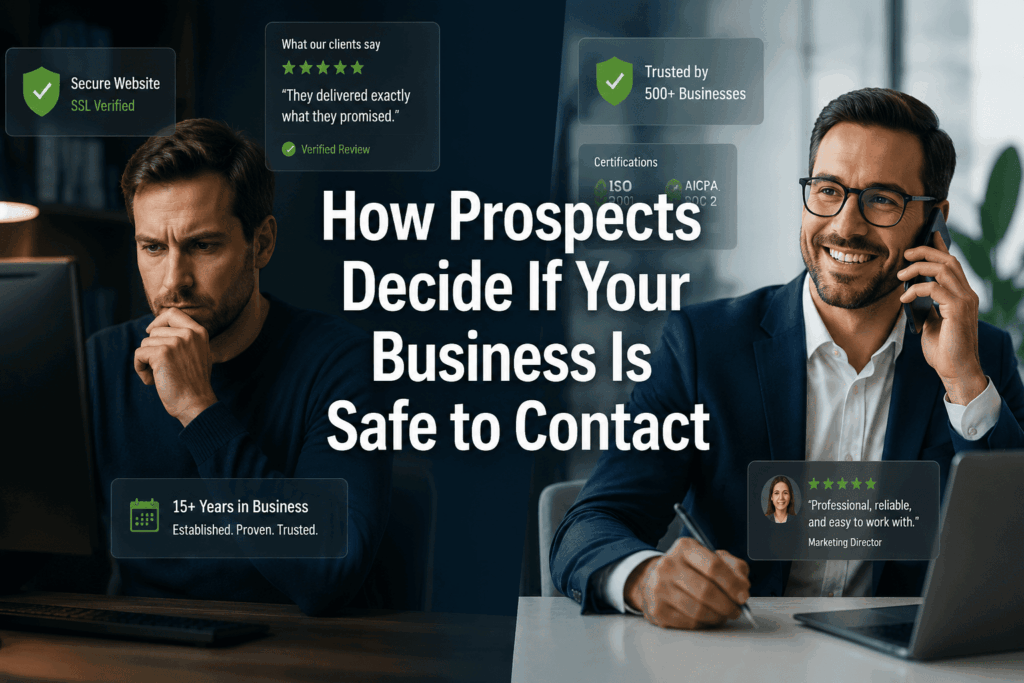
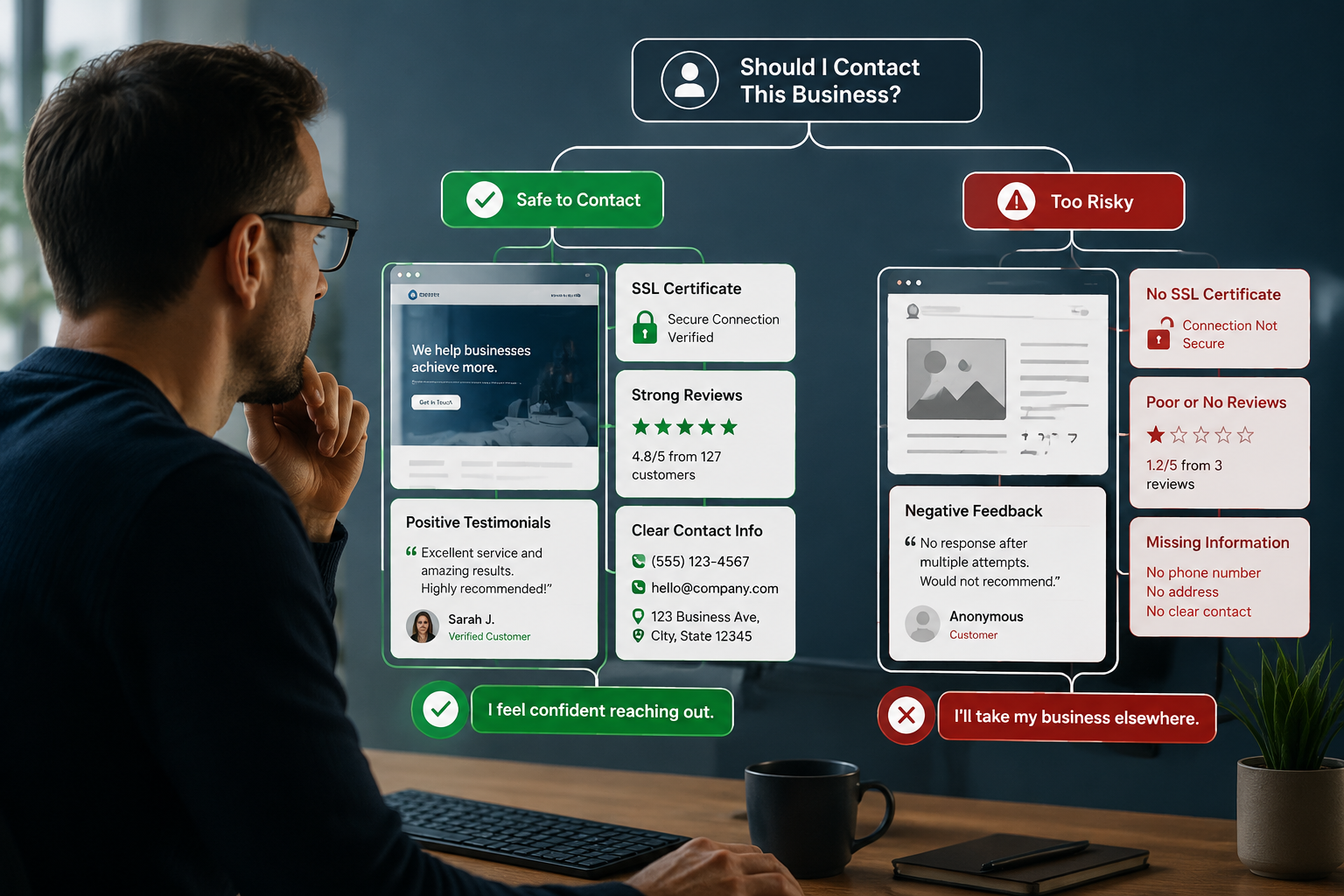
The moment a potential customer lands on your website, they’re running a mental risk assessment. They’re not just evaluating your product or service; they’re deciding if contacting you will lead to value or frustration.
Fear drives most buying decisions, especially in B2B transactions where the stakes feel higher. Prospects worry about wasting time on unqualified vendors, getting trapped in aggressive sales cycles, or working with companies that can’t deliver on their promises.
We see this hesitation constantly when we build systems for our clients. Before implementing our complete done-for-you system, many business owners tell us their biggest challenge isn’t generating traffic; it’s converting visitors who are clearly interested but won’t take the next step.
Here’s what prospects are really thinking when they evaluate your business:
• Will this company waste my time? – They want to know you’re legitimate and can actually help them
• Are they going to pressure me? – Fear of pushy sales tactics keeps many prospects from reaching out
• Can they actually deliver? – They need proof you’ve solved similar problems for similar businesses
• What’s this really going to cost? – Hidden pricing creates anxiety about budget surprises
• Will I look foolish to my boss? – B2B buyers especially fear recommending the wrong vendor
The businesses that understand this psychology and address these concerns upfront see dramatically higher contact rates. When we build websites and implement our AI-powered lead capture systems for clients, we focus heavily on these trust elements because they directly impact conversion rates.
How Website Design Impacts the “Is This Business Safe to Contact” Decision
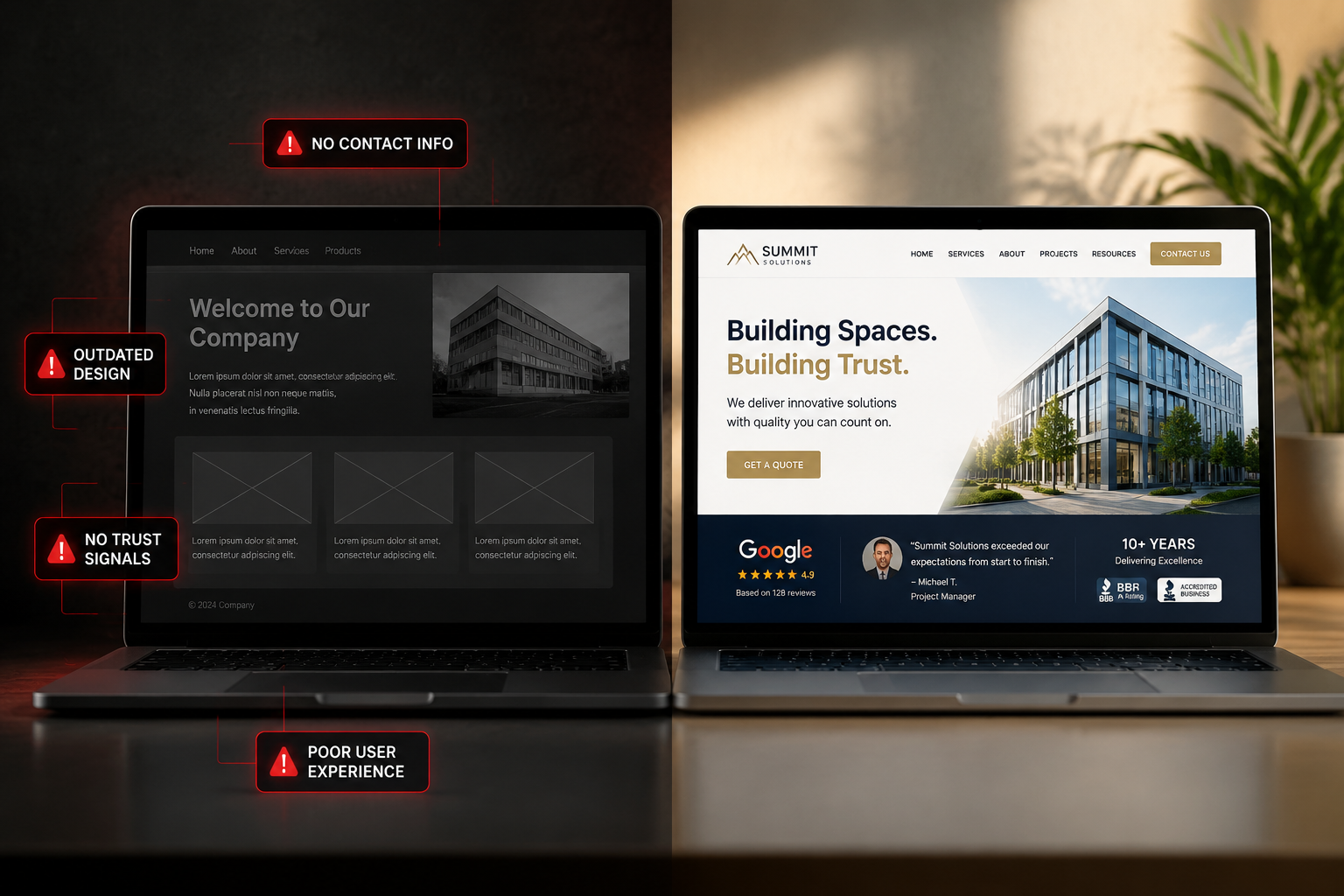
Your website design communicates professionalism before prospects read a single word. A clean, modern design suggests you pay attention to details and invest in your business—qualities prospects want in a vendor.
Poor website design triggers immediate red flags. Outdated layouts, broken links, or amateur graphics make prospects question your competence. If you can’t maintain a professional website, how can you deliver quality work for them?
When we create a free smart website built for you, we focus on elements that immediately signal trustworthiness:
Visual Trust Indicators
• Professional photography – Stock photos are fine, but they should look current and relevant
• Consistent branding – Colors, fonts, and styling should feel cohesive across all pages
• Clean navigation – Visitors should find what they need within 2-3 clicks
• Fast loading times – Slow sites suggest technical incompetence or lack of investment
• Mobile responsiveness – A broken mobile experience signals you’re behind the times
Content That Builds Confidence
• Clear value proposition – Visitors should understand what you do within 10 seconds
• Specific service descriptions – Vague language makes prospects question your expertise
• Process transparency – Explain how you work to reduce fear of the unknown
• Results and outcomes – Show what success looks like for your clients
The difference is dramatic. Our clients typically see 40-60% higher contact form completion rates after we implement their new website compared to their previous site. This isn’t just about aesthetics—it’s about psychology.
Common design mistakes that hurt trust:
- Using generic templates without customization
- Cluttered layouts with too many competing elements
- Outdated copyright dates or old blog posts
- Broken contact forms or missing contact information
- Inconsistent messaging between pages
Remember, your website often serves as the first impression prospects meet. Make sure it represents your business the way you’d want your best salesperson to.
Social Proof: The Strongest Signal for “Is This Business Safe to Contact”
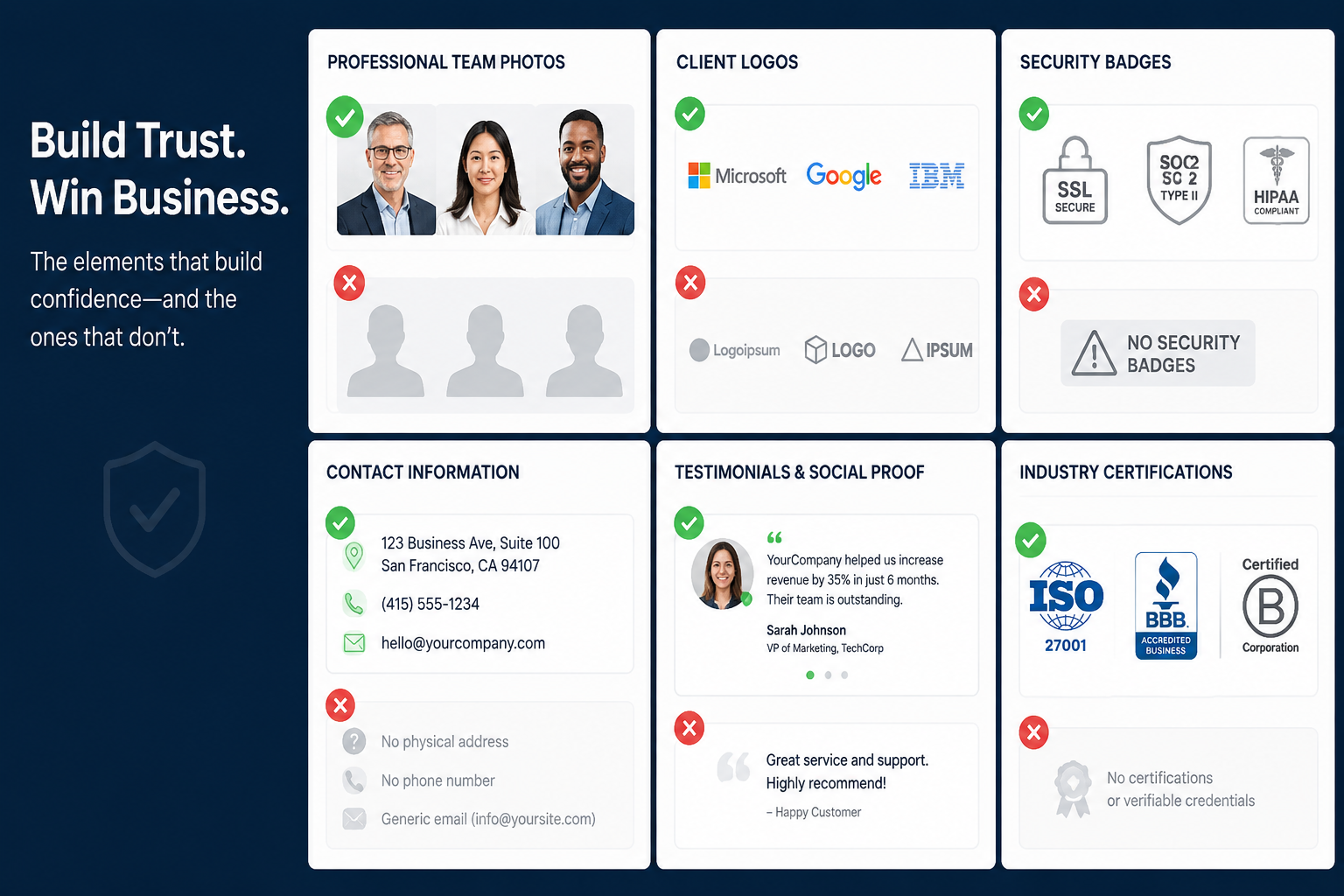
Nothing builds confidence faster than seeing that other businesses have successfully worked with you. Social proof addresses the core question prospects have: “Has this company actually delivered results for businesses like mine?”
Testimonials work because they shift risk. Instead of prospects taking your word for it, they hear from peers who’ve already made the decision and seen positive outcomes. This dramatically reduces the perceived risk of reaching out.
When we build the website and content for our clients, we always include multiple forms of social proof because different prospects respond to different types of validation:
Most Effective Social Proof Elements
Client testimonials with specifics – Generic praise doesn’t work. Effective testimonials include:
• The client’s name, title, and company
• Specific results or outcomes achieved
• The problem you solved for them
• How the experience exceeded expectations
Case studies with data – Detailed success stories that show:
• The client’s initial challenge
• Your approach to solving it
• Measurable results achieved
• Timeline for seeing results
Client logos and brands – Visual recognition of companies you’ve worked with, especially if prospects know these brands
Industry credentials and certifications – Professional qualifications that demonstrate expertise and ongoing education
Awards and recognition – Third-party validation from industry organizations
What Makes Social Proof Believable
Authenticity beats perfection. Prospects can spot fake testimonials immediately. Real testimonials often include minor imperfections or specific details that make them credible.
Relevance matters more than prestige. A testimonial from a similar business carries more weight than one from a Fortune 500 company if your prospect runs a small firm.
Recent dates build confidence. Old testimonials suggest you haven’t had satisfied clients lately.
Our automated follow-up systems actually help generate more testimonials by systematically asking satisfied clients to share their experience. This creates a steady stream of fresh social proof that keeps your credibility current.
Pro tip: Include testimonials that address common objections. If prospects typically worry about pricing, include testimonials that mention value. If they worry about the timeline, include testimonials about your responsiveness.
The goal isn’t to impress prospects with how great you are—it’s to help them feel confident that working with you is a safe decision.
Clear Communication: Reducing Risk in the Contact Decision
Confusing or vague messaging makes prospects work harder to understand what you do and how you can help them. When people have to guess, they usually choose not to contact you at all.
Clear communication reduces perceived risk by eliminating uncertainty. Prospects feel more confident reaching out when they understand exactly what to expect from the interaction.
This is why our all-in-one platform includes messaging frameworks that speak directly to prospects’ concerns. We’ve found that businesses using clear, benefit-focused language see significantly higher contact rates than those using industry jargon or vague descriptions.
Elements of Risk-Reducing Communication
Specific service descriptions that explain:
• What exactly do you deliver
• Who do you serve best
• How your process works
• What results clients can expect
Transparent next steps that outline:
• What happens when someone contacts you
• How long initial conversations typically take
• What information you’ll need from them
• When they can expect to hear back
Clear contact preferences that specify:
• Best ways to reach you
• Response time expectations
• What information to include in their message
• Whether you offer free consultations
Pricing transparency when possible:
• Starting price ranges, if applicable
• What’s included in base services
• Additional costs they should expect
• How you structure engagements
Common Communication Mistakes That Increase Risk
Using insider language – Industry jargon makes prospects feel excluded and uncertain about whether you serve businesses like theirs.
Making bold claims without proof – Statements like “guaranteed results” or “industry-leading” without supporting evidence create skepticism.
Focusing on features instead of outcomes – Prospects care more about what you’ll accomplish for them than how you do it.
Hiding important information – Making prospects hunt for pricing, contact info, or service details creates frustration and distrust.
When we implement our predictable growth system for clients, we always start with messaging that directly addresses the prospect’s perspective. Instead of talking about what the business does, we focus on what the prospect gets and why it matters to them.
Example of risk-reducing vs. risk-increasing language:
Risk-increasing: “We leverage cutting-edge methodologies to optimize your operational efficiency.”
Risk-reducing: “We help manufacturing companies reduce waste by 15-30% within 90 days using proven process improvements.”
The second version tells prospects exactly who you serve, what you deliver, and when they’ll see results. This clarity makes you feel much safer.
The Psychology Behind Contact Hesitation
Understanding why prospects hesitate to contact businesses helps you address their concerns proactively. Most hesitation comes from fear, fear of wasting time, being pressured, or making the wrong choice.
Loss aversion drives much of this behavior. Prospects focus more on what they might lose (time, money, credibility) than what they might gain. Your job is to minimize perceived losses while making the potential gains feel more certain.
We see this psychology play out constantly in the systems that actually work we build for clients. The businesses that acknowledge and address prospect fears upfront consistently generate more qualified leads than those that focus only on benefits.
Core Fears That Stop Prospects from Contacting You
Fear of aggressive sales tactics – Many prospects have been burned by pushy salespeople and now avoid any situation that might lead to pressure.
Fear of wasting time – Busy decision-makers worry about spending time on vendors who can’t actually help them or aren’t a good fit.
Fear of looking foolish – Especially in B2B situations, prospects worry about recommending a vendor that doesn’t deliver, which could hurt their reputation internally.
Fear of hidden costs – Concerns about pricing surprises or being locked into expensive contracts they can’t afford.
Fear of the unknown – Uncertainty about your process, timeline, or what working with you actually involves.
How to Address These Fears Proactively
Set clear expectations about your sales process:
• Explain that initial conversations are consultative, not sales-focused
• Mention that you’ll ask questions to determine if you’re a good fit
• Clarify that there’s no obligation to move forward
Provide multiple ways to engage with low commitment:
• Offer valuable resources they can download first
• Suggest starting with a brief phone call vs. a long meeting
• Provide email as an option for initial contact
Share your qualification criteria:
• Explain what types of businesses you work with best
• Mention situations where you’d refer them to someone else
• Show that you’re selective about who you work with
Be transparent about your approach:
• Outline your typical process from first contact to engagement
• Explain how you determine pricing
• Share what information you’ll need to provide accurate recommendations
Our automated follow-up systems are designed with this psychology in mind. Instead of immediately pushing for a meeting, they provide value and build trust over time, allowing prospects to engage when they feel ready.
The key insight: Prospects don’t just want to know if you can help them—they want to know if the process of finding out will be worth their time and comfortable for them.
Building Trust Through Automated Systems
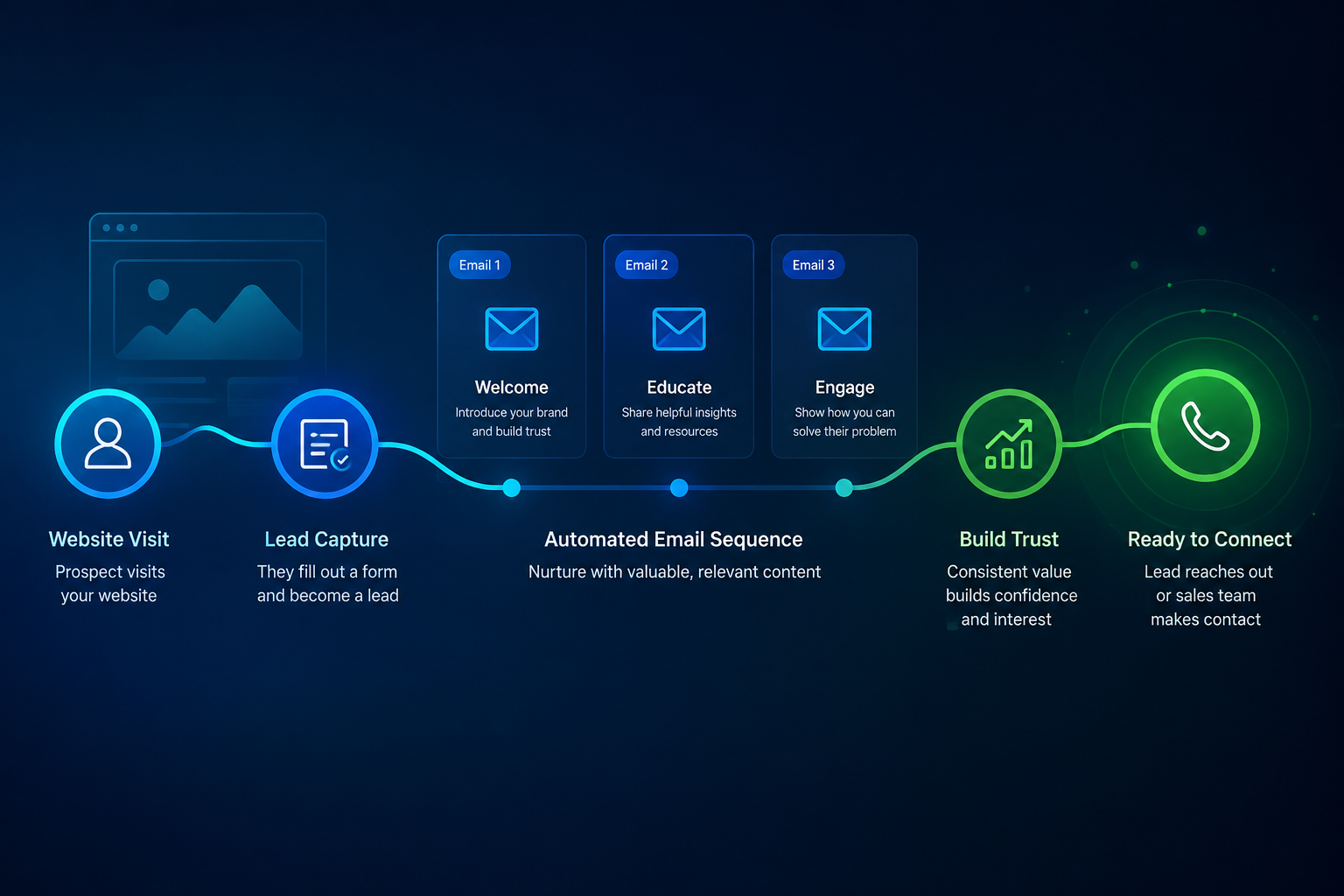
Many business owners worry that automation feels impersonal and might hurt trust-building. The opposite is actually true when done correctly. Well-designed automated systems can nurture trust more consistently than manual follow-up because they ensure every prospect receives the same high-quality experience.
Automation builds trust through consistency. When prospects receive valuable, relevant information at predictable intervals, it demonstrates reliability and professionalism—two key trust factors.
This is exactly why our leads captured and nurtured automatically approach works so well for clients. The system ensures that every prospect gets the attention and information they need to feel confident about moving forward, without requiring constant manual effort from the business owner.
How Automated Follow-Up Reduces Contact Hesitation
Provides value before asking for anything – Automated sequences can share helpful resources, insights, or tools that demonstrate your expertise without any sales pressure.
Maintains consistent communication – Regular touchpoints keep your business top-of-mind while prospects are evaluating their options.
Allows prospects to engage at their own pace – People can consume your content and respond when they’re ready, reducing pressure and increasing comfort.
Demonstrates your systems and processes – A well-organized follow-up sequence shows prospects that you’re detail-oriented and professional in how you handle relationships.
Key Elements of Trust-Building Automation
Educational content that addresses common concerns:
• Industry insights that demonstrate your expertise
• Case studies that show how you’ve helped similar businesses
• Process explanations that reduce uncertainty about working with you
• Answers to frequently asked questions
Personalization based on prospect behavior:
• Different content tracks for different types of businesses
• Responses triggered by specific actions (like downloading a resource)
• Relevant examples and case studies for their industry
Clear value in every communication:
• Each email or message should provide something useful
• Avoid purely promotional content in early touchpoints
• Share insights they can implement even if they don’t work with you
Easy ways to engage at different levels:
• Options to schedule calls, ask questions, or request more information
• Multiple contact methods (email, phone, contact forms)
• Clear next steps that don’t feel overwhelming
What Makes Automated Follow-Up Feel Personal
Relevant timing – Messages that arrive when prospects are likely thinking about their challenges feel more thoughtful than random outreach.
Specific content – Generic messages feel automated, but content that addresses their specific situation feels personal even when it’s systematically delivered.
Appropriate frequency – Too much communication feels pushy, while too little allows them to forget about you. The right balance maintains engagement without being overwhelming.
Human touches – Automated systems work best when they feel like they come from a real person who understands their business.
Our clients using these built and implemented for your business systems typically see 3-4x higher response rates compared to manual follow-up because the automation ensures consistent, valuable communication that builds trust over time.
The bottom line: Prospects feel safer contacting businesses that demonstrate organization, consistency, and genuine interest in helping them succeed. Automated systems, when done well, showcase all of these qualities better than sporadic manual outreach.
Industry-Specific Trust Signals
Different industries require different types of credibility markers. What makes a law firm seem trustworthy differs significantly from what builds confidence in a marketing agency or manufacturing consultant.
Understanding your industry’s specific trust requirements helps you prioritize the right credibility elements for your target audience. Generic trust-building approaches often miss the mark because they don’t address industry-specific concerns.
When we develop our ready-from-day-one systems for clients, we always research the trust signals that matter most in their specific industry. This targeted approach generates better results than one-size-fits-all credibility building.
Professional Services Trust Signals
Legal, accounting, and consulting firms need:
• Professional credentials and certifications prominently displayed
• Bar admissions, CPA licenses, or relevant professional memberships
• Years of experience and specific practice areas
• Case results or client outcomes (where ethically permissible)
• Professional headshots and team bios
• Clear fee structures or billing approaches
Healthcare and medical services require:
• Medical licenses and board certifications
• Hospital affiliations and medical school credentials
• Patient testimonials focusing on care quality and outcomes
• Insurance acceptance and payment options
• HIPAA compliance and privacy policies
• Professional associations and continuing education
Technical and Manufacturing Trust Signals
Engineering and technical services benefit from:
• Industry certifications (ISO, Six Sigma, etc.)
• Project portfolios with specific technical achievements
• Safety records and compliance certifications
• Equipment and facility capabilities
• Technical team qualifications and experience
• Quality control processes and standards
Manufacturing and industrial services need:
• Facility certifications and quality standards
• Equipment capabilities and capacity information
• Safety records and compliance history
• Client testimonials focusing on reliability and delivery
• Industry experience and specializations
• Financial stability indicators
Service-Based Business Trust Signals
Marketing and creative agencies should highlight:
• Portfolio of work with measurable results
• Client testimonials focusing on ROI and outcomes
• Team credentials and industry experience
• Case studies with specific performance metrics
• Industry awards and recognition
• Process transparency and communication methods
IT and technology services require:
• Security certifications and compliance standards
• Technical certifications from major vendors
• Uptime guarantees and service level agreements
• Client testimonials about reliability and support
• Team qualifications and ongoing training
• Disaster recovery and backup procedures
Adapting Trust Signals to Your Market
Research your competitors to understand what credibility markers are standard in your industry. You need to meet these baseline expectations before differentiating yourself.
Survey your best clients about what initially made them feel confident about working with you. Their insights often reveal trust factors you hadn’t considered.
Monitor industry publications to stay current on changing standards, regulations, or expectations that might affect how prospects evaluate vendors.
Test different approaches to see which trust signals resonate most with your specific target market. What works for one type of client might not work for another.
The goal isn’t to copy what everyone else does—it’s to understand the minimum credibility requirements for your industry, then find ways to exceed those expectations in meaningful ways.

