
Why Being Busy Is Secretly Killing Your Business Growth

What’s the Difference Between Marketing Activity and Actual Progress
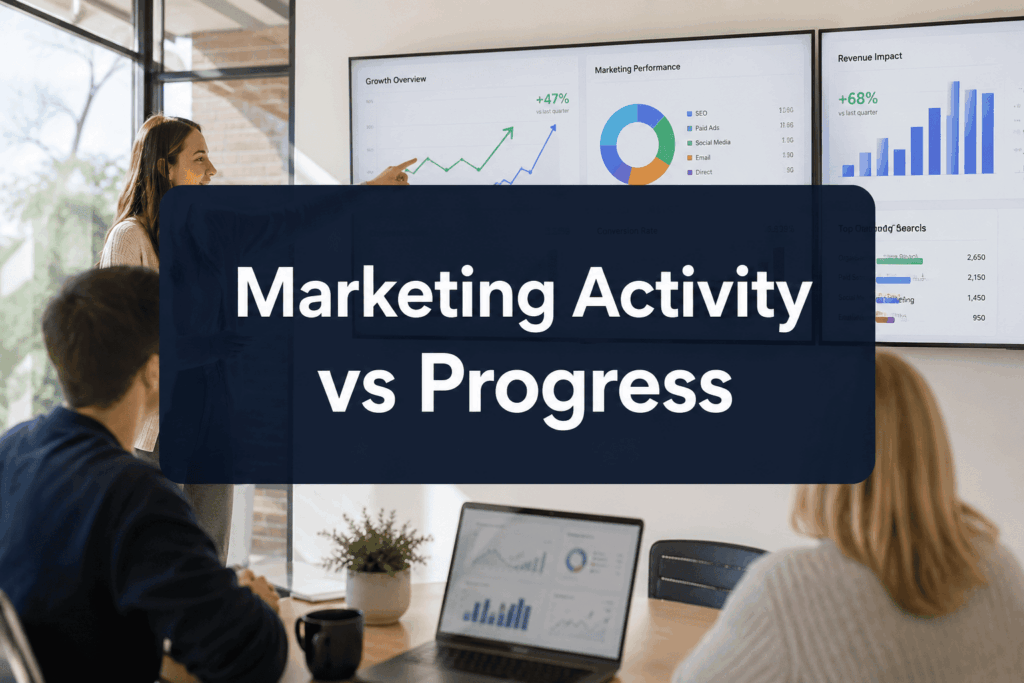
Marketing activity encompasses all the tasks, campaigns, and efforts you invest in promoting your business. Marketing progress, however, measures the concrete business outcomes those activities produce: qualified leads, sales conversions, and revenue growth.
The distinction matters because you can stay incredibly busy with marketing activities while making zero progress toward your business goals. We see this constantly with small business owners who spend hours creating social media posts, designing flyers, or attending networking events without any system to track whether these efforts actually bring in customers.
Real marketing progress shows up in your bank account. It’s measurable through metrics like cost per lead, conversion rates, customer lifetime value, and monthly recurring revenue. Activity might make you feel productive, but progress pays the bills.
Consider this example: A consulting firm posts daily on LinkedIn, sends weekly newsletters, and attends two networking events per month. That’s significant marketing activity. But if they can’t trace any new clients back to these efforts, they’re not making progress; they’re just staying busy.
The most successful small businesses we work with have learned to ruthlessly evaluate every marketing effort through one lens: does this directly contribute to getting more qualified leads and closing more sales? If not, it’s activity without progress.
How Do You Measure Marketing Progress Instead of Just Activity
Measuring marketing progress requires tracking business growth metrics that directly connect to revenue, not vanity metrics that simply show engagement or reach.
Focus on these progress indicators:
- Number of qualified leads generated monthly
- Cost per lead across different channels
- Lead-to-customer conversion rates
- Customer acquisition cost
- Monthly recurring revenue growth
- Customer lifetime value
Avoid these activity-focused vanity metrics:
- Social media followers or likes
- Website traffic without conversion tracking
- Email open rates without click-through measurement
- Number of posts published
- Event attendance without follow-up tracking
The key is building measurement systems that connect your marketing efforts to actual business outcomes. This means implementing proper tracking from the first customer touchpoint through the final sale.
We build these measurement systems into every client’s complete done-for-you system because without proper tracking, you’re flying blind. Our all-in-one platform automatically captures lead sources, tracks conversion rates, and provides clear ROI data so you know exactly which activities drive real progress.
Set up progress tracking by:
- Defining clear revenue goals for each quarter
- Identifying which marketing channels should contribute to those goals
- Implementing tracking systems that follow leads from source to sale
- Reviewing progress weekly, not just monthly or quarterly
- Eliminating activities that don’t show a measurable contribution to growth

Why Do Marketers Focus on Activity Instead of Results
Marketers often focus on activity instead of results because activities are easier to control and measure in the short term, while meaningful results take longer to materialize and require more sophisticated tracking systems.
The psychology behind activity focus:
- Activities provide immediate gratification and a sense of accomplishment
- It’s easier to count posts published than to track their business impact
- Many small business owners lack the systems to measure actual ROI
- Industry “best practices” often emphasize frequency over effectiveness
- Pressure to “stay active” on social media creates busy work
Systemic reasons for the activity trap:
- Most marketing tools measure engagement, not business outcomes
- Agencies often bill based on deliverables (activities) rather than results
- Small businesses typically lack dedicated marketing analysts
- The gap between marketing activity and sales results can span weeks or months
- Without proper attribution, it’s hard to connect activities to revenue
This is exactly why we build systems that actually work from day one. Our clients don’t get caught in the activity trap because we implement automated follow-up systems and tracking that connect every marketing effort directly to business results.
The solution is shifting your entire marketing approach from “what did we do this month” to “what did we achieve this month.” This requires better systems, clearer measurement, and the discipline to eliminate activities that don’t contribute to growth.
What Are Good Marketing Metrics That Show Real Progress
Good marketing metrics directly correlate with business growth and revenue generation, providing clear insight into your marketing productivity and return on investment.
Primary progress metrics for small businesses:
Lead Generation Metrics:
- Monthly qualified leads (not just any leads)
- Cost per qualified lead by channel
- Lead response time and follow-up completion rates
- Lead source attribution and quality scores
Conversion Metrics:
- Lead-to-customer conversion rate
- Sales cycle length
- Average deal size
- Win rate by lead source
Revenue Metrics:
- Customer acquisition cost (CAC)
- Customer lifetime value (CLV)
- Monthly recurring revenue growth
- Revenue per marketing dollar spent
Retention Metrics:
- Customer retention rate
- Repeat purchase frequency
- Referral rates and sources
- Net promoter score with revenue correlation
The best metrics tell a story about your business growth. For example, if your cost per lead is decreasing while your conversion rate is increasing, that indicates improving marketing productivity. If customer lifetime value is growing faster than acquisition costs, your marketing is driving profitable growth.
We track all these metrics automatically for our clients through our AI-powered lead capture and automated follow-up systems. This eliminates the guesswork and provides clear visibility into what’s actually working.
Avoid these common metric mistakes:
- Tracking website traffic without conversion measurement
- Focusing on social media engagement without sales correlation
- Measuring email open rates instead of click-to-conversion rates
- Counting marketing activities instead of business outcomes
How Can I Tell If My Marketing Team Is Actually Productive
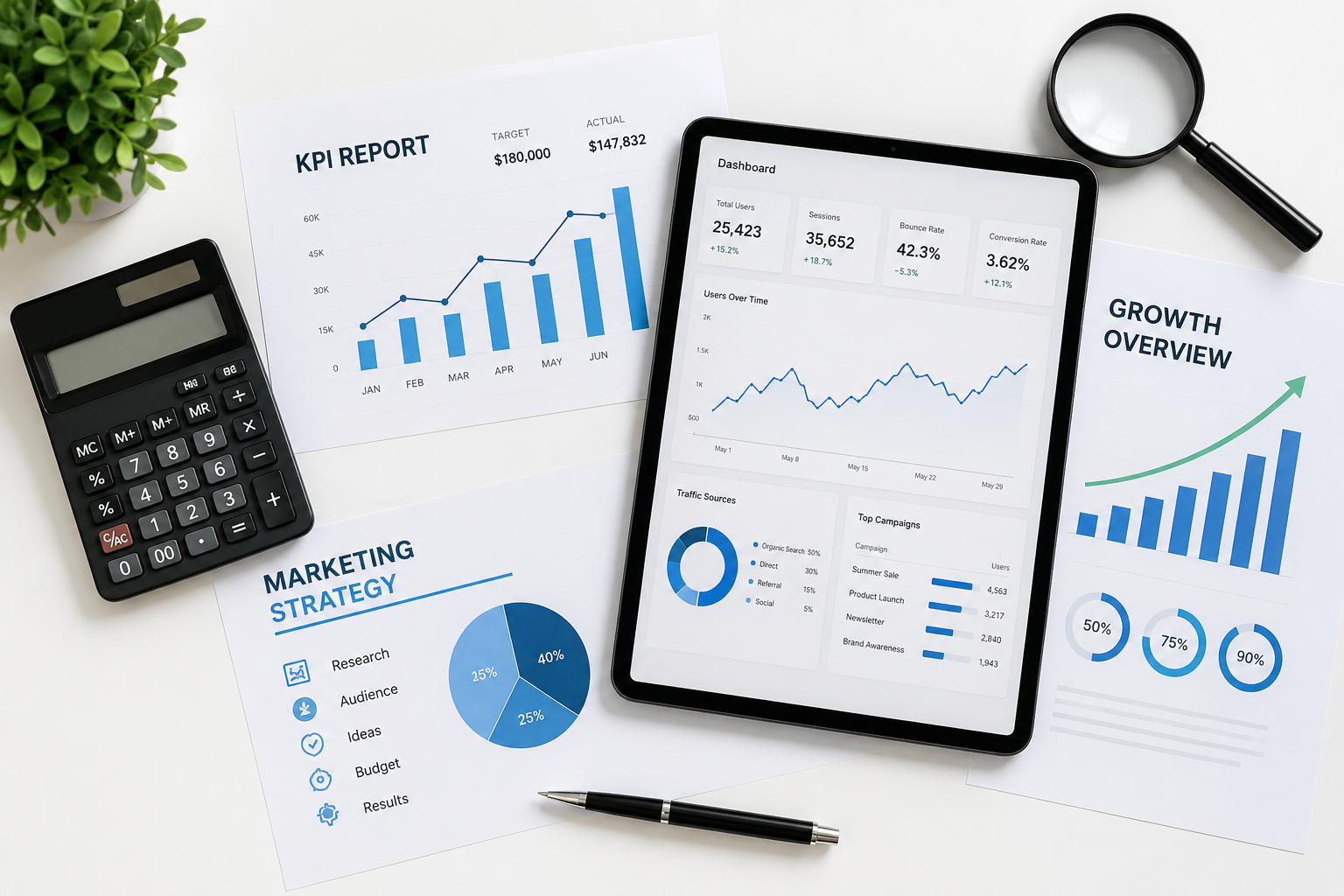
Marketing team productivity should be measured by their contribution to business growth metrics, not by the volume of marketing activities they complete or the hours they work.
Signs of productive marketing:
- Consistent monthly increase in qualified leads
- Improving conversion rates across marketing channels
- Decreasing customer acquisition costs over time
- Clear attribution between marketing efforts and closed sales
- Growing customer lifetime value
- Measurable ROI on marketing spend
Warning signs of unproductive marketing:
- Lots of content creation without lead generation results
- Increasing marketing spend without proportional revenue growth
- Focus on vanity metrics like followers or impressions
- Inability to trace customers back to specific marketing efforts
- Constant “testing” without implementing what works
- Marketing activities that don’t align with sales goals
Evaluate productivity through these questions:
- Can your marketing team show you exactly how many qualified leads they generated last month?
- Do they know the cost per lead for each marketing channel?
- Can they demonstrate which marketing efforts directly led to closed sales?
- Are they eliminating ineffective activities and doubling down on what works?
- Do they have systems in place for immediate lead follow-up?
The most productive marketing happens when you have systems that capture leads and nurture them automatically. This is why we provide a complete done-for-you system that includes AI-powered lead capture and automated follow-up systems; it ensures every marketing effort contributes to measurable business growth.
For small businesses without dedicated marketing teams, productivity means having marketing systems that work without constant manual effort. The goal is predictable lead generation that runs in the background while you focus on serving customers and closing deals.
What’s the Difference Between Being Busy and Being Effective in Marketing
Being busy in marketing means filling your time with marketing-related tasks, while being effective means focusing exclusively on activities that generate measurable business results and drive revenue growth.
Busy marketing looks like:
- Posting daily on multiple social media platforms without a strategy
- Attending networking events without follow-up systems
- Creating content because “you should” rather than because it drives leads
- Running promotions without measuring their profitability
- Constantly switching between different marketing tactics
- Spending hours on design and creative work that doesn’t convert
Effective marketing looks like:
- Implementing systems that consistently generate qualified leads
- Focusing on 2-3 marketing channels that produce measurable ROI
- Creating content specifically designed to attract your ideal customers
- Running campaigns with clear success metrics and profit goals
- Doubling down on activities that show proven results
- Automating repetitive tasks to focus on strategy and optimization
The difference comes down to intentionality and measurement. Effective marketers eliminate activities that don’t directly contribute to business growth, no matter how “important” they seem or how much industry experts recommend them.
We see this constantly with small business owners who come to us exhausted from years of busy marketing work. They’ve been posting, networking, and creating content, but can’t point to specific customers those efforts brought in. That’s when we implement our predictable growth system that focuses exclusively on activities that generate qualified leads and sales.
Make the shift from busy to effective:
- Audit your current marketing activities and their measurable outcomes
- Eliminate any activity that doesn’t directly generate leads or sales
- Implement proper tracking for remaining activities
- Focus resources on the 20% of efforts driving 80% of results
- Automate successful processes to free up time for optimization
How Do You Avoid Vanity Metrics in Marketing
Avoiding vanity metrics requires focusing exclusively on business growth metrics that directly correlate with revenue and profit, while ignoring engagement numbers that don’t translate to paying customers.
Common vanity metrics to avoid:
- Social media followers, likes, and shares without conversion tracking
- Website traffic numbers without lead generation measurement
- Email newsletter subscribers without purchase behavior analysis
- Video views or content downloads without sales attribution
- Brand awareness surveys without revenue correlation
- Event attendance without follow-up conversion tracking
Replace vanity metrics with business metrics:
- Instead of followers, track leads generated from social media
- Instead of website traffic, measure conversion rate and cost per lead
- Instead of email subscribers, track email-to-sale conversion rates
- Instead of content views, measure content-to-customer attribution
- Instead of brand awareness, track market share and customer acquisition
- Instead of event attendance, measure events-to-sales conversion
The key is asking “so what?” after every metric. If someone tells you your social media post got 500 likes, ask “So what, did any of those likes become paying customers?” If your website traffic increased 50%, ask “so what, did that translate to more qualified leads?”
This is exactly why our all-in-one platform focuses on metrics that matter for business growth. We track leads captured automatically, measure conversion rates at every stage, and provide clear ROI data, so you never get distracted by vanity metrics.
Implement vanity-metric filters:
- Only track metrics that connect to revenue within 90 days
- Require every marketing report to show cost per lead and conversion rates
- Eliminate any metric that can’t be traced to actual customer acquisition
- Focus team discussions on business outcomes, not marketing activities
- Set goals based on revenue targets, not engagement targets
What Marketing Activities Don’t Actually Drive Business Growth
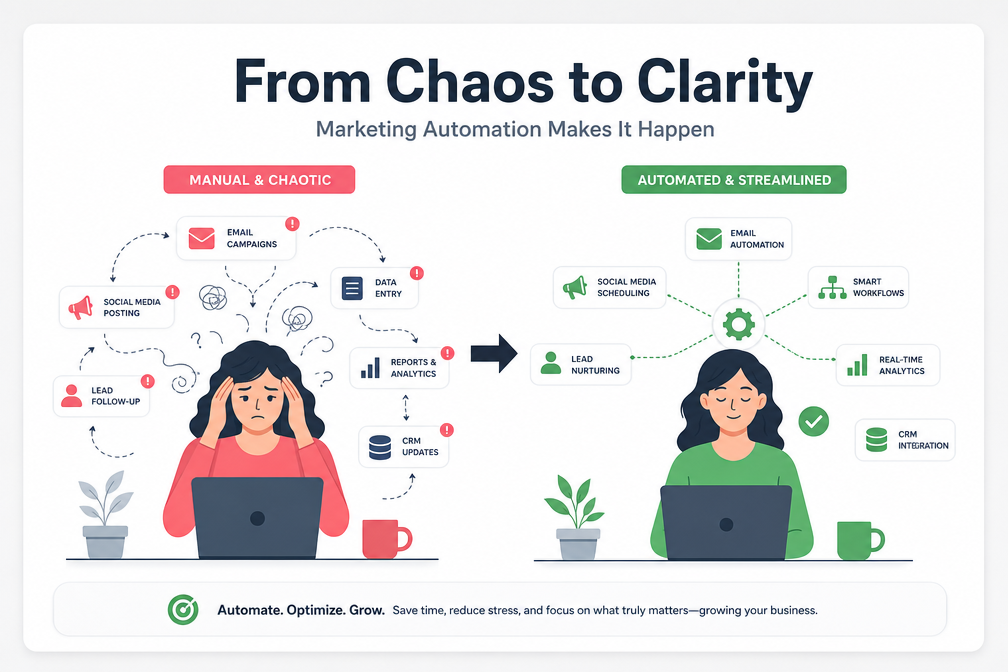
Many traditional marketing activities consume significant time and budget without generating qualified leads or driving measurable business growth, especially for small B2B service companies.
Low-impact activities that feel productive:
- Generic social media posting without lead capture systems
- Networking events without structured follow-up processes
- Content creation focused on entertainment rather than lead generation
- Broad advertising without specific targeting or conversion tracking
- Email newsletters that don’t include clear calls-to-action
- Website updates that don’t improve conversion rates
Why these activities persist despite poor ROI:
- They’re easy to measure in terms of completion (posts published, events attended)
- Industry “experts” recommend them as best practices
- They provide immediate gratification and a sense of accomplishment
- They don’t require sophisticated tracking or measurement systems
- They feel like “real marketing” even when they don’t drive results
Activities that consistently drive growth for small businesses:
- Targeted lead generation campaigns with immediate follow-up
- Content marketing designed specifically to attract ideal customers
- Email sequences that nurture leads toward purchasing decisions
- Referral systems that turn customers into active promoters
- Strategic partnerships with complementary businesses
- Automated systems that capture and qualify leads 24/7
The most successful small businesses we work with have eliminated the busy work and focus exclusively on activities that generate predictable results. This is why we build the website and content specifically designed for lead generation, not just brand awareness.
Our clients avoid these growth-killing activities because we provide a complete done-for-you system that includes only proven lead generation and conversion strategies. No tech knowledge required; everything is built and implemented for your business from day one.
How Should I Set Marketing Goals Based on Progress, Not Activity
Setting progress-based marketing goals requires defining specific business outcomes you want to achieve, then working backward to identify the marketing activities and metrics that will drive those results.
Progress-based goal framework:
- Start with revenue targets: Define specific monthly or quarterly revenue goals
- Calculate lead requirements: Determine how many qualified leads you need to hit revenue targets
- Set conversion benchmarks: Establish target conversion rates at each stage of your sales process
- Define cost parameters: Set maximum cost per lead and customer acquisition cost limits
- Create timeline milestones: Break annual goals into monthly progress checkpoints
Example of progress-based goals:
- Generate 50 qualified leads per month (not “post 20 times on social media”)
- Achieve 15% lead-to-customer conversion rate (not “send weekly newsletters”)
- Maintain $200 cost per lead across all channels (not “attend 4 networking events”)
- Increase customer lifetime value to $5,000 (not “create 10 blog posts monthly”)
Avoid activity-based goals like:
- Number of social media posts or followers
- Frequency of email sends or newsletter subscribers
- Amount of content created or events attended
- Website traffic increases without conversion requirements
- Brand awareness metrics without sales correlation
The key is ensuring every marketing goal directly connects to business growth. If you can’t draw a clear line from the goal to increased revenue, it’s probably an activity goal disguised as a progress goal.
This approach is built into our predictable growth system. We help clients set realistic lead generation targets based on their revenue goals, then implement the automated systems needed to hit those targets consistently.
Monthly goal-setting process:
- Review the previous month’s lead generation and conversion performance
- Identify which activities drove the most qualified leads
- Set next month’s lead targets based on sales capacity and revenue goals
- Allocate marketing budget to activities with proven ROI
- Eliminate or reduce activities that didn’t contribute to growth
What Are Common Mistakes When Measuring Marketing Productivity
The most common mistakes in measuring marketing productivity stem from focusing on activities rather than outcomes, using metrics that don’t correlate with business growth, and failing to implement proper attribution systems.
Critical measurement mistakes:
Tracking the wrong metrics:
- Measuring social media engagement instead of social media lead generation
- Focusing on website traffic without conversion rate analysis
- Counting content pieces created rather than content-to-customer attribution
- Tracking email open rates without measuring email-to-sale conversion
- Measuring brand awareness without revenue correlation
Poor attribution and tracking:
- Failing to track lead sources from first touch to final sale
- Using last-click attribution that ignores the full customer journey
- Not implementing proper UTM codes and conversion tracking
- Lacking systems to connect marketing activities to closed deals
- Missing the gap between marketing-qualified leads and sales-qualified leads
Timing and reporting errors:
- Expecting immediate results from long-term marketing strategies
- Not accounting for the typical sales cycle length in measurement
- Reporting on activities weekly, but outcomes only quarterly
- Failing to track lifetime value and focusing only on the initial purchase
- Not measuring retention and repeat purchase rates
System and process failures:
- Using multiple disconnected tools that don’t share data
- Lacking automated lead scoring and qualification systems
- Not implementing immediate follow-up processes for new leads
- Missing integration between marketing and sales data
- Failing to track customer acquisition cost accurately
We eliminate these measurement mistakes by providing an all-in-one platform that tracks everything automatically. Our clients get accurate attribution, proper lead scoring, and clear ROI reporting without having to manage multiple systems or worry about data integration.
Fix measurement mistakes by:
- Implementing end-to-end tracking from marketing touch to closed sale
- Focusing exclusively on metrics that correlate with revenue growth
- Setting up automated systems that capture and score leads properly
- Creating monthly reports that show clear marketing ROI
- Eliminating vanity metrics from all marketing discussions and decisions
How Do You Balance Marketing Activities with Measurable Outcomes
Balancing marketing activities with measurable outcomes requires implementing systems that automatically track the business impact of every marketing effort while eliminating activities that don’t contribute to growth.
The 80/20 approach to marketing balance:
- Spend 80% of your marketing time and budget on activities with proven ROI
- Allocate 20% to testing new strategies and channels
- Measure everything, but make decisions based on business outcomes
- Eliminate activities that don’t show measurable results within 90 days
Create systematic balance:
Weekly evaluation process:
- Review lead generation numbers from all marketing activities
- Calculate the cost per lead for each marketing channel
- Identify which activities generated the most qualified prospects
- Adjust next week’s efforts based on performance data
- Eliminate or reduce low-performing activities
Monthly optimization cycle:
- Analyze conversion rates from marketing-qualified leads to customers
- Calculate the return on investment for each marketing channel
- Increase budget allocation to the highest-performing activities
- Test one new marketing approach while maintaining proven strategies
- Document what works for systematic replication
Quarterly strategic review:
- Evaluate overall marketing productivity against business growth goals
- Identify gaps between marketing activities and sales results
- Implement new systems or tools to improve measurement and automation
- Set next quarter’s goals based on proven marketing performance
- Eliminate any marketing activities that don’t show clear business impact
This systematic approach is exactly what we implement for our clients through our complete done-for-you system. Every marketing activity is designed for measurable results, with automated tracking and follow-up systems that ensure nothing falls through the cracks.
The goal is to reach a point where your marketing runs predictably in the background, generating qualified leads consistently while you focus on serving customers and growing your business. No tech knowledge required; we build and implement everything for you.
What Does Marketing Progress Look Like for a Small Business
Marketing progress for small businesses shows up as consistent, measurable improvements in lead generation, conversion rates, and revenue growth, with systems that work predictably without constant manual effort.
Quarterly progress indicators:
- Steady increase in monthly qualified leads (10-20% growth per quarter)
- Improving lead-to-customer conversion rates
- Decreasing cost per lead as systems optimize
- Growing customer lifetime value through better targeting
- Increasing referral rates from satisfied customers
- Measurable ROI on all marketing investments
Monthly progress markers:
- Consistent lead generation that meets or exceeds targets
- Automated follow-up systems that nurture prospects effectively
- Clear attribution showing which marketing efforts drive sales
- Improved sales cycle efficiency and shorter time-to-close
- Growing email list of qualified prospects, not just subscribers
- Positive trends in customer acquisition cost versus lifetime value
Weekly progress signals:
- New qualified leads entering your sales pipeline consistently
- Automated systems capturing and qualifying prospects 24/7
- Follow-up sequences are running smoothly without manual intervention
- Clear visibility into which marketing channels perform best
- Steady improvement in conversion rates at each stage of the sales process
What progress doesn’t look like:
- Sporadic lead generation with unpredictable dry spells
- Lots of marketing activity, but unclear business results
- Dependence on manual processes that consume significant time
- Inability to trace customers back to specific marketing efforts
- Constant switching between marketing tactics without clear measurement
- Marketing that requires constant attention to maintain results
Real progress means having marketing systems that work while you sleep. Our clients achieve this through our predictable growth system that includes automated lead capture, AI-powered follow-up, and clear tracking, all built and implemented without requiring any tech knowledge.
The ultimate measure of marketing progress for small businesses is predictability: knowing that your marketing will consistently generate qualified leads and support your revenue goals, month after month, without requiring constant manual effort or attention.
How Can Marketing Activity Trap Companies Into Wasting Their Budget
Marketing activity traps occur when companies invest significant time and money in tasks that feel productive but don’t generate measurable business results, creating a cycle of busy work that drains resources without driving growth.
Common budget-wasting activity traps:
Social media posting without strategy:
- Spending hours creating content that doesn’t generate leads
- Paying for social media management that focuses on engagement over conversion
- Boosting posts without proper targeting or conversion tracking
- Maintaining a presence on platforms where your customers don’t buy
Content creation without purpose:
- Producing blog posts, videos, or podcasts that don’t attract qualified prospects
- Creating content for SEO without understanding search intent or buyer behavior
- Developing marketing materials that don’t include clear calls-to-action
- Writing content that entertains but doesn’t educate prospects about your solutions
Event and networking activity without follow-up:
- Attending conferences and trade shows without systematic lead capture
- Sponsoring events that don’t provide measurable lead generation
- Networking without CRM systems to track and nurture new connections
- Speaking at events without systems to convert audience members to prospects
Technology and tool proliferation:
- Paying for multiple marketing tools that don’t integrate or provide clear ROI
- Implementing complex systems that require significant training and maintenance
- Subscribing to software based on features rather than business outcomes
- Maintaining tools that duplicate functionality or aren’t being used effectively
The compound cost of activity traps:
- Direct costs: staff time, software subscriptions, advertising spend
- Opportunity costs: missing revenue from more effective marketing approaches
- Hidden costs: complexity, training, system maintenance, and integration challenges
- Strategic costs: delayed growth, competitive disadvantage, and market share loss
We help small businesses escape these traps by providing a complete done-for-you system that eliminates the guesswork. Our all-in-one platform focuses exclusively on activities that generate qualified leads and drive measurable business growth, with everything built and implemented for you from day one.
Escape activity traps by:
- Auditing all current marketing expenses against lead generation results
- Eliminating any activity that can’t show a clear ROI within 90 days
- Implementing automated systems that work without constant manual effort
- Focusing the budget on proven lead generation and conversion strategies
- Choosing integrated solutions over multiple point solutions that don’t work together

