
Why Small Business Leads Go Cold + How to Fix Follow-Up

You know the feeling. A potential customer fills out your contact form, calls your office, or engages with your social media post. They seem genuinely interested. You’re excited about the opportunity. Then… crickets. They disappear—no returned calls, no email responses, nothing.
This cold leads problem isn’t unique to your business. We see it happen to small business owners across Metro Atlanta every single day. The frustrating part? These prospects were interested. They took action. They raised their hand and said, “I want to know more.”
So why do small business leads disappear even when they initially show interest? The answer might surprise you. It’s rarely about your product, your pricing, or your competition. It’s about the gaps in your follow-up process.
What Happens in Those Critical First Hours

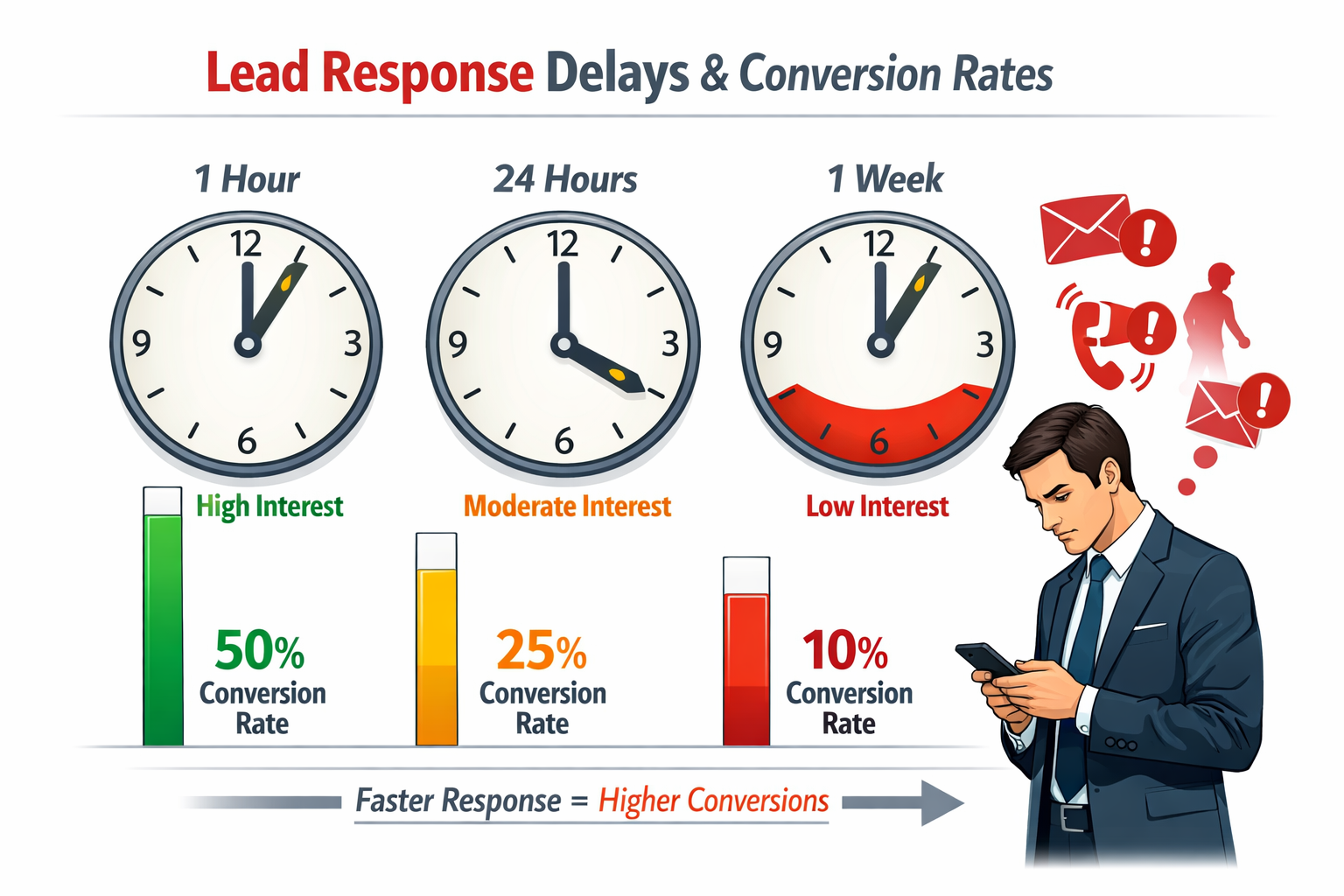
When someone expresses interest in your business, you have a narrow window of opportunity. Think of it like a hot coal: the longer you wait to act, the colder it gets.
Here’s what typically happens after someone becomes a lead:
Hour 1: The prospect is actively thinking about their problem and your potential solution. They’re checking their phone for your response. This is your golden hour.
Hours 2-6: Interest remains high, but other priorities start competing for their attention. They’re still receptive to your outreach.
Day 1: Interest begins to wane. They’ve moved on to other tasks, other research, or other potential solutions. You can still capture their attention, but it requires more effort.
Day 2-3: The prospect has likely forgotten the specific reason they reached out. They may not even remember your company name. Recovery becomes much harder.
Week 1+: The lead is effectively cold. They’ve either solved their problem elsewhere or decided it wasn’t urgent enough to pursue.
The harsh reality is that most small businesses don’t respond until day 2 or later. By then, even the most interested prospects have moved on.
The Response Time Reality Check
Let me share what we’ve observed working with hundreds of small businesses. The average response time to a new lead is 47 hours. That’s nearly two full business days.
Compare that to what prospects expect: 67% want a response within 4 hours, and 15% expect a response within 15 minutes.
This massive disconnect explains why leads go cold. It’s not that they weren’t interested; it’s that you didn’t respond while they were still hot.
The Most Common Lead Follow-Up Problems
Problem #1: The “I’ll Get to It Later” Trap
You’re in the middle of serving a current customer when a new lead notification pops up. You think, “I’ll handle this as soon as I finish here.” But then another customer needs attention, an urgent email comes in, or you get pulled into a meeting.
Before you know it, it’s 5 PM, and you’re heading home. The lead sits in your inbox overnight. The next morning brings new fires to fight, and the cycle continues.
Why this kills deals: Every hour you delay reduces your chances of connecting. The prospect’s problem hasn’t gone away, but their attention has shifted.
Problem #2: Playing Phone Tag Without a System
You finally call the prospect back, but they don’t answer. You leave a voicemail. They call back when you’re busy. You play phone tag for days, with each missed connection reducing momentum.
Without a systematic approach to scheduling callbacks and managing communication, interested prospects slip through the cracks.
Why this kills deals: Each failed connection attempt reduces the prospect’s confidence in your ability to serve them effectively.
Problem #3: The Generic Follow-Up Approach
When you do follow up, you send generic messages: “Just checking in” or “Following up on your inquiry.” These messages provide no value and feel like pushy sales tactics.
Prospects ignore these messages because they don’t address their specific needs or move the conversation forward.
Why this kills deals: Generic follow-up makes you sound like every other vendor. Prospects need to see value in every interaction.
Problem #4: No Clear Next Steps
You have a great initial conversation with a prospect, but you end the call without clearly defining what happens next. You say something vague like “I’ll send you some information” or “Let’s touch base next week.”
The prospect hangs up, unsure about the next step, and you forget to follow through on your vague promise.
Why this kills deals: Confusion kills momentum. Prospects need a clear path forward to maintain their engagement.
Problem #5: Inconsistent Follow-Up Frequency
You follow up once, maybe twice, then give up. Or you follow up too aggressively, sending daily emails that feel pushy. Without a structured follow-up sequence, you either annoy prospects or let them forget about you.
Why this kills deals: Inconsistent communication signals unprofessionalism and makes prospects question your reliability.
Why Manual Follow-Up Systems Always Fail
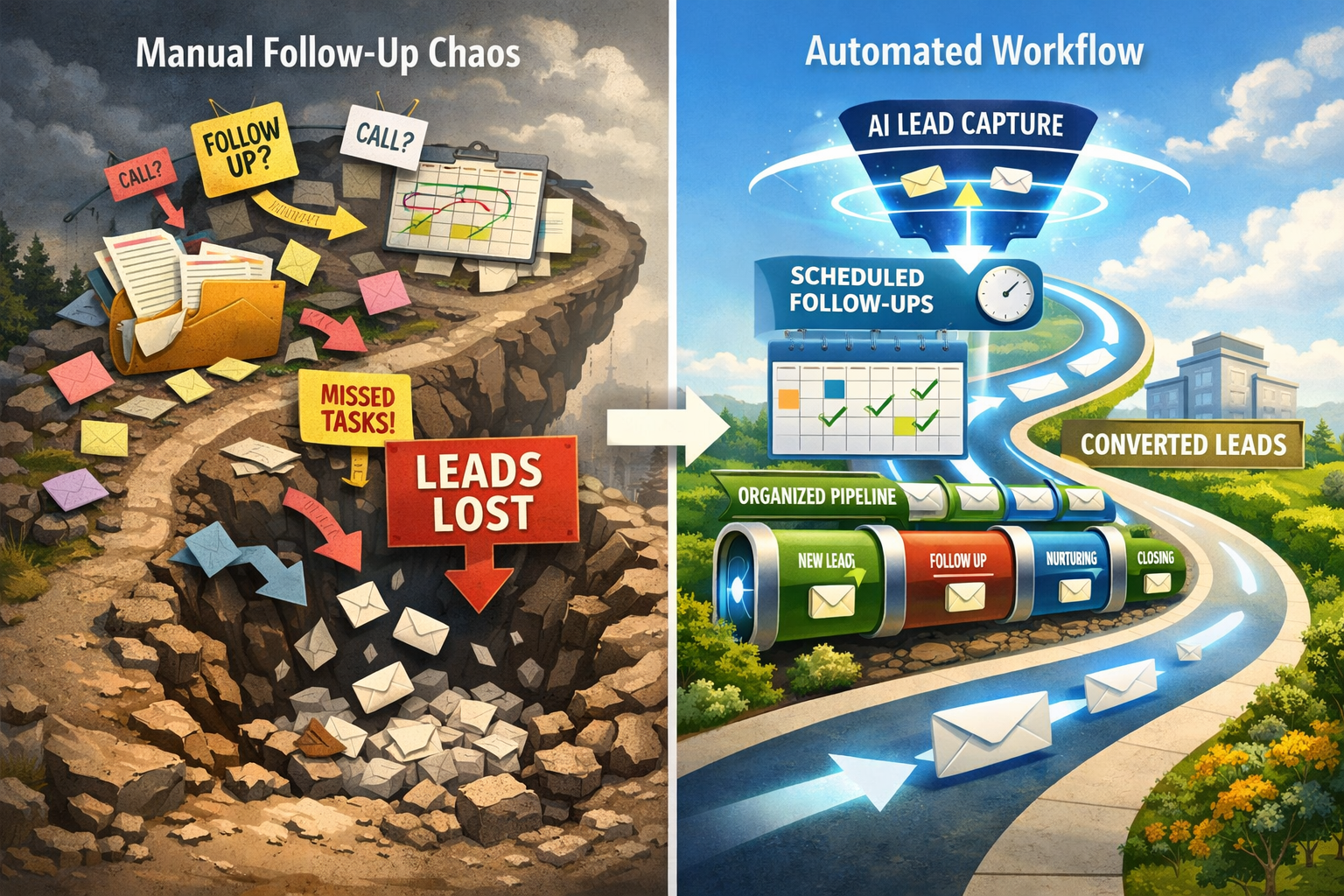
Here’s the uncomfortable truth: relying on your memory, sticky notes, or even spreadsheets to manage lead follow-up will always result in lost opportunities. It’s not a matter of if—it’s a matter of when.
The Human Factor Problem
You’re running a business, which means you’re constantly pulled in different directions. Customer service issues, employee questions, vendor problems, and a hundred other daily tasks compete for your attention.
In this environment, lead follow-up becomes reactive instead of proactive. You respond when you remember, not when it’s most effective.
The Scaling Problem
As your business grows, manual follow-up becomes impossible. You might be able to track 5-10 leads in your head, but what about 50? Or 100? The system breaks down, and leads fall through the cracks.
The Consistency Problem
Different team members handle follow-up differently. One person might call immediately, another might wait a day, and a third might send an email instead. This inconsistency creates a poor prospect experience and reduces conversion rates.
The Knowledge Problem
When leads go cold, you lose valuable information about why they didn’t convert. Without proper tracking and follow-up systems, you can’t identify patterns or improve your process.
The Real Cost of Losing Interested Prospects
Let’s put some numbers to this problem. Say you generate 20 leads per month, and your average customer value is $5,000. If you lose 60% of those leads due to poor follow-up (a conservative estimate), you’re losing $60,000 in potential revenue every month.
That’s $720,000 per year in lost opportunities—not from lack of interest, but from process failures.
Now multiply that by the lifetime value of customers, referrals, and repeat business. The real cost of the cold leads problem quickly reaches seven figures for many small businesses.
What Actually Works: Building Systems That Capture and Nurture

The solution to losing interested prospects isn’t working harder—it’s building systems that work automatically. Here’s what effective lead management looks like:
Immediate Response Systems
The moment someone expresses interest, they should receive an immediate response. This doesn’t mean you personally need to be available 24/7. It means having automated systems that acknowledge their interest and provide immediate value.
What this looks like: An automated email that arrives within minutes, thanking them for their interest and providing helpful information related to their specific inquiry.
Clear Communication Pathways
Every prospect should know exactly how and when they’ll hear from you next. Remove all ambiguity from the process.
What this looks like: “You’ll receive a detailed proposal via email within 2 business hours, and I’ll call you tomorrow at 10 AM to discuss any questions.”
Value-Driven Follow-Up Sequences
Instead of “checking in,” provide value in every interaction. Share relevant case studies, helpful tips, or industry insights that address their specific challenges.
What this looks like: A series of helpful emails that educate prospects about their problem and potential solutions, positioning you as a trusted advisor rather than a pushy salesperson.
Multi-Channel Nurturing
Different prospects prefer different communication methods. Some want phone calls, others prefer email, and some respond best to text messages. Effective systems use multiple channels strategically.
What this looks like: An initial email followed by a phone call, with text message reminders for scheduled appointments and social media retargeting to stay top-of-mind.
Automated Scheduling and Reminders
Remove friction from the process by making it easy for prospects to schedule time with you and ensuring they don’t forget about appointments.
What this looks like: Calendar links that allow prospects to book meetings directly, with automated reminders sent via email and text.
How We Solve This Problem for Our Clients
At SalesHubHQ, we’ve seen this problem destroy too many small businesses. That’s why we build complete done-for-you systems that capture and nurture leads automatically.
Here’s how our approach differs:
We Build Everything for You
Instead of giving you another tool to figure out, we build the entire system for your business. Your free smart website built for you, automated follow-up sequences, lead scoring systems—everything ready from day one.
AI-Powered Lead Capture
Our systems use artificial intelligence to identify and capture leads from multiple sources, ensuring no interested prospect slips through the cracks.
Automated Follow-Up That Feels Personal
We create customized follow-up sequences that provide value while maintaining a personal touch. Prospects receive helpful, relevant communication without you lifting a finger.
All-in-One Platform Management
No more juggling multiple tools and systems. Everything works together seamlessly because we build and implement it for your business as a unified system.
No Tech Knowledge Required
You don’t need to learn new software or become a marketing expert. The systems work automatically in the background while you focus on running your business and closing deals.
The Transformation You Can Expect
When you implement proper lead management systems, the results are dramatic:
- Immediate response times: Every lead gets acknowledged within minutes
- Consistent follow-up: No more forgotten prospects or missed opportunities
- Higher conversion rates: Proper nurturing turns more prospects into customers
- Better customer experience: Prospects feel valued and well-served from the first interaction
- Predictable growth: You can forecast revenue based on consistent lead conversion
- More time freedom: Automated systems handle follow-up while you focus on high-value activities
Our clients typically see a 40-60% increase in lead conversion within the first 90 days of implementation.
Taking Action: Your Next Steps
The cold leads problem won’t solve itself. Every day you wait, more interested prospects slip away to competitors who have better systems.
Here’s what you can do right now:
- Audit your current process: Track how long it takes you to respond to new leads this week
- Identify the biggest gaps: Where do most prospects get lost in your current system?
- Prioritize speed: Commit to responding to all new leads within 2 hours maximum
- Create clear next steps: End every prospect interaction with a specific, scheduled follow-up action
- Consider automation: Evaluate whether manual processes are costing you more than automated solutions
If you’re tired of watching interested prospects disappear and want a predictable growth system that actually works, we can help. Our team builds and implements complete lead management systems for small businesses throughout Metro Atlanta.
The leads captured and nurtured automatically approach means you never lose another interested prospect to poor follow-up timing or inconsistent communication.

