
What Small Business Buyers Look for Before They Contact You

Quick Answer
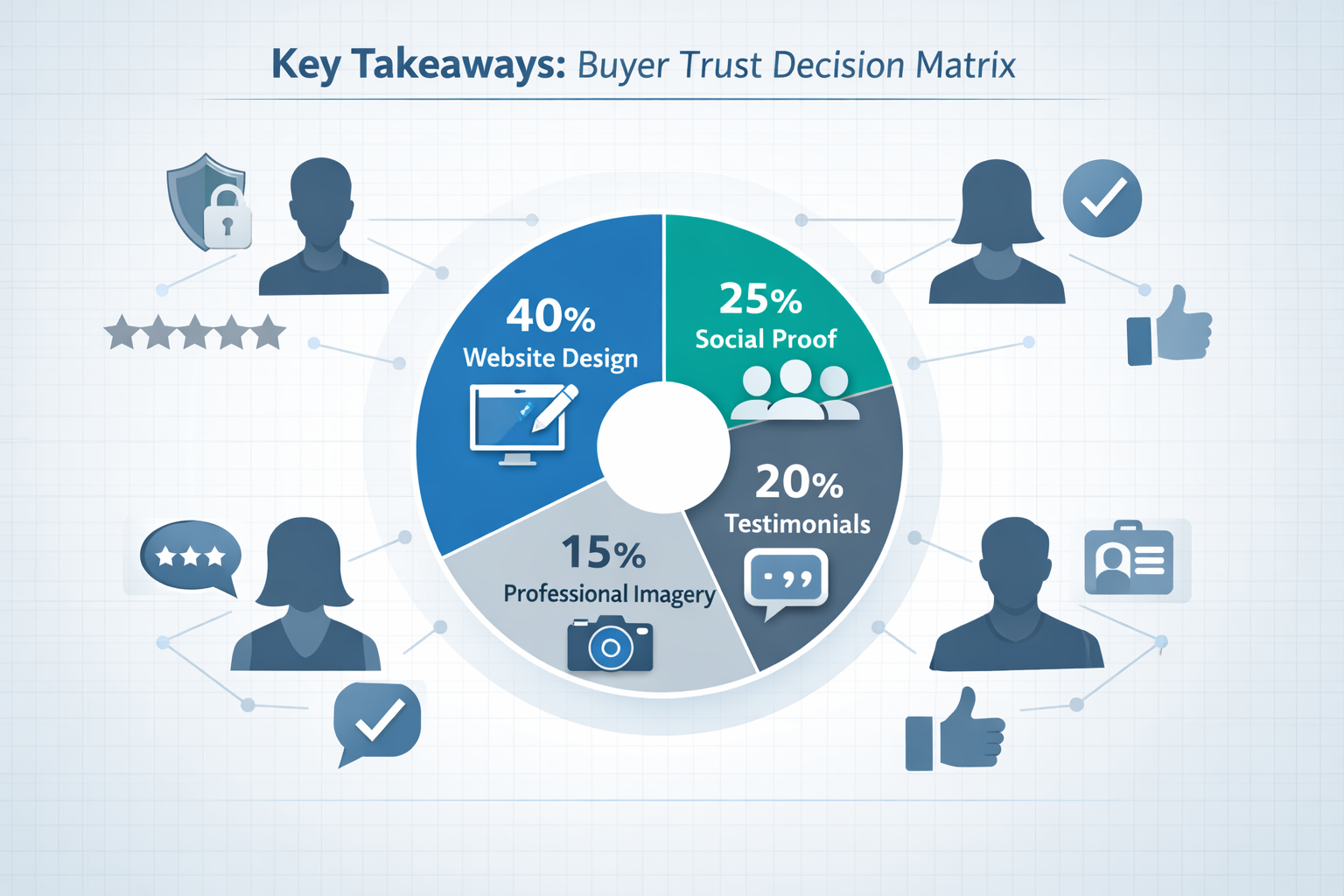
Small business buyers look for four core elements before contacting you: clarity about what you do and who you serve, proof that you deliver results through testimonials and case studies, confidence demonstrated through professional presentation and expertise, and relevance to their specific needs and industry. Your website serves as your digital storefront where buyers form first impressions and decide whether you’re worth their time – making website credibility and trust signals absolutely critical for generating quality leads.
Picture this: A potential client finds your business online at 10 PM on a Tuesday. They’re frustrated with their current provider and are actively looking for someone who can solve their problem. In the next 60 seconds, they’ll decide whether to bookmark your site, fill out your contact form, or click away forever.
What buyers look for before contacting a business isn’t mysterious – it’s predictable human psychology. They want to feel confident you’re the right choice before they invest time in a conversation. Understanding buyer trust signals and small-business trust factors can mean the difference between a website that generates leads and one that just looks pretty.
We’ve helped hundreds of Metro Atlanta businesses transform their online presence into lead-generating systems. The patterns are clear: buyers evaluate specific elements in a specific order, and website credibility either opens doors or slams them shut.
How Buyers Actually Evaluate Your Business Online
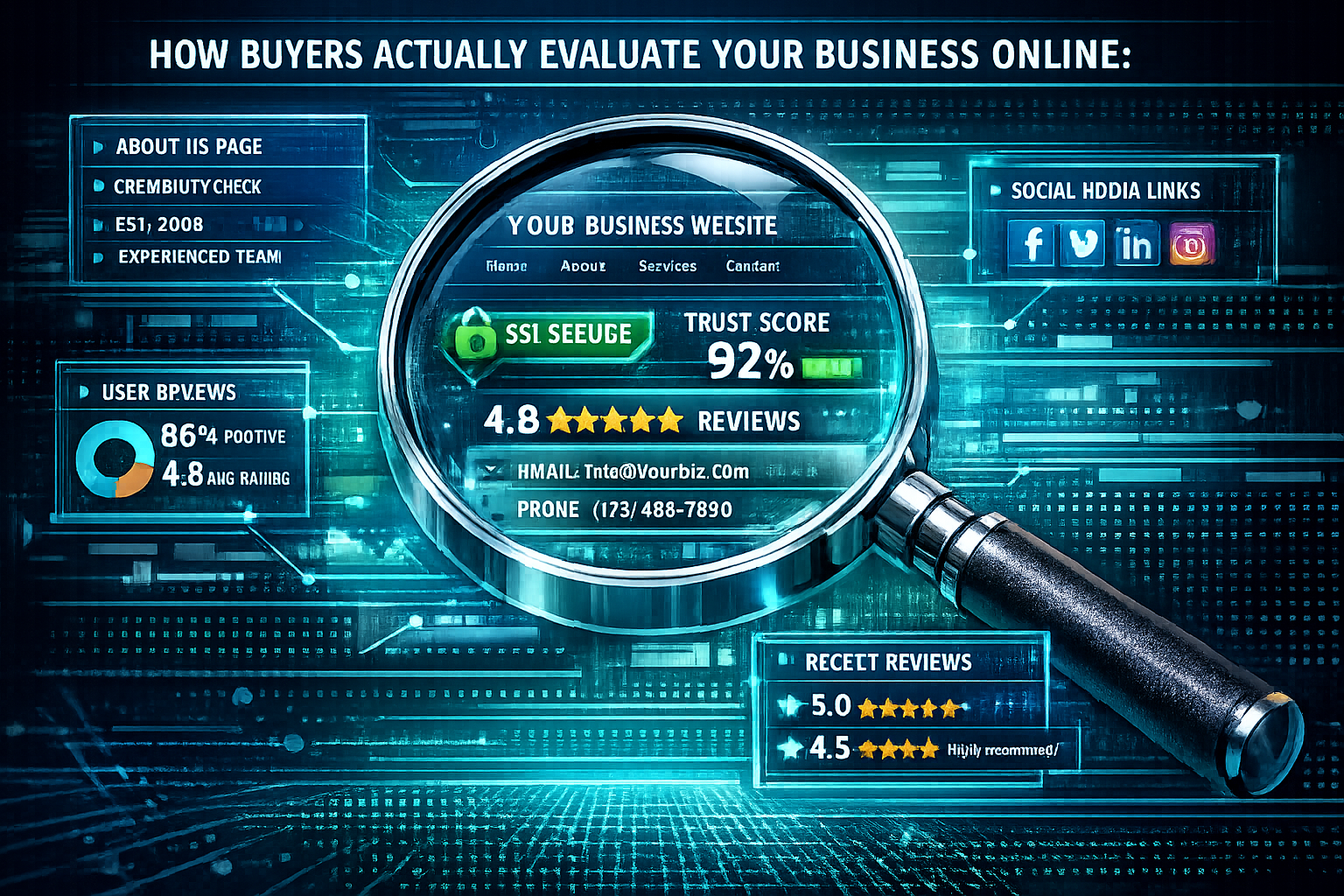
Buyers don’t read your website like a novel – they scan it like a detective looking for evidence. Within seconds, they’re asking three questions: “Can you solve my problem?” “Are you legitimate?”, and “What happens next?”
Your website needs to answer these questions immediately. Buyers typically spend 15-30 seconds on your homepage before deciding to dig deeper or leave. During this critical window, they’re looking for clear value propositions, professional design, and obvious next steps.
The scanning pattern is predictable: Most buyers start with your headline, glance at your main navigation, scan for social proof, and look for contact information. If any of these elements feel unclear or unprofessional, they’re gone.
Smart business owners recognize this reality and structure their websites accordingly. Every element serves a purpose in building trust and guiding visitors toward contact. No room for confusion or decoration doesn’t advance the buyer’s evaluation process.
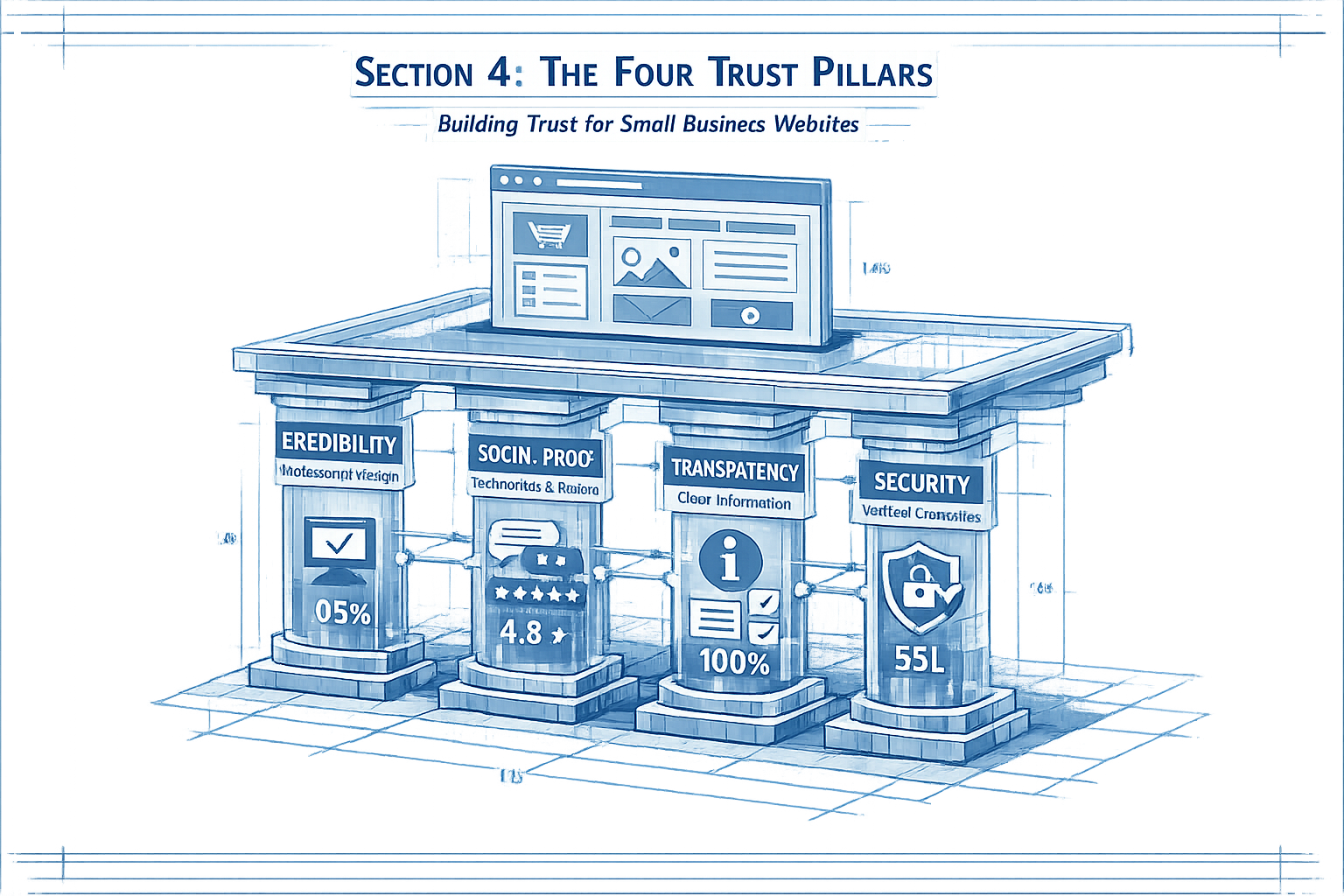
The Four Trust Pillars Buyers Evaluate Before Making Contact
Clarity: Do You Solve My Specific Problem?
Buyers don’t want to guess what you do or whether you can help them. Small business trust factors start with crystal-clear messaging about your services, target clients, and unique approach.
Your homepage should answer these questions within 10 seconds:
- What specific problem do you solve?
- Who do you serve (industry, company size, location)?
- What makes you different from competitors?
- What results can clients expect?
Common clarity mistakes include vague taglines like “Your Success Partner” or service descriptions that could apply to any business. Instead, be specific: “We help Metro Atlanta manufacturers reduce IT downtime by 80% through proactive monitoring and rapid response.”
Choose clarity over cleverness every time. Buyers appreciate straightforward communication that respects their time and intelligence.
Proof: Can You Actually Deliver Results?
Buyer trust signals require evidence, not just promises. Smart buyers look for testimonials, case studies, client logos, and specific results you’ve achieved for others.
Effective social proof includes:
- Specific testimonials with client names, companies, and measurable results
- Case studies that walk through challenges, solutions, and outcomes
- Client logos from recognizable companies in relevant industries
- Awards and certifications that demonstrate expertise and credibility
- Before-and-after examples that show tangible improvements
Generic testimonials like “Great service!” carry no weight. Buyers want details: “SalesHubHQ increased our qualified leads by 150% in 90 days while cutting our marketing tool costs in half.”
Pro tip: Include negative social proof when relevant. Mentioning common problems you solve (“Before working with us, 80% of our clients struggled with scattered marketing tools”) helps buyers self-identify and builds credibility.
Confidence: Are You Professional and Reliable?
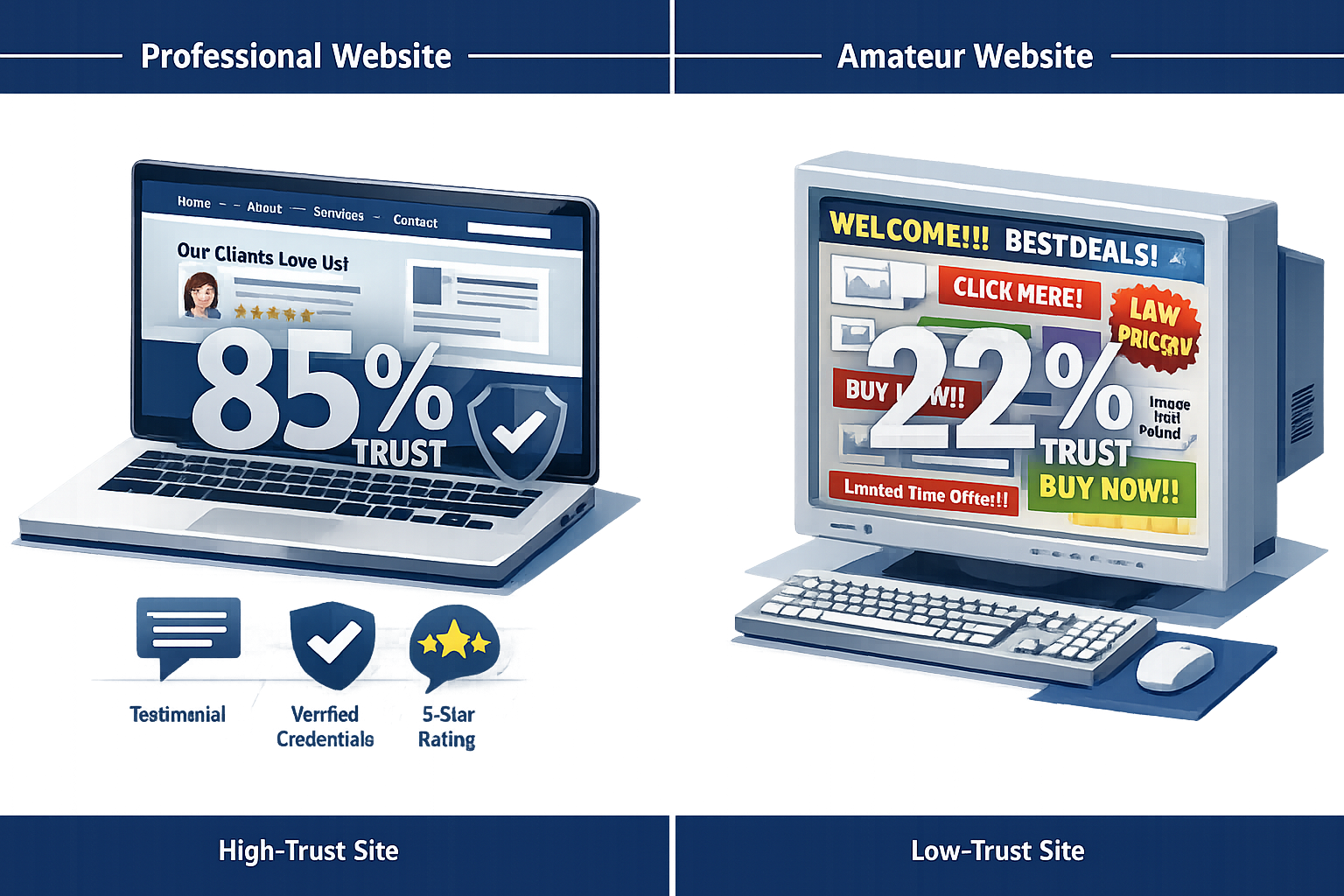
Website credibility depends heavily on professional presentation and attention to detail. Buyers judge your business competence based on how you present yourself online.
Key confidence indicators include:
- Professional design that’s clean, modern, and mobile-friendly
- Error-free content with proper grammar and spelling
- Fast loading times that respect visitor patience
- Security features like SSL certificates and trust badges
- Complete contact information, including physical address and phone number
- Professional photography rather than generic stock images
- Consistent branding across all pages and materials
Buyers also look for expertise indicators like published articles, speaking engagements, industry involvement, and thought leadership content. These elements position you as an authority rather than just another vendor.
Red flags that kill confidence: Outdated copyright dates, broken links, missing contact information, poor mobile experience, and generic stock photos that scream “template website.”
Relevance: Do You Understand My Industry and Situation?
Buyers want to work with specialists who understand their specific challenges and industry dynamics. What buyers look for before contacting a business includes evidence that you’ve successfully served similar companies.
Demonstrate relevance through:
- Industry-specific case studies that address familiar challenges
- Specialized service offerings tailored to their business type
- Industry terminology used correctly and naturally
- Relevant client examples from their sector or similar situations
- Understanding of compliance requirements or industry regulations
- Knowledge of industry trends and common pain points
A manufacturing company won’t be impressed by your retail success stories. They want to see that you understand manufacturing challenges, speak their language, and have delivered results for similar businesses.
The relevance test: Can a visitor quickly determine whether you serve businesses like theirs? If they have to guess or dig through generic content, you’ve failed the relevance test.
Website Elements That Build or Destroy Credibility
Navigation and User Experience
Your website navigation tells buyers how organized and professional your business is. Small business trust factors include intuitive menus, logical page structure, and easy access to important information.
Essential navigation elements:
- Clear main menu with 5-7 primary options
- Prominent contact information on every page
- Search functionality for content-heavy sites
- Breadcrumb navigation for deeper pages
- Footer with complete business information
User experience factors that influence buyer decisions include page loading speed, mobile responsiveness, and logical information architecture. Buyers abandon slow or confusing websites within seconds.
Quick test: Can a first-time visitor find your contact information, understand your services, and identify your target clients within 30 seconds? If not, your navigation needs work.
Contact Information and Accessibility
Buyers want multiple ways to reach you and clear expectations about response times. Buyer trust signals include complete contact details and obvious next steps for getting in touch.
Must-have contact elements:
- Phone number prominently displayed
- Professional email address (not Gmail)
- Physical business address
- Contact form with specific fields
- Response time expectations
- Multiple contact methods (phone, email, form)
Advanced accessibility features include live chat, scheduling links, downloadable resources, and clear business hours. The easier you make it to contact you, the more likely qualified buyers will take that step.
Avoid contact forms that ask for unnecessary information. Buyers will abandon forms that feel invasive or time-consuming. Stick to essential fields: name, email, phone, and message.
Security and Trust Badges
Modern buyers are security-conscious and look for indicators that their information will be protected. Website credibility requires visible security measures and trust indicators.
Important security elements:
- SSL certificate (https://) for all pages
- Privacy policy is clearly linked
- Security badges from recognized providers
- Professional email addresses
- Secure contact forms
- Clear data handling practices
Trust badges from industry associations, certifications, and security providers add credibility. However, only display badges you’ve actually earned – buyers can verify these credentials.
Local business indicators like Better Business Bureau ratings, Chamber of Commerce membership, and local awards help establish community credibility for Metro Atlanta businesses.
The Psychology Behind Buyer Decision-Making
Risk Reduction vs. Opportunity Pursuit
Buyers evaluate potential partners through two lenses: minimizing risk and maximizing opportunity. What buyers look for before contacting a business depends on which motivation drives their search.
Risk-focused buyers prioritize:
- Proven track records and long business history
- Insurance and bonding information
- Detailed processes and quality controls
- References from similar companies
- Clear contracts and guarantees
Opportunity-focused buyers emphasize:
- Innovation and cutting-edge solutions
- Growth potential and scalability
- Competitive advantages and differentiation
- ROI projections and success metrics
- Speed of implementation
Smart businesses address both motivations by highlighting stability and innovation, proven results, and future potential. Your website should reassure conservative buyers while exciting progressive ones.
Social Proof and Herd Behavior
Buyers feel safer choosing providers that others have successfully used. Buyer trust signals leverage this psychological tendency through strategic social proof placement.
Types of social proof that influence decisions:
- Expert endorsements from industry leaders
- User testimonials from satisfied clients
- Wisdom of crowds through client counts or market share
- Celebrity endorsements from recognizable figures
- Certification badges from respected organizations
Placement strategy matters: Put your strongest social proof above the fold on your homepage. Include relevant testimonials on service pages. Feature case studies prominently in your navigation.
Quality over quantity: Three detailed, specific testimonials outperform twenty generic ones. Buyers can spot fake or generic social proof immediately.
The Commitment Escalation Process
Buyers don’t jump from awareness to purchase – they climb a ladder of increasing commitment. Small business trust factors support this natural progression.
Typical buyer journey:
- Initial research – scanning for basic fit and credibility
- Deeper evaluation – reading case studies and testimonials
- Comparison shopping – evaluating multiple options
- Risk assessment – checking references and credentials
- Contact initiation – reaching out for more information
- Proposal evaluation – comparing formal proposals
- Decision making – selecting the preferred partner
Your website should support each stage with appropriate content and clear next steps. Don’t rush buyers through this process – provide the information they need to feel confident at each stage.
Common Trust-Killing Mistakes Small Businesses Make
Generic Messaging That Says Nothing
The biggest credibility killer is messaging that could apply to any business in any industry. Website credibility requires specific, differentiated positioning that clearly communicates your unique value.
Generic messaging examples:
- “Your trusted business partner”
- “Quality service since 1995”
- “We exceed expectations.”
- “Customer satisfaction guaranteed.”
Specific alternatives:
- “We help Metro Atlanta manufacturers eliminate unplanned downtime through predictive maintenance programs”
- “Our cybersecurity solutions have prevented data breaches for 200+ professional service firms”
- “We build complete done-for-you marketing systems that generate predictable leads for B2B service companies”
The specificity test: If your competitor could copy your homepage headline and use it unchanged, it’s too generic. Buyers need to understand exactly what makes you different and better.
Outdated or Incomplete Information
Nothing destroys trust faster than outdated content or incomplete business information. Buyer trust signals require current, accurate details about your business and services.
Common outdated elements:
- Copyright dates from previous years
- Team photos with former employees
- Service descriptions for discontinued offerings
- Testimonials from 5+ years ago
- Blog posts that haven’t been updated in months
- Contact information for old locations
Maintenance checklist:
- Update copyright dates annually
- Review and refresh content quarterly
- Remove outdated team members and add new ones
- Archive old blog posts or update them with current information
- Verify all contact information monthly
- Test all forms and links regularly
Pro tip: Add “Last updated” dates to important pages. This shows buyers you maintain current information and care about accuracy.
Poor Mobile Experience
Over 60% of B2B buyers research vendors on mobile devices. Small business trust factors must include seamless mobile experiences that don’t frustrate potential clients.
Mobile credibility killers:
- Slow loading times on mobile networks
- Text that’s too small to read
- Buttons that are hard to tap
- Forms that don’t work on mobile
- Navigation that’s confusing on small screens
- Pop-ups that can’t be closed easily
Mobile optimization essentials:
- Responsive design that adapts to all screen sizes
- Fast loading times (under 3 seconds)
- Large, tappable buttons and links
- Readable text without zooming
- Simplified navigation for small screens
- Mobile-friendly contact forms
Test regularly: View your website on multiple devices and connection speeds. What looks perfect on your desktop might be unusable on a phone.
Building a Complete Trust System That Actually Works
The SalesHubHQ Approach to Buyer Psychology
We’ve learned that what buyers look for before contacting a business follows predictable patterns, but most small businesses struggle to address these needs systematically. That’s why we build complete done-for-you systems that align with how buyers actually make decisions.
Our all-in-one platform addresses every trust factor buyers evaluate:
- Professional websites built specifically for your industry and target clients
- AI-powered content that speaks directly to buyer concerns and motivations
- Automated lead capture systems that work even when you’re not available
- Integrated social proof management that showcases your best results
- Mobile-optimized design that works perfectly on any device
The key difference: We don’t just build websites – we create predictable growth systems that turn visitors into leads automatically. No tech knowledge required, ready from day one.
Beyond the Website: Complete Digital Presence
Website credibility is just the foundation. Modern buyers research you across multiple touchpoints before making contact. A complete trust system addresses every place buyers might encounter your business.
Essential digital presence elements:
- Google Business Profile with current information and positive reviews
- LinkedIn company page with regular updates and employee profiles
- Industry directory listings with consistent business information
- Review platform management across Google, industry sites, and social media
- Content marketing that demonstrates expertise and builds authority
Consistency is crucial: Your messaging, branding, and contact information must be identical across all platforms. Inconsistencies raise red flags and damage credibility.
We handle the complexity: Our complete done-for-you system ensures consistent branding and messaging across all digital touchpoints. Your leads are captured and nurtured automatically through systems that actually work.
Measuring and Improving Trust Signals
You can’t improve what you don’t measure. Buyer trust signals should be tracked and optimized based on actual visitor behavior and conversion data.
Key metrics to monitor:
- Time on site – longer visits indicate stronger engagement
- Pages per session – more pages suggest deeper interest
- Contact form completion rates – higher rates indicate effective trust building
- Phone call volume – increases suggest improved credibility
- Bounce rate – lower rates mean better first impressions
A/B testing opportunities:
- Different headlines and value propositions
- Various social proof placements
- Multiple contact form designs
- Different trust badge combinations
- Alternative navigation structures
Our built-in analytics track these metrics automatically and provide clear insights about what’s working. No need to become a data expert – we show you exactly how to improve your results.

