
How Poor Follow-Up Silently Kills Small Business Growth
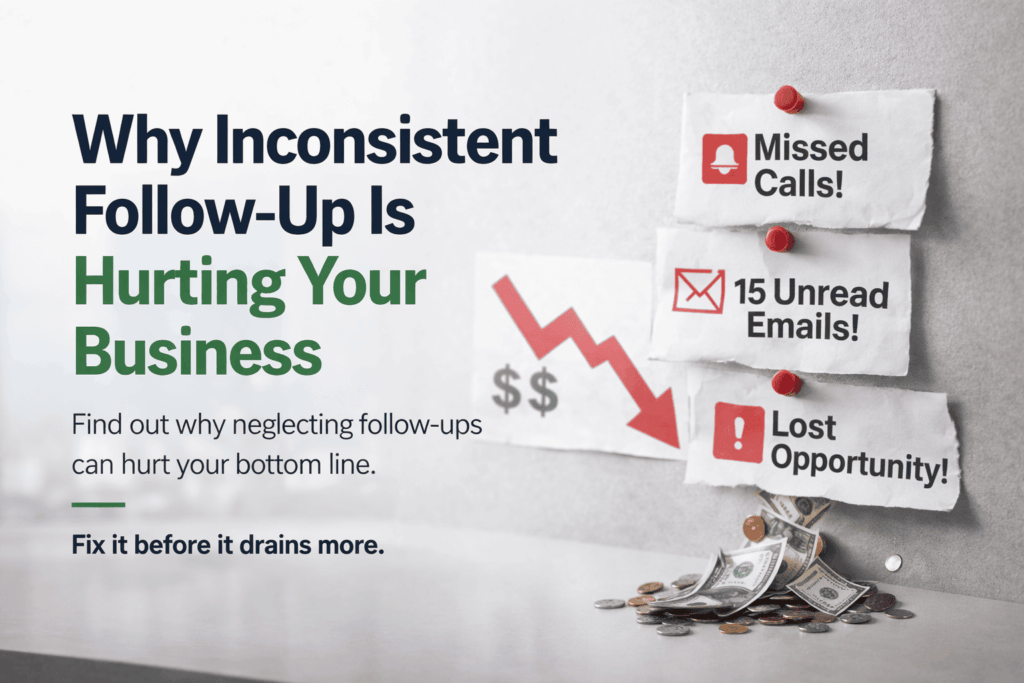
A potential customer fills out your contact form at 2 PM on Tuesday. You’re in back-to-back meetings until Thursday. By the time you call them on Friday afternoon, they’ve already signed with your competitor. Sound familiar? This scenario plays out thousands of times daily across small businesses, creating a silent revenue drain that most owners never fully recognize.
Inconsistent follow-up leads to lost revenue, frustrated prospects, and stunted business growth. The problem isn’t just about sales follow-up mistakes – it’s about losing leads small business owners worked hard to generate in the first place. Without a solid lead follow-up strategy, even the best marketing efforts become worthless.
We see this pattern repeatedly with our clients. They’re generating leads but struggling to convert them consistently. The solution isn’t working harder – it’s building systems that work automatically.
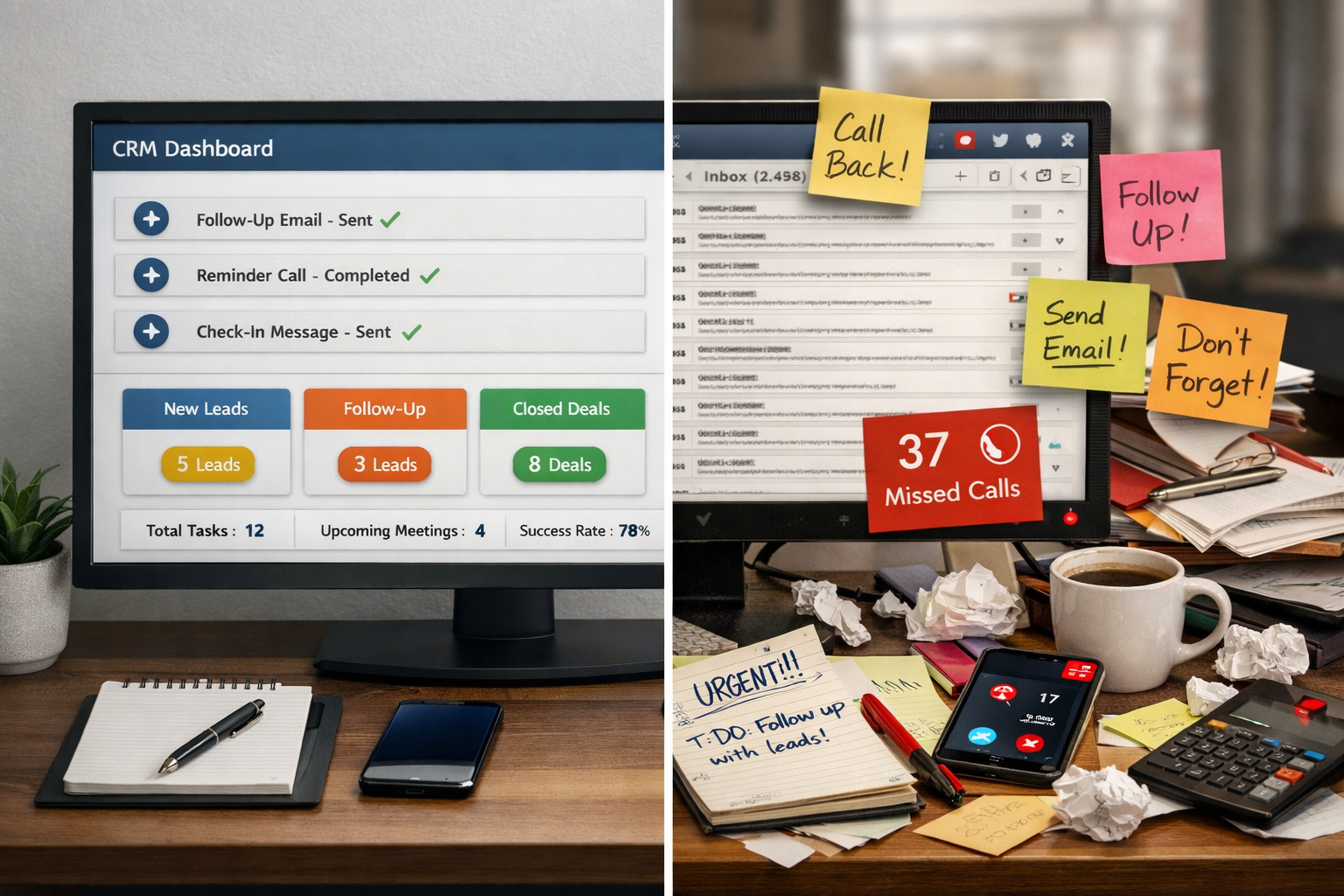
Why Inconsistent Follow-Up Destroys Small Business Revenue
Inconsistent follow-up kills small-business growth by breaking the trust-building process that turns prospects into customers. When leads don’t hear from you promptly and regularly, they assume you don’t want their business or can’t handle their needs professionally.
Here’s what happens when your lead follow-up strategy lacks consistency:
Immediate Revenue Loss
- Qualified prospects move to competitors who respond faster
- Hot leads cool down and lose interest in your solution
- Referrals feel ignored and stop recommending your business
- Existing customers question your reliability for future projects
Long-term Growth Damage
- Your reputation suffers as word spreads about poor responsiveness
- Marketing ROI plummets when leads aren’t properly nurtured
- Sales cycles become unpredictable and harder to forecast
- Team morale drops as everyone scrambles to catch up on missed opportunities
Operational Chaos
- No one knows who’s responsible for which leads
- Important prospects slip through communication gaps
- Follow-up becomes reactive instead of proactive
- Business growth stagnates despite marketing investments
The math is brutal. If you generate 100 leads per month and lose 60% due to poor follow-up, you’re essentially throwing away $60,000+ in potential revenue annually (assuming average deal size of $1,000).
The Real Cost of Sales Follow-Up Mistakes
Sales follow-up mistakes cost small businesses far more than most owners realize. The visible cost is the immediate lost sale, but the hidden costs compound over time and create lasting damage to your growth potential.
Immediate Financial Impact
Direct Revenue Loss
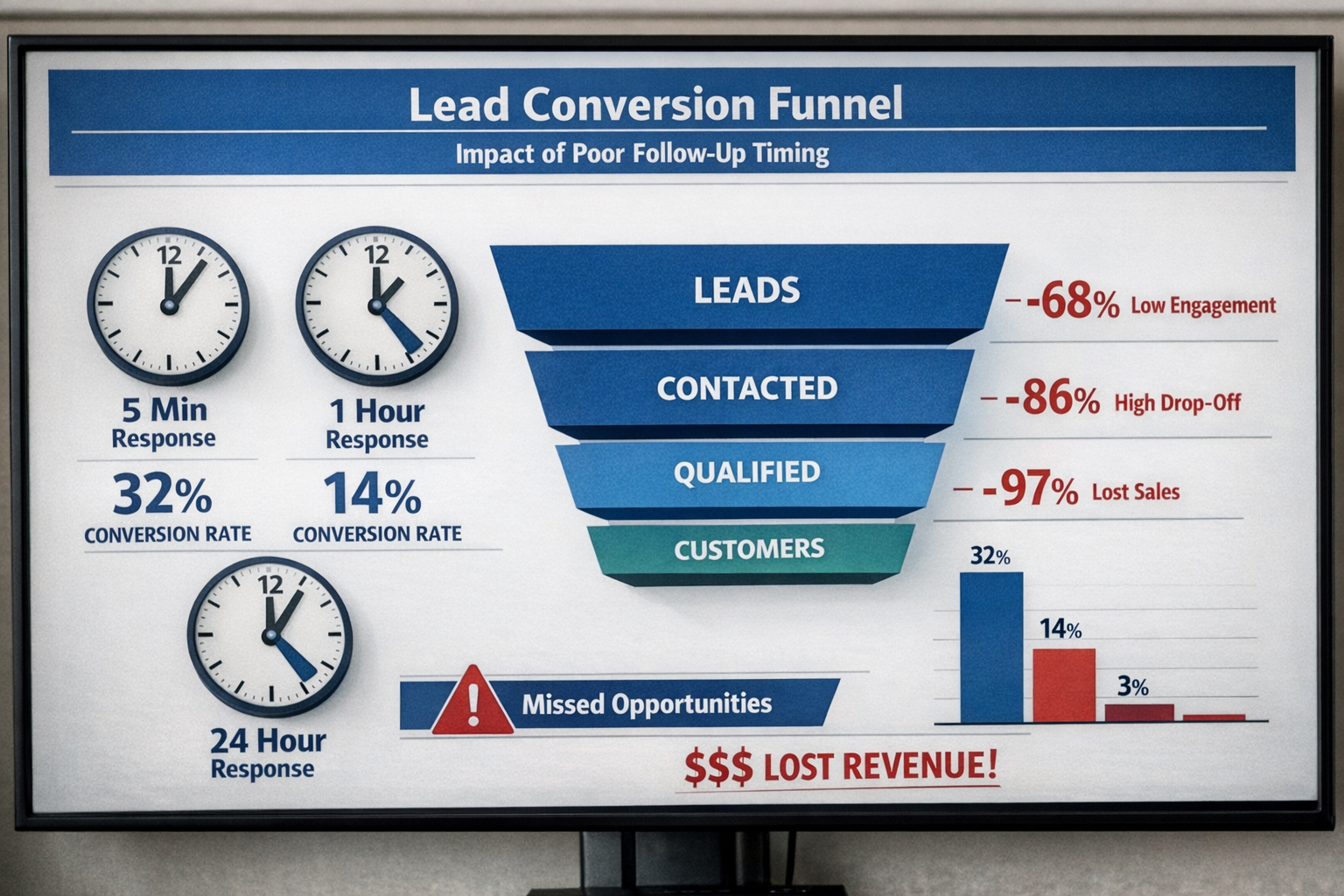
- The average small business loses 27% of its potential revenue due to poor follow-up timing
- Each day of delay reduces conversion probability by 15-20%
- Competitors capture your leads when you’re slow to respond
- Referral sources stop sending business when they see poor responsiveness
Wasted Marketing Investment
- Every dollar spent generating leads becomes worthless without proper follow-up
- Google Ads, social media campaigns, and networking events fail to deliver ROI
- Content marketing efforts don’t convert visitors into customers
- Trade show investments yield minimal returns
Hidden Long-Term Costs
Reputation Damage
- Poor follow-up creates negative word-of-mouth in your market
- Online reviews mention slow response times and poor communication
- Professional networks lose confidence in your reliability
- Industry reputation suffers, making future sales harder
Team Inefficiency
- Employees waste time trying to recreate lost lead information
- Sales conversations start from scratch instead of building on previous interactions
- Administrative overhead increases as everyone scrambles to catch up
- Stress levels rise as opportunities slip away
Growth Limitations
- Unpredictable revenue makes it impossible to plan expansion
- Cash flow becomes erratic and hard to manage
- Scaling becomes risky without consistent lead conversion
- Investment in new team members or equipment gets delayed
The typical small business owner doesn’t realize they’re losing leads that small business growth depends on until the pattern becomes obvious. By then, competitors have established relationships with prospects who should have become your customers.
How Manual Follow-Up Systems Fail Small Businesses
Manual follow-up systems fail because they rely on human memory and perfect execution in an imperfect world. Small business owners juggle dozens of responsibilities daily, making it impossible to maintain consistent, timely follow-up with every prospect.
The Human Factor Problem
Memory Limitations
- Business owners forget to follow up when other priorities demand attention
- Lead details get mixed up between different prospects
- Important timing windows get missed during busy periods
- Follow-up frequency becomes inconsistent and unpredictable
Competing Priorities
- Customer service issues take precedence over lead nurturing
- Operational problems interrupt planned follow-up activities
- Administrative tasks consume time meant for prospect communication
- Travel and meetings create gaps in follow-up consistency
System Breakdown Points
Information Scattered Everywhere
- Lead details live in email, sticky notes, and various documents
- No central system tracks follow-up history or next steps
- Team members can’t access lead information when the owner is unavailable
- Important context gets lost between different communication channels
No Accountability or Tracking
- No one knows which leads need immediate attention
- Follow-up timing becomes arbitrary instead of strategic
- Success rates can’t be measured or improved
- Patterns of what works get lost in the chaos
Inconsistent Messaging
- Different team members say different things to prospects
- Value propositions get diluted or confused
- Professional image suffers from disjointed communication
- Brand consistency disappears across touchpoints
The Scaling Problem
Manual systems that work for 10 leads per month completely break down at 50 leads per month. As your marketing improves and generates more opportunities, manual follow-up becomes the bottleneck that prevents growth.
Volume Overwhelm
- More leads mean more details to remember and track
- Response times get slower as volume increases
- Quality of follow-up decreases under pressure
- Opportunities get prioritized randomly instead of strategically
Team Confusion
- Multiple people handling leads creates overlap and gaps
- No clear handoff process between marketing and sales
- Lead ownership becomes unclear during busy periods
- Communication with prospects becomes fragmented
This is why successful businesses implement automated follow-up systems that handle the mechanical aspects of lead nurturing while freeing up humans to focus on relationship building and closing deals.
Building a Lead Follow-Up Strategy That Actually Works
A successful lead follow-up strategy combines speed, consistency, and personalization to move prospects through your sales process predictably. The key is creating systems that work automatically while maintaining the human touch that builds relationships.

The Foundation: Speed and Consistency
Immediate Response Protocol
- Acknowledge every lead within 5 minutes of initial contact
- Send confirmation that includes next steps and timeline
- Provide immediate value through helpful resources or insights
- Set clear expectations for ongoing communication
Structured Follow-Up Sequence
- Day 1: Personal welcome and needs assessment
- Day 3: Relevant case study or success story
- Day 7: Educational content addressing common concerns
- Day 14: Direct offer with clear call-to-action
- Day 30: Check in with additional value
Essential System Components
Centralized Lead Management
- All prospect information lives in one accessible location
- Complete communication history tracks every interaction
- Next steps and priorities are clearly visible
- Team members can seamlessly continue conversations
Automated Workflows
- Triggered sequences ensure no lead gets forgotten
- Personalized messages maintain human connection
- Scheduling tools eliminate back-and-forth coordination
- Follow-up reminders keep manual tasks on track
Performance Tracking
- Response time monitoring identifies improvement opportunities
- Conversion rates reveal which messages work best
- Lead source analysis shows where to focus marketing efforts
- Revenue attribution proves the ROI of follow-up investments
Making It Personal at Scale
The best lead follow-up strategy balances automation with personalization. Prospects should feel like they’re receiving individual attention, even when systems handle the mechanical aspects.
Smart Personalization
- Use the prospect’s name and company throughout communications
- Reference specific needs mentioned in initial contact
- Share relevant case studies from similar businesses
- Customize timing based on the prospect’s indicated timeline
Value-First Approach
- Lead with helpful insights instead of sales pitches
- Share industry knowledge that demonstrates expertise
- Provide tools or resources that solve immediate problems
- Position yourself as a trusted advisor, not just a vendor
Multiple Communication Channels
- Email for detailed information and documentation
- Phone calls for urgent matters and relationship building
- Text messages for quick confirmations and reminders
- Social media for staying top-of-mind between formal touchpoints
The Technology Solution
We build complete done-for-you systems that handle lead follow-up automatically while maintaining the personal touch your prospects expect. Our all-in-one platform includes:
- AI-powered lead capture that qualifies prospects instantly
- Automated follow-up systems that nurture leads consistently
- Free smart website built for you that converts visitors into leads
- Predictable growth system that scales with your business
The system is ready from day one with no tech knowledge required. We build the website and content, then implement the entire follow-up system for your business. Leads captured and nurtured automatically while you focus on closing deals and running your company.
This approach eliminates the sales follow-up mistakes that cost small businesses thousands in lost revenue. Instead of losing leads small business growth depends on, you get systems that actually work and are built and implemented for your business.
Common Sales Follow-Up Mistakes That Cost Deals
Most small businesses make predictable sales follow-up mistakes that sabotage their growth potential. These errors seem minor individually, but compound to create massive revenue loss over time.
Timing Mistakes
Waiting Too Long for Initial Contact
- Calling leads back “when you have time” instead of immediately
- Assuming prospects will wait patiently for your response
- Underestimating how quickly competitors move on hot leads
- Treating lead response as a low-priority administrative task
Inconsistent Follow-Up Frequency
- Bombarding prospects with daily calls, then disappearing for weeks
- Following up aggressively initially, then giving up after two attempts
- Varying follow-up timing based on your schedule instead of the prospect’s needs
- Forgetting about leads during busy periods or vacations
Communication Mistakes
Generic, Template-Heavy Messages
- Sending obviously automated emails that feel impersonal
- Using the same pitch for every prospect regardless of their situation
- Failing to reference previous conversations or specific needs
- Copying and pasting responses without customization
Wrong Channel Selection
- Emailing prospects who prefer phone communication
- Calling people who clearly indicated email preference
- Using formal channels for casual relationships
- Ignoring generational communication preferences
Process Mistakes
No Clear Next Steps
- Ending conversations without defining what happens next
- Leaving prospects uncertain about the timeline or process
- Failing to confirm understanding of next actions
- Creating ambiguity about who does what when
Lack of Value in Each Touchpoint
- Following up just to “check in” without providing value
- Asking “Have you made a decision yet?” repeatedly
- Sharing irrelevant content that doesn’t address the prospect’s concerns
- Focusing on your needs instead of solving their problems
Technology and Tracking Mistakes
Poor Information Management
- Losing track of where each prospect stands in your process
- Forgetting important details shared in previous conversations
- Having multiple team members contact the same prospect
- Missing opportunities because information lives in someone’s head
No Performance Measurement
- Not tracking which follow-up approaches work best
- Failing to identify patterns in successful conversions
- Missing opportunities to improve response times
- Continuing ineffective practices because you don’t measure results
Why Automated Follow-Up Systems Win
Automated follow-up systems solve the human limitations that cause inconsistent follow-up to lead to slipping away. They ensure every prospect receives timely, relevant communication while freeing business owners to focus on relationship building and deal closing.
Consistency at Scale
Never Miss a Follow-Up
- Systems work 24/7 without breaks, vacations, or sick days
- Every lead receives the same high-quality initial response
- Follow-up timing stays consistent regardless of business demands
- Prospects never fall through cracks during busy periods
Predictable Lead Nurturing
- Each prospect moves through proven sequences that convert
- Messaging stays on-brand and professionally crafted
- Value delivery happens automatically at optimal intervals
- Conversion rates improve through systematic optimization
Speed and Efficiency
Immediate Response Capability
- Leads get acknowledged within minutes of initial contact
- Qualification questions get answered instantly
- Appointment scheduling happens without phone tag
- Information requests get fulfilled automatically
Resource Optimization
- Business owners focus their time on qualified, ready-to-buy prospects
- Administrative follow-up tasks happen automatically
- Team members handle higher-value relationship activities
- Marketing ROI improves through better lead conversion
Personalization at Scale
Modern automated follow-up systems deliver personalized experiences that feel human while operating with machine-like consistency.
Smart Customization
- Messages include prospect names, company details, and specific needs
- Content varies based on lead source and qualification responses
- Timing adjusts according to prospect behavior and engagement
- Communication channels match stated preferences
Behavioral Triggers
- Website visits trigger relevant follow-up sequences
- Email opens and clicks adjust subsequent messaging
- Downloaded content determines the next educational materials
- Engagement levels influence follow-up frequency and intensity
The Business Impact
Companies using automated follow-up systems typically see:
- 35-50% improvement in lead conversion rates
- 60-80% reduction in response time to new leads
- 25-40% increase in average deal size through better nurturing
- 70-90% decrease in leads lost to poor follow-up
Our complete done-for-you system delivers these results because we build the website and content, then implement AI-powered lead capture and automated follow-up systems that work together seamlessly. The all-in-one platform creates a predictable growth system that’s ready from day one with no tech knowledge required.
Instead of losing leads small business growth depends on, you get leads captured and nurtured automatically through systems that actually work. We handle the build and implementation for your business part so you can focus on what you do best.

