
How B2B Companies Build Predictable Leads in 2026

The Foundation: What Makes a B2B Lead Generation System Actually Work
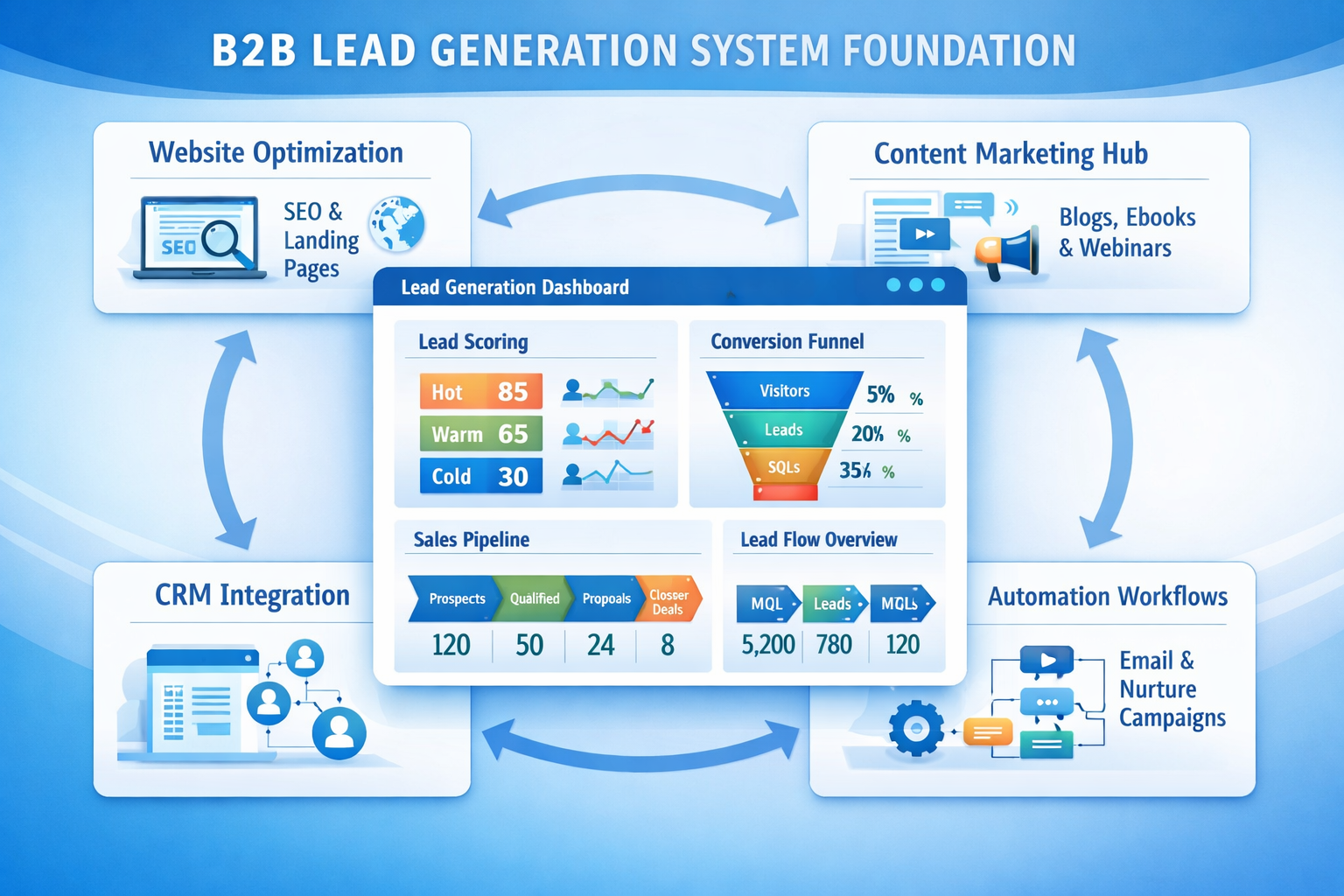
Here’s what we’ve learned after building hundreds of lead generation systems for B2B companies: most businesses are trying to solve the wrong problem. They’re focused on getting more traffic or more leads, when what they really need is a predictable growth system that turns strangers into customers automatically.
A real B2B lead generation system isn’t just a collection of marketing tactics. It’s an integrated machine with five essential components that work together:
1. Website Optimization That Converts Visitors
Your website is your 24/7 salesperson, but most B2B sites are terrible at their job. We see companies spending thousands on Google Ads, driving traffic to websites that convert at less than 1%. That’s like hiring a great salesperson and then making them work with their hands tied behind their back.
Your free smart website built for you should include:
- Clear value propositions on every page
- AI-powered lead capture forms that appear at the right moment
- Mobile-responsive design (over 60% of B2B research happens on mobile)
- Fast loading speeds (under 3 seconds)
- Trust signals like testimonials and case studies
2. Content Marketing That Educates and Attracts
Content isn’t just about blog posts. It’s about creating a systematic way to demonstrate your expertise and attract your ideal prospects. When we build the website and content for our clients, we focus on answering the questions your prospects are already asking.
The content engine includes:
- Educational blog content that ranks in search results
- Lead magnets that capture contact information
- Email nurture sequences that build trust over time
- Case studies that prove your results
- Social proof that builds credibility
3. CRM and Automation That Never Drops the Ball
This is where most B2B companies fall apart. They capture leads but then rely on manual follow-up processes that inevitably break down. Your automated follow-up systems should handle the heavy lifting so your sales team can focus on closing deals.
Key automation components:
- Lead scoring that prioritizes your best prospects
- Email sequences that nurture leads over time
- Task creation for your sales team at the right moments
- Pipeline management that tracks every opportunity
- Reporting that shows you what’s working
4. Follow-up Sequences That Build Relationships
Here’s a sobering statistic: 80% of sales require 5-12 touchpoints, but most salespeople give up after 2-3 attempts. Your B2B lead generation system needs to bridge this gap with consistent, valuable follow-up that doesn’t feel pushy or salesy.
Effective follow-up includes:
- Welcome sequences for new subscribers
- Educational email series that solves problems
- Retargeting ads for website visitors
- Personal outreach from your sales team
- Value-driven content that builds trust
5. Measurement and Optimization That Improves Results
You can’t improve what you don’t measure. The most successful B2B companies we work with are obsessive about tracking their numbers and making data-driven improvements to their predictable growth system.
Essential metrics to track:
- Website conversion rates by traffic source
- Email open rates and click-through rates
- Lead-to-opportunity conversion rates
- Sales cycle length and close rates
- Customer acquisition cost and lifetime value
Building Your Content Marketing Engine for Consistent Lead Flow
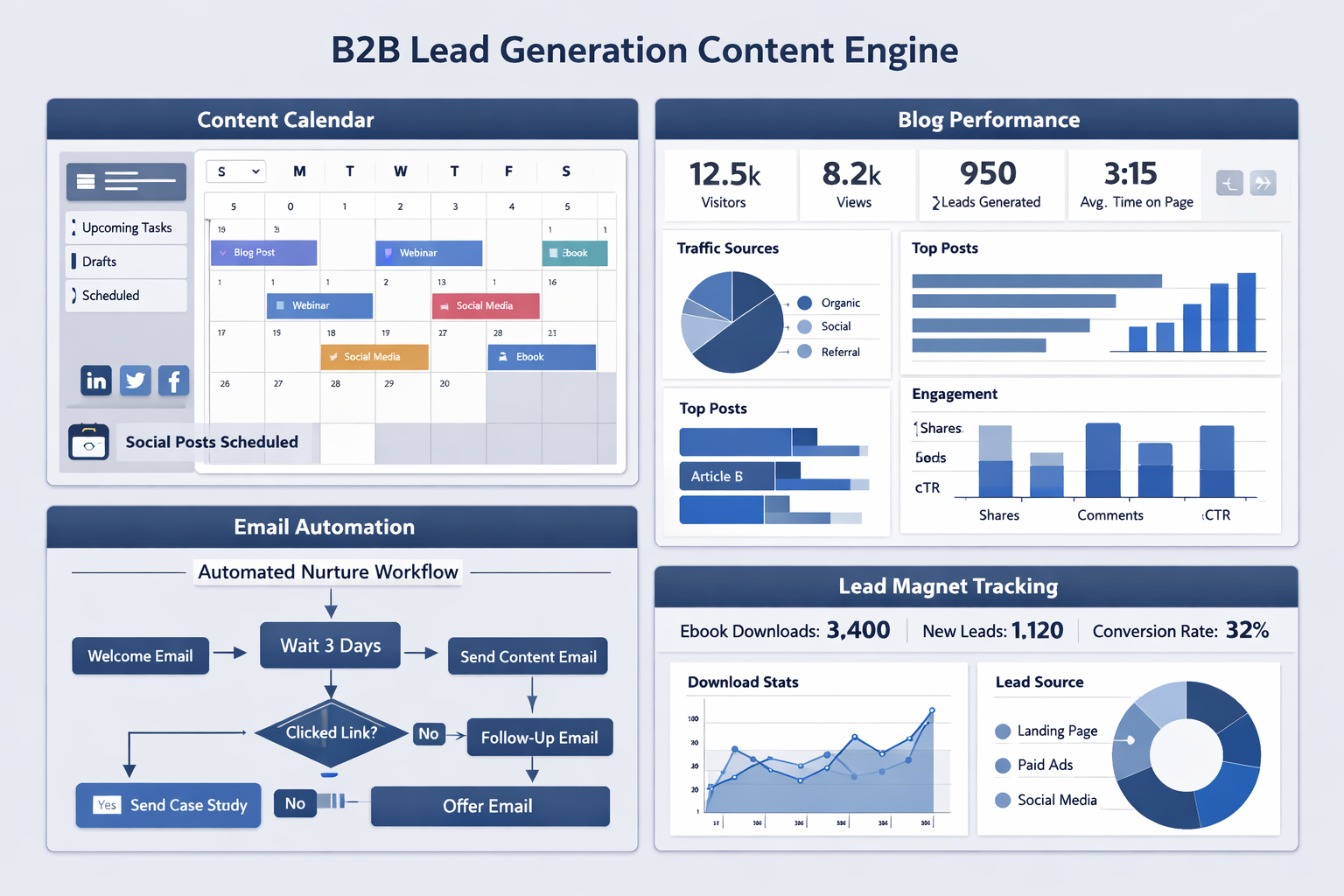
Let’s get specific about content because this is where we see the biggest gaps in most B2B lead generation systems. Content marketing isn’t about publishing random blog posts and hoping for the best. It’s about creating a systematic approach to attracting, educating, and converting your ideal prospects.
The Content Flywheel Approach
Think of your content marketing as a flywheel rather than a funnel. Each piece of content should serve multiple purposes:
Educational Blog Content forms the foundation. We recommend starting with 2-3 high-quality posts per month that directly address your prospects’ biggest challenges. These posts should be comprehensive (1,500+ words), include real examples, and provide actionable advice.
Lead Magnets capture contact information by offering something valuable in exchange. The best lead magnets solve a specific problem your prospects face right now. Think checklists, templates, calculators, or mini-courses rather than generic whitepapers.
Email Nurture Sequences keep you top-of-mind while building trust. A good nurture sequence includes 5-7 emails over 2-3 weeks, mixing educational content with social proof and soft calls-to-action.
Content That Actually Converts
Here’s what separates content that generates leads from content that just takes up space on your blog:
Problem-focused topics that address real pain points your prospects face daily. Instead of “5 Benefits of Our Software,” write “How to Reduce Manual Data Entry by 80% (Without Hiring More Staff).”
Specific, actionable advice that readers can implement immediately. Generic advice doesn’t build trust or demonstrate expertise.
Clear next steps that guide readers toward working with you. Every piece of content should have a logical next step, whether that’s downloading a resource, booking a consultation, or reading a related article.
Social proof integration that shows real results. Include customer stories, case studies, and specific metrics whenever possible.
CRM Integration and Automation: The Backbone of Predictable Results
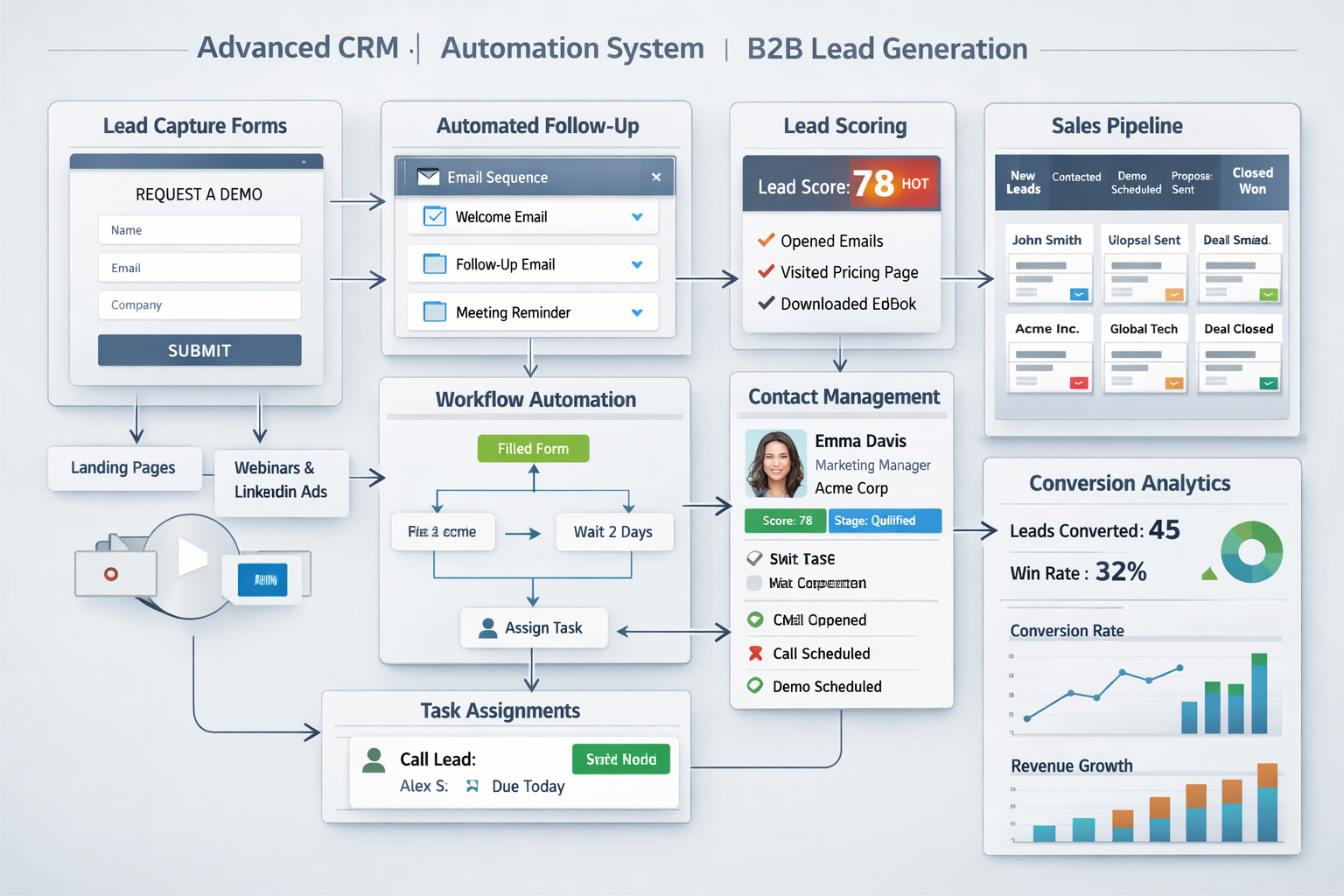
Here’s where most B2B companies sabotage their own success: they capture leads but then rely on manual processes to follow up. We’ve seen companies spend $10,000 per month on marketing only to lose 40% of their leads because someone forgot to follow up or entered the wrong information in their CRM.
Your B2B lead generation system needs automation that works even when you’re sleeping, on vacation, or focused on other parts of your business.
Essential Automation Workflows
Lead Capture and routing happen the moment someone fills out a form on your website. The lead should automatically be added to your CRM, assigned to the right salesperson, and entered into the appropriate nurture sequence all within minutes of submitting their information.
Lead Scoring and Qualification help you prioritize your best prospects. Set up rules that assign points based on actions like visiting your pricing page, downloading multiple resources, or opening several emails. Leads captured and nurtured automatically with higher scores get immediate attention from your sales team.
Follow-up Task Creation ensures nothing falls through the cracks. When a lead reaches a certain score or takes a specific action, your CRM should automatically create tasks for your sales team with suggested next steps and relevant context.
Pipeline Management tracks every opportunity from initial contact to closed deal. Your automation should move deals through pipeline stages, send notifications when opportunities stall, and create reports showing your team’s performance.
Integration That Actually Works
The key to a successful all-in-one platform approach is making sure all your tools talk to each other seamlessly. When someone downloads a lead magnet from your website, that action should trigger updates in your CRM, add them to the right email sequence, and create a follow-up task for your sales team.
Most B2B companies use 5-10 different tools that don’t integrate well:
- Website and landing page builder
- Email marketing platform
- CRM system
- Social media management
- Analytics and reporting tools
The problem isn’t the tools themselves; it’s the gaps between them. When your systems that actually work are built and implemented for your business as an integrated solution, you eliminate the manual work and reduce the chance of leads falling through the cracks.
The Power of “Set It and Forget It” Sequences
Once your automation is properly configured, it should run your lead generation process with minimal manual intervention. Here’s what that looks like in practice:
A prospect visits your website and downloads a lead magnet. Within 5 minutes, they receive a welcome email with their download link. Over the next two weeks, they get a series of educational emails that build trust and demonstrate your expertise. If they open multiple emails or visit your pricing page, your CRM automatically creates a high-priority task for your sales team to reach out personally.
Meanwhile, if they don’t engage with the email sequence, they’re automatically added to a longer-term nurture campaign that sends valuable content once per week. If they visit your website again, view specific pages, or engage with your content, they’re moved back into the active follow-up sequence.
This complete done-for-you system approach means you’re always following up with prospects at the right time with the right message, without requiring constant manual oversight.
Advanced Follow-up Strategies That Convert Prospects into Customers
Let’s talk about the follow-up strategies that separate companies with predictable revenue from those still struggling with inconsistent results. Most B2B companies are leaving money on the table because they don’t have systematic follow-up processes that work consistently.
Multi-Channel Follow-up That Feels Personal
The most effective B2B lead generation system uses multiple touchpoints across different channels to stay top-of-mind without being annoying. Here’s the framework we use:
Email Sequences form the backbone of your follow-up. Start with a welcome series that delivers immediate value, then transition to educational content that positions you as a trusted advisor. Include case studies, industry insights, and helpful resources rather than constant sales pitches.
Retargeting Ads keep you visible to prospects who’ve visited your website but haven’t converted yet. Create specific ad campaigns for people who visited your pricing page, downloaded a lead magnet, or spent significant time reading your content.
Personal Outreach from your sales team should be triggered by specific actions or lead scores. When someone downloads multiple resources or visits key pages on your website, that’s the perfect time for a personal phone call or customized email.
Social Media Engagement helps you stay connected with prospects in a less formal way. Share valuable content, engage with their posts, and participate in industry discussions where your prospects are active.
Timing That Maximizes Response Rates
When you follow up, matters as much as how you follow up. Our data shows that automated follow-up systems with proper timing generate 3-5x better response rates than random outreach.
Immediate Response (within 5 minutes) for high-intent actions like requesting a demo or visiting your pricing page multiple times. Speed matters. Leads that are contacted within 5 minutes are 100x more likely to convert than those contacted after 30 minutes.
Educational Sequences (over 2-3 weeks) for new subscribers who aren’t ready to buy yet. Focus on solving problems and building trust rather than pushing for a sale.
Long-term Nurturing (monthly or quarterly) for prospects who aren’t ready now but might be good customers eventually. Share industry insights, company updates, and relevant case studies.
Re-engagement Campaigns for leads who’ve gone cold. Sometimes, a simple “Did we lose you?” email with a valuable resource can restart the conversation.
Personalization at Scale
Here’s the challenge: you need a follow-up that feels personal but works automatically. The solution is to use the data you already have to customize your messaging without manual work.
Dynamic Content in your emails based on the prospect’s industry, company size, or the specific lead magnet they downloaded. Someone who downloaded a “Guide to Reducing IT Costs” should receive different follow-up content than someone who downloaded “How to Scale Your Sales Team.”
Behavioral Triggers that customize the experience based on actions prospects take. If someone spends 10 minutes reading a case study about a specific service, your next email should reference that service and offer related resources.
Industry-Specific Messaging that speaks directly to the challenges and opportunities in their sector. Manufacturing companies face different challenges than professional services firms; your follow-up should reflect that understanding.
Measuring and Optimizing Your B2B Lead Generation System Performance
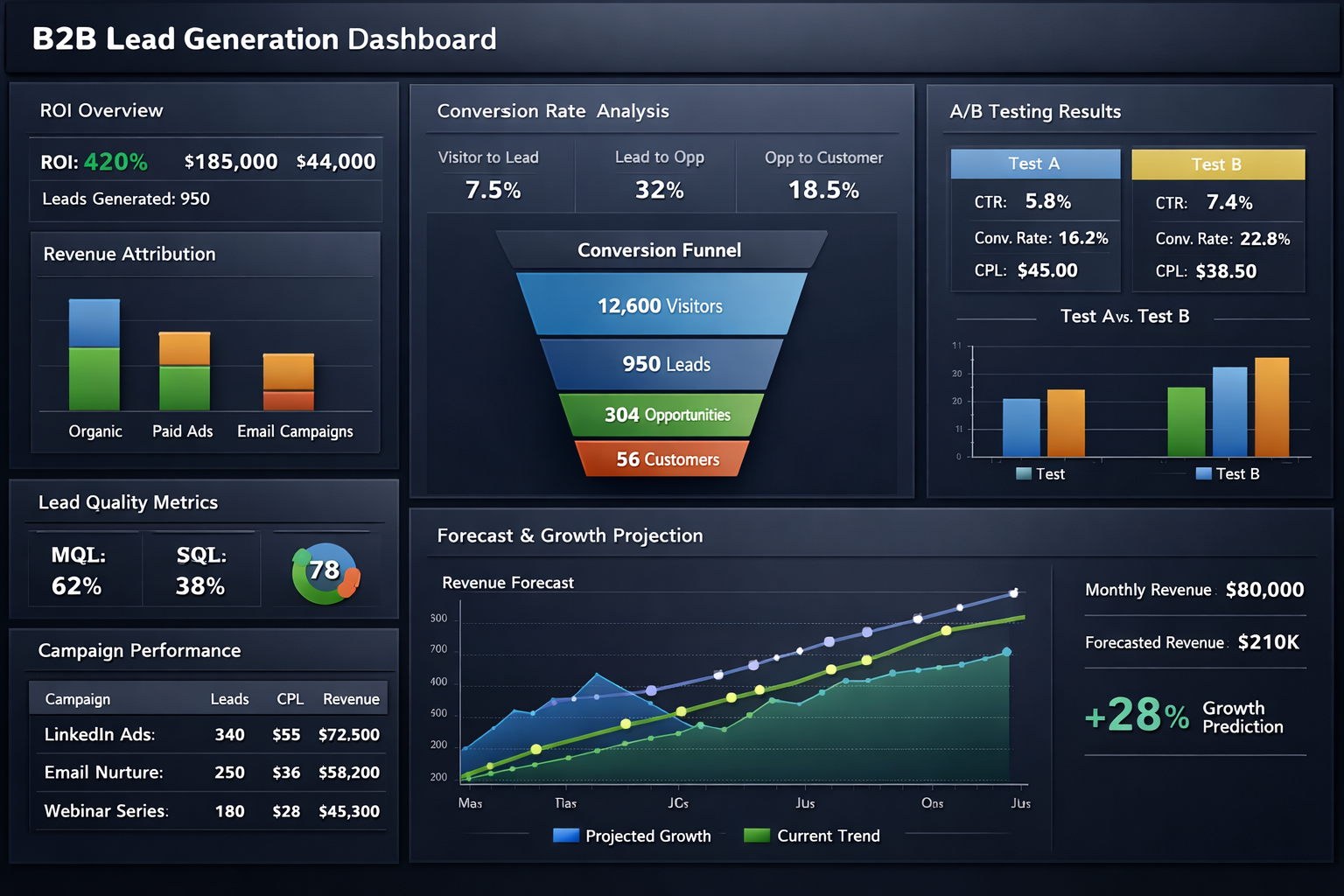
Here’s what separates successful B2B companies from those that waste money on marketing: they measure everything and optimize based on data rather than guesswork. Your predictable growth system should give you clear visibility into what’s working, what’s not, and where to focus your improvement efforts.
The Metrics That Actually Matter
Most B2B companies track vanity metrics like website traffic and social media followers while ignoring the numbers that directly impact revenue. Focus on these key performance indicators:
Lead Quality Metrics tell you whether you’re attracting the right prospects:
- Lead-to-opportunity conversion rate (should be 15-25% for good quality leads)
- Average deal size by lead source
- Sales cycle length by lead source
- Customer lifetime value by acquisition channel
System Performance Metrics show you how well your automation is working:
- Website conversion rate by traffic source (aim for 2-5% for B2B)
- Email open rates and click-through rates by sequence
- Lead response time (should be under 5 minutes for high-intent leads)
- Pipeline velocity and stage conversion rates
Revenue Attribution Metrics connect your marketing efforts to actual revenue:
- Customer acquisition cost by channel
- Return on marketing investment
- Revenue per lead by source
- Time from first touch to closed deal
A/B Testing That Drives Real Improvements
Random testing wastes time and resources. Systematic testing based on data-driven hypotheses drives consistent improvements to your B2B lead generation system.
Website Optimization Tests should focus on elements that directly impact conversion:
- Headlines and value propositions on key landing pages
- Call-to-action button text, color, and placement
- Lead magnet offers and descriptions
- Form length and field requirements
Email Performance Tests can significantly improve your nurture sequence results:
- Subject lines and send times
- Email length and format
- Call-to-action placement and wording
- Personalization elements and dynamic content
Content Performance Analysis helps you create more of what works:
- Blog post topics that generate the most leads
- Lead magnet formats with the highest conversion rates
- Case study formats that drive the most engagement
- Social media content that generates website traffic
Optimization Cycles That Compound Results
The most successful companies we work with follow a systematic optimization process that compounds improvements over time. Here’s the framework:
Monthly Performance Reviews to identify trends and opportunities. Look at your key metrics, identify what’s working well, and spot areas for improvement. Focus on the biggest impact opportunities first.
Quarterly Strategy Adjustments based on what you’ve learned. Maybe certain lead sources are performing better than expected, or specific content topics are resonating more than others. Adjust your strategy to double down on what’s working.
Annual System Audits to ensure all components of your B2B lead generation system are still optimized and integrated properly. Technology changes, your business evolves, and your market shifts make sure your system keeps pace.
The key is making incremental improvements consistently rather than trying to overhaul everything at once. Small improvements to conversion rates, email performance, and follow-up processes compound over time to create dramatic improvements in your overall results.

