
B2B Content-to-Appointment Engine: 2026 Guide
What Is a B2B Content-to-Appointment Engine?
Let me start with what happened to one of our clients, Sarah, who runs a cybersecurity consulting firm in Atlanta. She was spending 20 hours a week cold calling and networking, landing maybe two appointments per month. Her content marketing consisted of random LinkedIn posts that got three likes from her mom, her accountant, and a bot.
Fast forward six months after implementing her content-to-appointment engine: Sarah now books 12-15 qualified appointments monthly, and prospects come to her already educated about her services. She spends her time closing deals, not chasing leads.
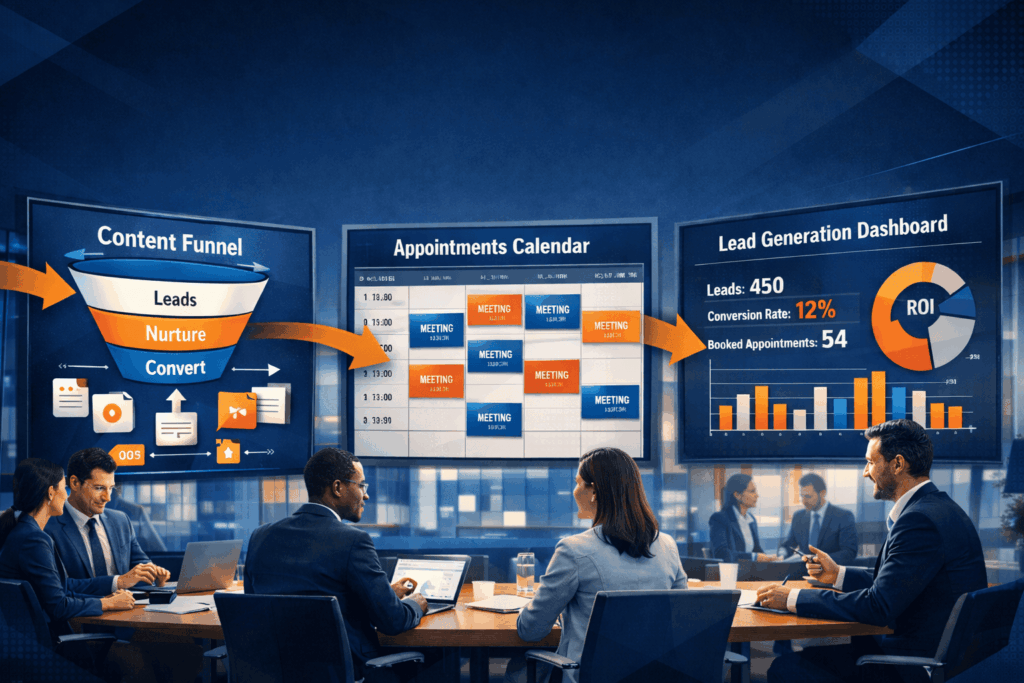
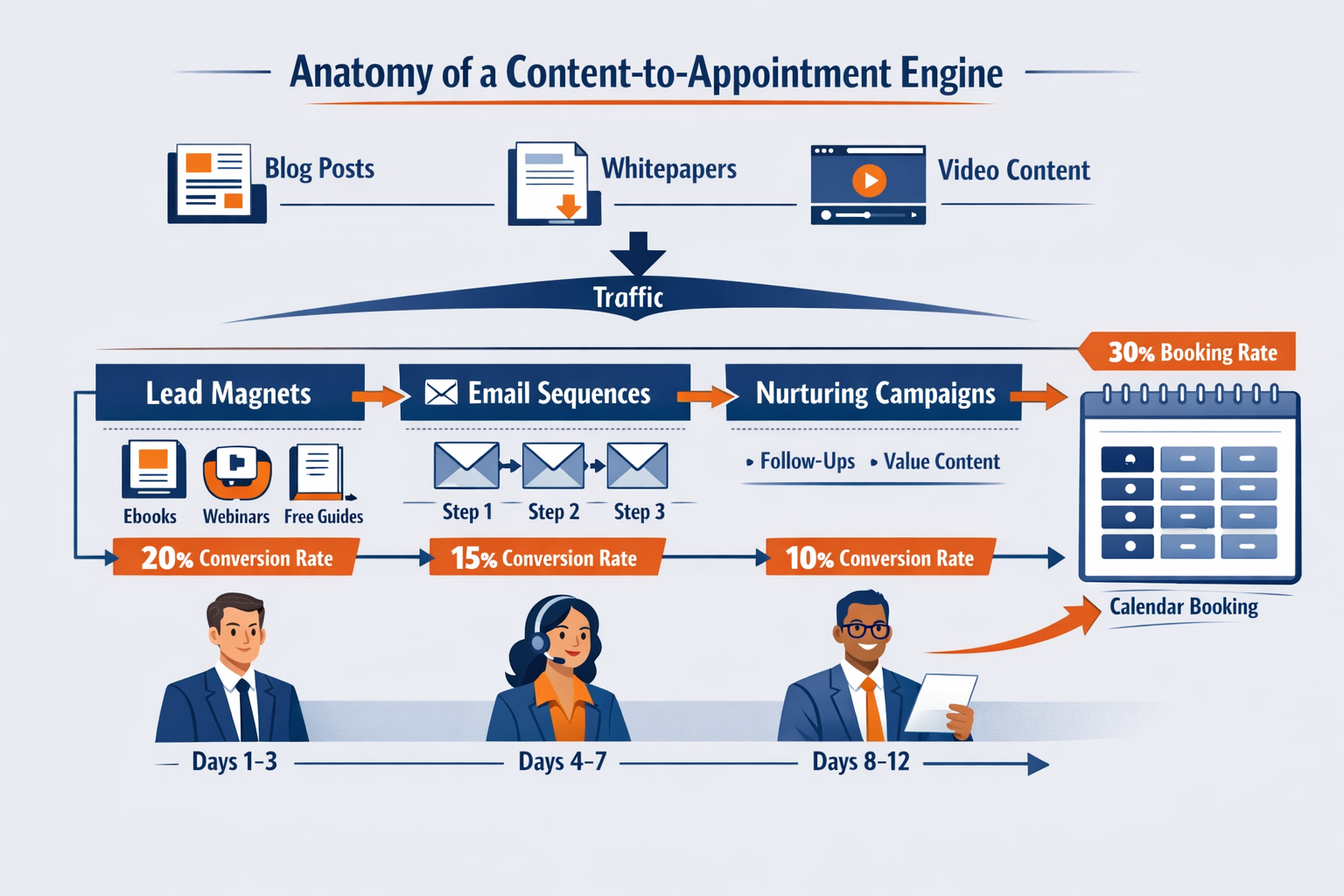
A B2B content-to-appointment engine is a systematic approach that uses valuable content to attract your ideal prospects, nurtures them through automated sequences, and converts them into booked sales appointments. Unlike traditional marketing that separates content creation from lead generation, this system treats every piece of content as a strategic step toward getting prospects on your calendar.
Think of it as a well-oiled machine where:
- Your content attracts the right people
- Your systems capture and qualify leads automatically
- Your follow-up sequences build trust and demonstrate expertise
- Your prospects book appointments because they’re already convinced you can help them
The beauty of this approach is that it works while you sleep. No more cold calling strangers or hoping your networking events pay off. Instead, you wake up to appointment requests from prospects who already understand your value.
Why Traditional B2B Marketing Falls Short
Most B2B service businesses approach marketing like they’re throwing spaghetti at the wall. They create content without a clear purpose, use five different tools that don’t talk to each other, and wonder why their “marketing efforts” feel like a part-time job with no paycheck.
Here’s what we see constantly:
- Scattered content creation with no connection to actual business goals
- Manual follow-up processes that depend on remembering to send emails
- No clear path from content consumption to appointment booking
- Inability to measure what’s actually driving appointments
The result? Business owners get frustrated, blame “marketing” for not working, and go back to the exhausting grind of manual prospecting.
Understanding the Content-to-Appointment Framework
The Complete Guide to Building a B2B Content-to-Appointment Engine revolves around a four-stage framework that we’ve refined through working with hundreds of B2B service businesses. Each stage builds on the previous one, creating a seamless experience for your prospects and a predictable system for your business.
Stage 1: Strategic Content Creation
This isn’t about creating more content; it’s about creating the right content that moves prospects closer to booking an appointment. Every piece of content should serve one of three purposes:
Awareness Content attracts new prospects who don’t know they need your services yet. Think industry insights, trend analysis, and educational content that positions you as the expert.
Consideration Content helps prospects who recognize their problem understand potential solutions. Case studies, comparison guides, and “how-to” content work well here.
Decision Content pushes qualified prospects toward booking an appointment. This includes consultative content, ROI calculators, and strategic assessments.
Stage 2: Multi-Channel Distribution
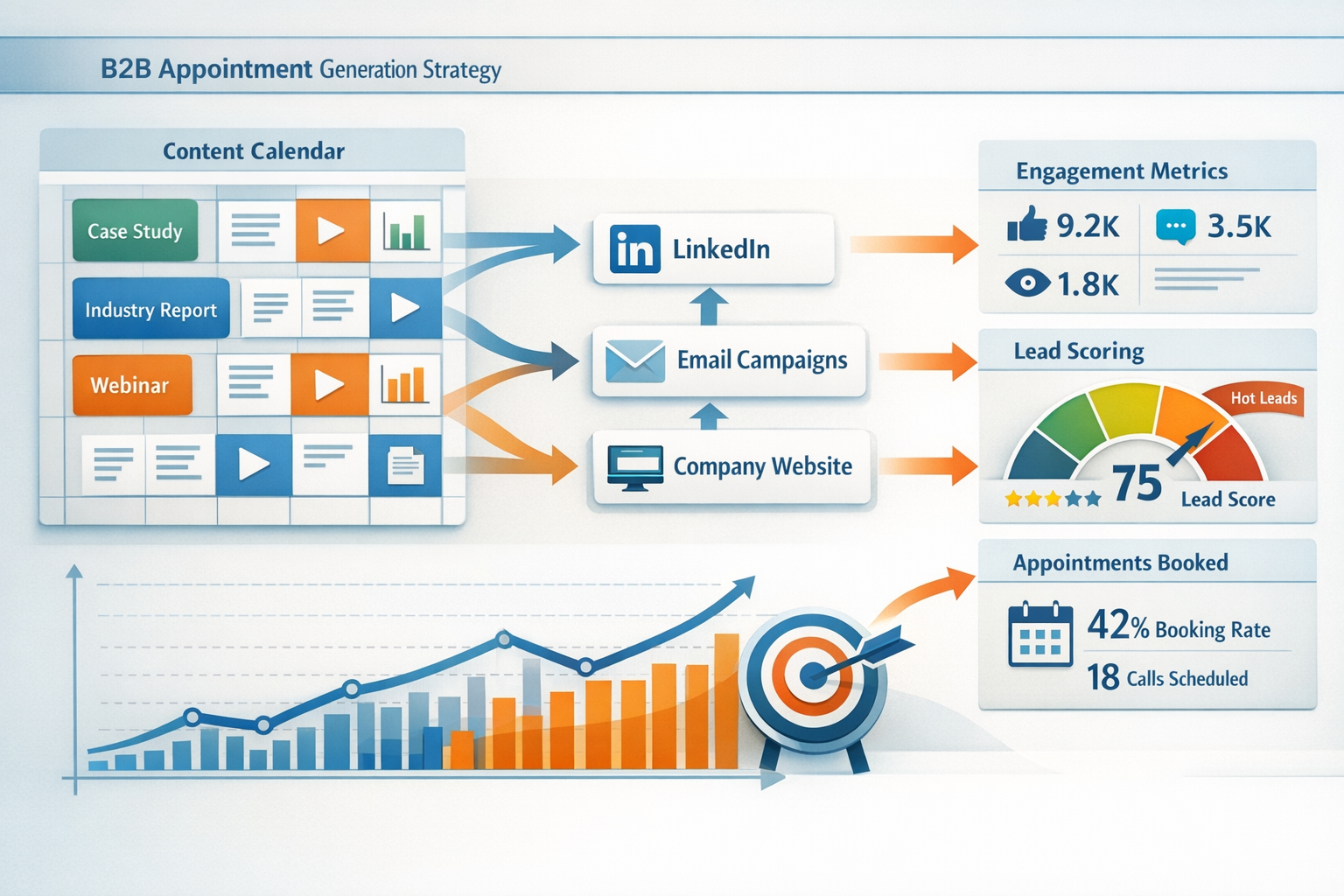
Creating great content means nothing if the right people don’t see it. Your distribution strategy should focus on where your prospects actually spend their time, not where you think they should be.
For most B2B service businesses, this means:
- LinkedIn for professional networking and thought leadership
- Email marketing for direct communication with your audience
- Your website is optimized for search and conversion
- Industry publications and guest posting opportunities
Stage 3: Automated Lead Capture and Nurturing
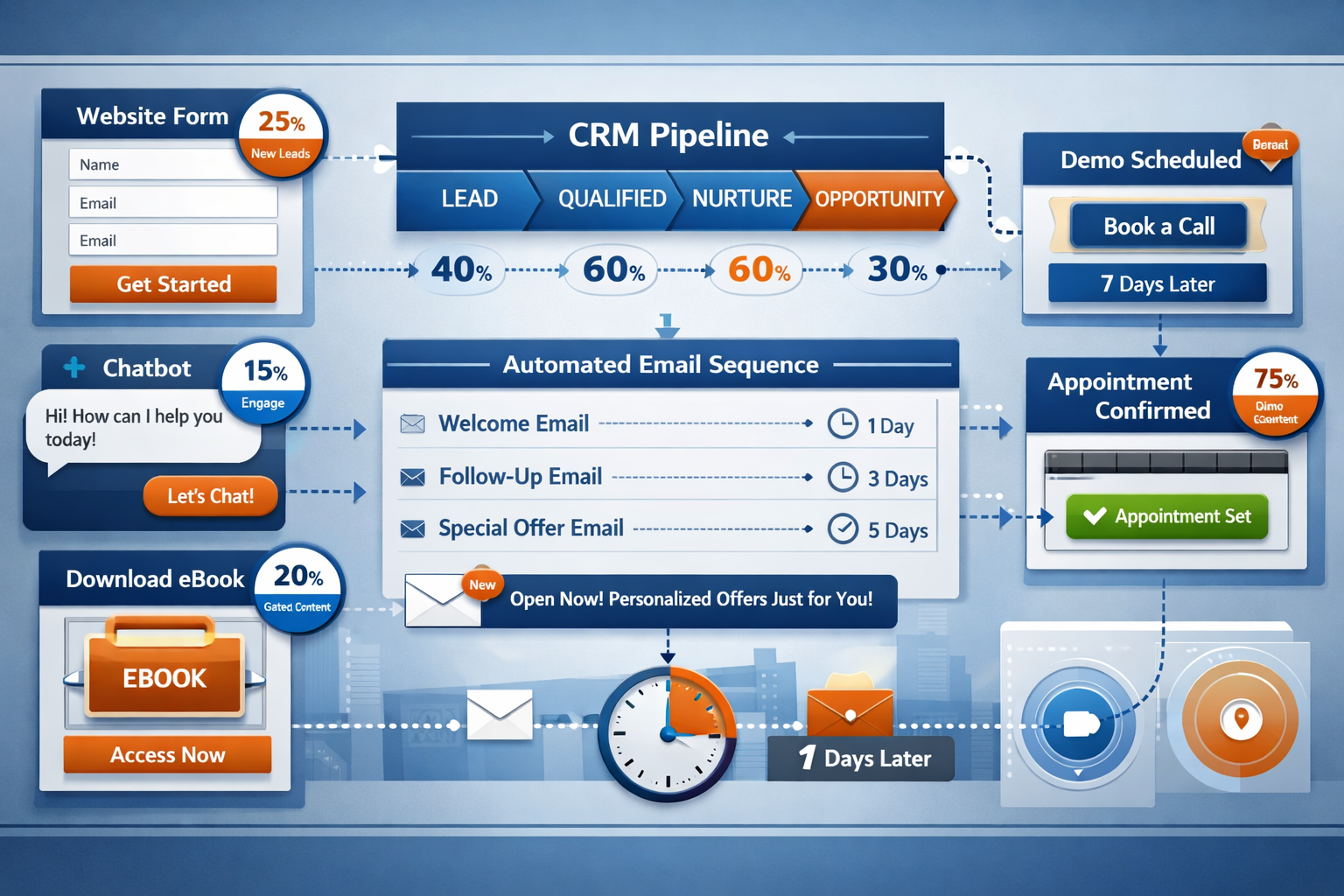
This is where the magic happens. Your content attracts prospects, but your systems capture their information and nurture them toward an appointment. This includes:
- Lead magnets that provide immediate value in exchange for contact information
- Email sequences that build trust and demonstrate expertise over time
- Lead scoring to identify when prospects are ready for sales conversations
- Automated follow-up that keeps you top-of-mind without manual effort
Stage 4: Measurement and Optimization
You can’t improve what you don’t measure. The final stage involves tracking the right metrics and continuously optimizing your system for better results.
Key metrics include:
- Content engagement rates
- Lead conversion rates
- Email open and click rates
- Appointment booking rates
- Customer acquisition cost
Building Your Content Strategy for Appointment Generation
Here’s where most B2B businesses go wrong: they create content they think their prospects want instead of content that actually drives appointments. I learned this the hard way when we first started helping businesses build these systems.
We had a client—let’s call him Mike—who ran an IT consulting firm. He was creating three blog posts per week about technical topics that showcased his expertise. The content was brilliant, but after six months, he’d generated exactly zero appointments from his content marketing efforts.
The problem? Mike was creating content for other IT professionals, not for the business owners who actually hire IT consultants. His prospects didn’t want to learn how to configure servers; they wanted to understand how reliable IT systems would help their businesses grow.
The Three-Tier Content Approach
The Complete Guide to Building a B2B Content-to-Appointment Engine requires a strategic approach to content creation that maps directly to your prospect’s journey. Here’s how we structure content for maximum appointment generation:
Tier 1: Problem-Aware Content (Top of Funnel)
This content attracts prospects who recognize they have a challenge but haven’t yet identified specific solutions. Your goal is to be helpful while positioning yourself as the expert they’ll want to work with.
Examples that work:
- “5 Signs Your Current [Service Area] Strategy Is Costing You Money.”
- “What Every [Industry] Leader Should Know About [Common Challenge]”
- “The Hidden Costs of [Common Problem] (And How to Avoid Them)”
Content formats:
- Educational blog posts
- Industry trend reports
- Diagnostic assessments
- Webinars and workshops
Tier 2: Solution-Aware Content (Middle of Funnel)
These prospects know they need help and are evaluating different approaches. Your content should demonstrate your methodology while building trust in your ability to deliver results.
Examples that work:
- “How [Your Method] Helped [Client Type] Achieve [Specific Result]”
- “The Complete Guide to Choosing the Right [Service Provider]”
- “Case Study: How We Solved [Common Challenge] for [Industry] Company”
Content formats:
- Case studies
- Comparison guides
- Process explanations
- Client success stories
Tier 3: Decision-Ready Content (Bottom of Funnel)
These prospects are ready to move forward, but need final reassurance that you’re the right choice. This content should remove final objections and make booking an appointment the obvious next step.
Examples that work:
- “What to Expect in Your First 90 Days Working with [Your Company]”
- “ROI Calculator: The True Cost of [Problem] vs. [Solution]”
- “Free Assessment: Is Your [Business Area] Optimized for Growth?”
Content formats:
- Consultative assessments
- ROI calculators
- “What to expect” guides
- Free strategy sessions
Content Creation That Actually Converts
The difference between content that gets likes and content that gets appointments comes down to one thing: relevance to your prospect’s immediate business challenges.
Every piece of content should answer one of these questions:
- How can I make more money?
- How can I save money?
- How can I reduce risk?
- How can I save time?
- How can I avoid problems?
When Mike shifted his content strategy to focus on business outcomes instead of technical features, everything changed. Instead of “How to Implement Multi-Factor Authentication,” he created “How Poor IT Security Costs Small Businesses $200,000 (And How to Prevent It).”
The result? His appointment bookings increased by 400% within three months.
Distribution Channels That Drive Appointments
Creating great content is only half the battle. The other half is getting it in front of the right people at the right time. Most B2B service businesses make the mistake of trying to be everywhere at once, spreading their efforts so thin that nothing gets the attention it deserves.
The Complete Guide to Building a B2B Content-to-Appointment Engine focuses on mastering a few key distribution channels rather than dabbling in everything. Here’s what actually works for B2B appointment generation:
LinkedIn: Your B2B Appointment Engine
LinkedIn isn’t just another social media platform; it’s where B2B decisions get made. But most businesses use LinkedIn like they use Facebook, posting random updates and hoping for engagement.
Here’s how to use LinkedIn strategically:
Personal Profile Optimization: Your personal profile should position you as the expert prospects want to meet. This means:
- A headline that speaks to business outcomes, not job titles
- A summary that focuses on client results, not your credentials
- Regular content that demonstrates expertise and drives conversations
Company Page Strategy: Your company page should support your personal brand while showcasing client success. Use it for:
- Case studies and client testimonials
- Behind-the-scenes content that builds trust
- Industry insights that position you as a thought leader
LinkedIn Content Distribution: The platform rewards consistent, valuable content. Focus on:
- Native video content (gets 5x more engagement than text posts)
- Industry insights with your unique perspective
- Client success stories (with permission)
- Educational content that solves real problems
Email Marketing: The Appointment Booking Workhorse
Email remains the highest ROI marketing channel for B2B businesses, but only when done strategically. Your email marketing should nurture prospects through the entire journey from awareness to appointment booking.
Email Sequence Strategy:
Welcome Series (Days 1-7): Introduce yourself, set expectations, and provide immediate value. This is where you establish credibility and begin building trust.
Educational Series (Weeks 2-4): Share insights, case studies, and strategic advice that demonstrate your expertise while addressing common challenges.
Social Proof Series (Weeks 5-6): Client testimonials, case studies, and results that build confidence in your ability to deliver.
Appointment Invitation Series (Week 7+): Direct invitations to book consultations, assessments, or strategy sessions.
Your Website: The 24/7 Appointment Generator
Your website should work like a skilled salesperson who never sleeps, educating prospects and guiding them toward booking an appointment. Most B2B websites fail because they focus on the company instead of the prospect’s problems.
Key Website Elements for Appointment Generation:
Problem-Focused Homepage: Lead with the problems you solve, not the services you provide. Prospects should immediately understand how you can help their business.
Resource Library: A collection of valuable content that demonstrates expertise while capturing lead information. This becomes your lead generation engine.
Clear Appointment Booking: Multiple pathways to book consultations, with clear value propositions for each type of meeting you offer.
Social Proof: Client testimonials, case studies, and results are prominently displayed throughout the site.
Lead Capture and Nurturing Systems
This is where the magic happens and where most businesses completely drop the ball. You can create the best content in the world and distribute it perfectly, but if you don’t have systems to capture and nurture leads, you’re just creating expensive entertainment.
I remember working with Jennifer, who runs a marketing consultancy. She was getting great engagement on her LinkedIn content and driving decent traffic to her website. But when we audited her systems, we discovered she was losing 95% of her website visitors without capturing any contact information.
The problem? She had great content but no strategic way to exchange value for contact information. Once we implemented proper lead capture and nurturing systems, her appointment bookings increased by 300% using the same traffic.
Strategic Lead Magnets That Actually Work
A lead magnet is valuable content you offer in exchange for contact information. But not all lead magnets are created equal. The best lead magnets for B2B appointment generation solve an immediate problem while demonstrating your expertise.
High-Converting Lead Magnet Types:
Diagnostic Assessments: Tools that help prospects evaluate their current situation. Examples:
- “IT Security Assessment: How Vulnerable Is Your Business?”
- “Marketing ROI Calculator: Are You Wasting Money on the Wrong Channels?”
- “Operational Efficiency Audit: Find Hidden Profit Opportunities”
Strategic Guides: In-depth resources that provide actionable advice. Examples:
- “The CFO’s Guide to Choosing the Right Accounting Software”
- “How to Evaluate IT Service Providers (Without Getting Burned)”
- “The Complete Guide to [Industry-Specific Challenge]”
Templates and Checklists: Ready-to-use tools that save time and effort. Examples:
- “New Employee Onboarding Checklist”
- “Quarterly Business Review Template”
- “Vendor Evaluation Scorecard”
Automated Nurturing Sequences
Once you capture a lead, your nurturing sequence should build trust, demonstrate expertise, and guide prospects toward booking an appointment. This happens automatically through email sequences triggered by specific actions.
The 7-Touch Nurturing Framework:
Touch 1 (Immediate): Deliver the promised lead magnet and set expectations for future communications.
Touch 2 (Day 2): Share a relevant case study or client success story that demonstrates results similar to what the prospect wants.
Touch 3 (Day 4): Provide additional educational content that addresses common concerns or objections.
Touch 4 (Day 7): Share social proof—testimonials, reviews, or industry recognition that builds credibility.
Touch 5 (Day 10): Offer a soft appointment invitation—perhaps a free assessment or strategy session.
Touch 6 (Day 14): Address common objections with educational content or FAQ responses.
Touch 7 (Day 21): Direct appointment invitation with a clear value proposition and an easy booking process.
Lead Scoring and Qualification
Not every lead is ready for a sales conversation. Lead scoring helps you identify which prospects are most likely to book and convert, so you can focus your personal attention where it matters most.
Behavioral Scoring Factors:
- Email engagement (opens, clicks, forwards)
- Website activity (pages visited, time spent, return visits)
- Content consumption (downloads, video views, resource access)
- Social media engagement (shares, comments, connections)
Demographic Scoring Factors:
- Company size and industry
- Job title and decision-making authority
- Geographic location
- Budget indicators
When leads reach a certain score threshold, they trigger automatic notifications to your sales team or additional nurturing sequences designed to encourage appointment booking.
Measurement and Optimization Strategies
You can’t improve what you don’t measure, but most B2B businesses track vanity metrics instead of numbers that actually matter for appointment generation. Page views and social media followers might make you feel good, but they don’t pay the bills.
The Complete Guide to Building a B2B Content-to-Appointment Engine requires tracking metrics that directly correlate with business growth. Here are the key performance indicators that actually matter:
Essential Metrics for Content-to-Appointment Success
Lead Generation Metrics:
- Website conversion rate: Percentage of visitors who become leads
- Cost per lead: Total marketing spend divided by leads generated
- Lead source performance: Which channels generate the highest-quality leads
- Content conversion rates: Which pieces of content generate the most leads
Appointment Generation Metrics:
- Lead-to-appointment rate: Percentage of leads who book appointments
- Appointment show rate: Percentage of booked appointments that actually happen
- Time to appointment: Average days from lead capture to booked appointment
- Appointment source attribution: Which content or channels drive appointments
Revenue Metrics:
- Appointment-to-sale conversion rate: Percentage of appointments that become customers
- Customer acquisition cost: Total cost to acquire each new customer
- Customer lifetime value: Total revenue from each customer relationship
- Marketing ROI: Revenue generated per dollar spent on marketing
Tools for Tracking and Optimization
The right tools make measurement and optimization possible without requiring a data science degree. Here’s what we recommend for most B2B service businesses:
All-in-One Platform Benefits:
When you use an integrated platform, all your data connects automatically. You can see exactly which content pieces drive leads, which leads book appointments, and which appointments become customers. This complete picture makes optimization decisions obvious.
Key Tracking Capabilities:
- Content performance analytics showing which pieces drive the most engagement and conversions
- Lead source tracking that follows prospects from first touch to closed sale
- Email sequence performance with open rates, click rates, and conversion tracking
- Appointment booking analytics showing conversion rates and optimization opportunities
Optimization Strategies That Drive Results
A/B Testing Framework:
Test one element at a time to identify what actually improves results:
- Email subject lines to improve open rates
- Call-to-action buttons to increase click-through rates
- Landing page headlines to boost conversion rates
- Lead magnet offers to attract more qualified prospects
Content Performance Analysis:
Regularly review which content generates the most leads and appointments:
- Double down on high-performing topics by creating related content
- Update and republish successful content to extend its reach
- Identify content gaps where prospects need more information
- Retire low-performing content that doesn’t drive results
Conversion Path Optimization:
Map out every step from content consumption to appointment booking:
- Identify drop-off points where prospects leave the process
- Simplify complex steps that create friction
- Add social proof at key decision points
- Test different appointment booking options to reduce barriers
Advanced Tactics for Maximum Results
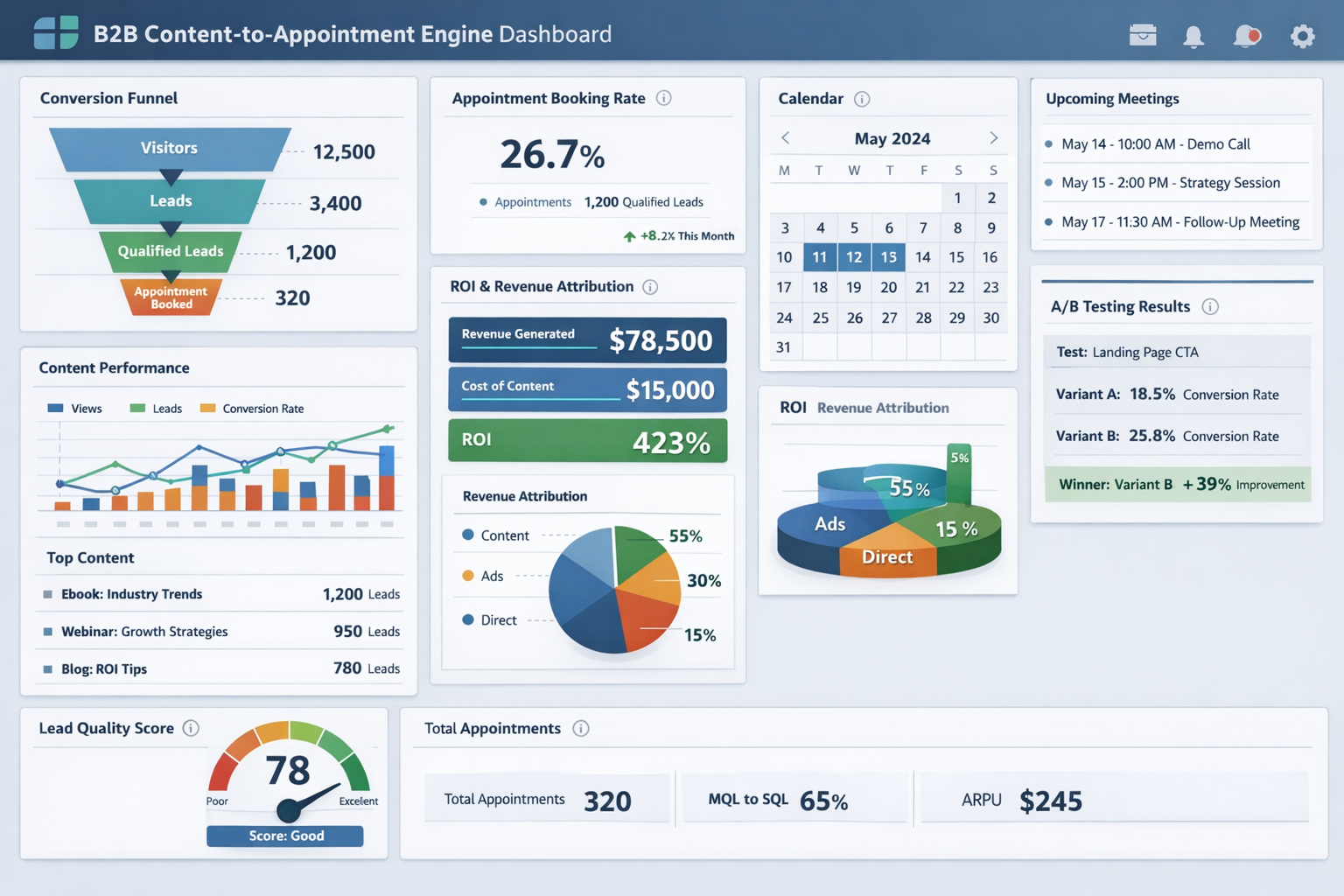
Once you have the foundation of your content-to-appointment engine working, these advanced tactics can significantly amplify your results. These strategies require more sophistication but deliver proportionally higher returns.
Personalization at Scale
Modern prospects expect personalized experiences, but most B2B businesses can’t afford to create custom content for every prospect. The solution is personalization at scale—using technology and smart segmentation to deliver relevant experiences without manual effort.
Dynamic Content Strategies:
- Industry-specific landing pages that speak directly to sector challenges
- Role-based email sequences tailored to different decision-makers
- Company size segmentation with appropriate case studies and examples
- Geographic customization for local market relevance
Behavioral Trigger Campaigns:
Set up automated campaigns triggered by specific prospect behaviors:
- High-value content consumption triggers premium resource offers
- Multiple email opens trigger direct outreach from the sales team
- Website return visits trigger retargeting campaigns
- Abandoned appointment bookings trigger follow-up sequences
Strategic Partnership Integration
Your content-to-appointment engine becomes more powerful when integrated with strategic partnerships. This expands your reach without proportionally increasing your effort.
Cross-Promotion Opportunities:
- Guest content creation for partner audiences
- Joint webinars and workshops that showcase complementary expertise
- Referral content that makes it easy for partners to recommend you
- Co-created resources that provide more comprehensive value
Account-Based Content Marketing
For B2B businesses targeting specific high-value accounts, account-based content marketing can dramatically improve appointment booking rates with key prospects.
Account-Specific Strategies:
- Custom case studies featuring similar companies in the same industry
- Personalized video content addressing specific company challenges
- Industry trend analysis relevant to the target account’s market position
- Executive-level content designed for C-suite consumption
Conclusion: Your Next Steps to Building a Predictable Appointment Engine
Building a B2B content-to-appointment engine isn’t just about marketing; it’s about creating a predictable system for business growth. When done correctly, this system generates qualified appointments while you focus on what you do best: serving clients and growing your business.
The businesses that succeed with this approach share three characteristics:
- They commit to the complete system instead of implementing pieces randomly
- They focus on their prospects’ business outcomes instead of their own credentials
- They measure what matters and optimize based on actual results
Remember Sarah from the beginning of this article? Her cybersecurity consulting firm now generates 12-15 qualified appointments monthly because she followed this exact framework. She didn’t need to become a marketing expert; she needed systems that actually work.
Your immediate next steps:
- Audit your current content to identify gaps in your prospect journey
- Choose your primary distribution channels and commit to mastering them
- Implement lead capture systems on your highest-traffic content
- Set up basic nurturing sequences to guide prospects toward appointments
- Establish measurement systems to track what actually drives appointments
The difference between businesses that struggle with inconsistent leads and those with predictable appointment flows comes down to systems. You can keep hoping your networking and referrals will sustain your growth, or you can build a content-to-appointment engine that works whether you’re in the office or on vacation.
The choice is yours. The framework is proven. The only question is: when will you start building your appointment engine?

