
The Hidden Reasons Prospects Choose Competitors

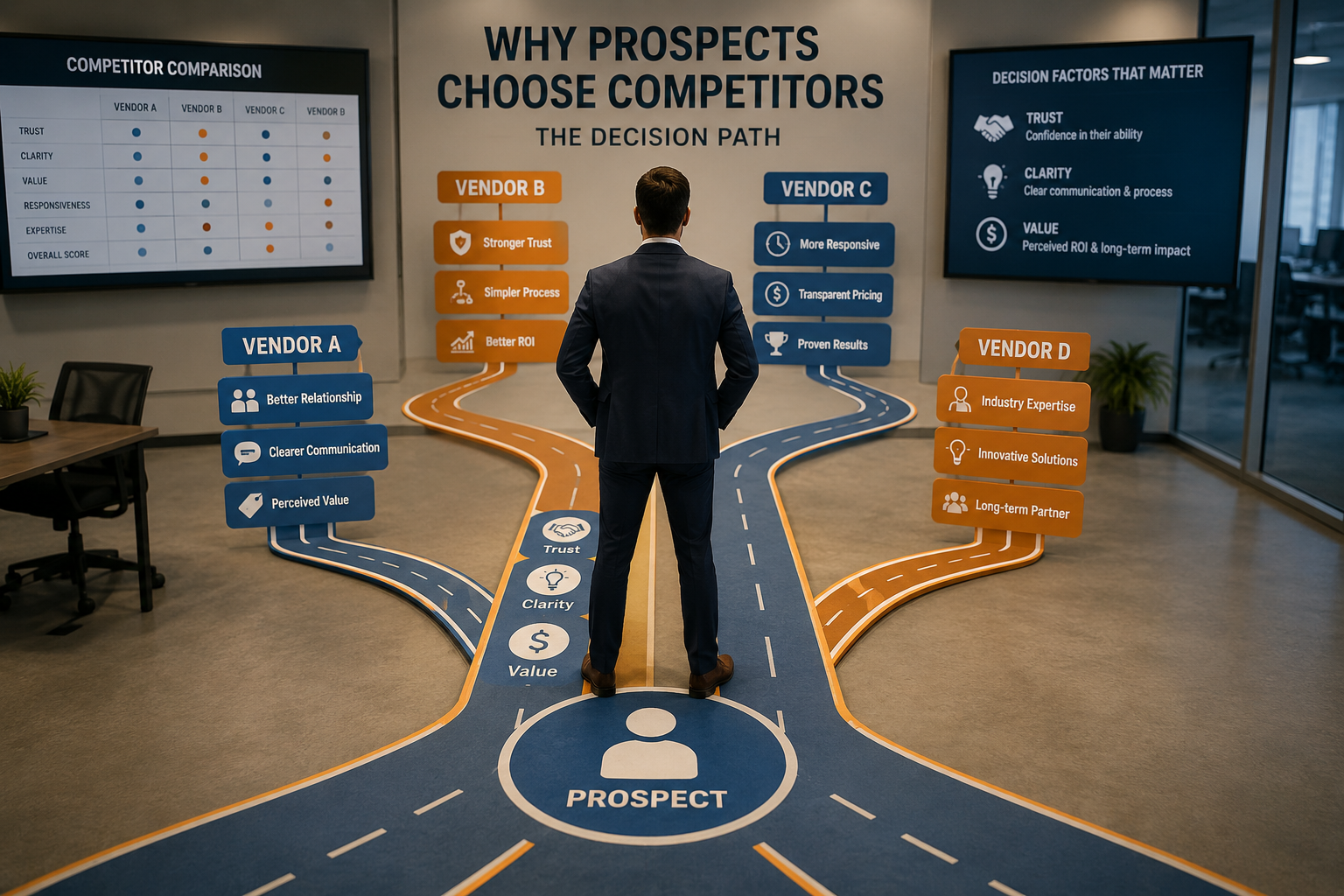
Why Do Customers Pick Other Companies Over Us
Customers choose competitors over your business primarily due to perception gaps that form before meaningful dialogue begins. Your prospects evaluate credibility, clarity, and competence through digital touchpoints like your website, social media presence, and online reviews within seconds of discovery.
The most common reasons for business competition include unclear value propositions, poor website user experience, and a lack of social proof. When prospects can’t quickly understand what you do or how you help businesses like theirs, they move to competitors who communicate more clearly.
Key factors driving competitor selection:
- First impression failures: Outdated websites, unclear messaging, or slow loading times
- Trust deficits: Missing testimonials, case studies, or professional credentials
- Complexity barriers: Complicated pricing, lengthy sales processes, or technical jargon
- Response delays: Slow follow-up times or difficult contact processes
We see this pattern repeatedly with our clients. Before implementing our complete done-for-you system, many lost prospects simply because their websites didn’t clearly communicate their expertise or value proposition within those critical first 30 seconds.
What Factors Make Someone Choose a Different Vendor
Vendor selection decisions hinge on three primary customer decision factors: perceived competence, decision ease, and risk mitigation. Prospects gravitate toward vendors who appear most capable of solving their problems with minimal hassle and maximum reliability.
Competence signals that influence choice:
- Professional website design and functionality
- Relevant case studies and client testimonials
- Clear explanation of services and outcomes
- Industry-specific expertise demonstration
Decision ease factors:
- Simple pricing structure and clear next steps
- Responsive communication and quick follow-up
- Streamlined onboarding or implementation process
- Accessible contact methods and scheduling options
Risk mitigation elements:
- Established track record with similar businesses
- Transparent processes and expectations
- Professional credentials and certifications
- Clear guarantees or service level agreements
Choose vendors who excel in all three areas if you want to understand why prospects choose competitors. Most businesses focus only on competence while ignoring the ease of decision-making and risk factors that actually drive final choices.
How Much Does Price Really Matter When Buying
Price ranks fourth or fifth among customer decision factors for most B2B purchases, despite being the most commonly cited objection. Research indicates that value perception, trust, and decision confidence typically outweigh pure price considerations in professional service purchases.
When price becomes the deciding factor:
- All vendors appear equally competent and trustworthy
- The buyer lacks budget flexibility or authority
- No clear differentiation exists between options
- The purchase is viewed as a commodity transaction
When other factors override price:
- Significant expertise or outcome differences are apparent
- Trust levels vary substantially between vendors
- Implementation complexity differs meaningfully
- Long-term relationship value is prioritized
Most lost deals to competitors that cite “price” actually reflect failures in value communication or trust building. When prospects truly understand your unique value and trust your ability to deliver, price objections decrease significantly.
We build websites and content that clearly communicate value propositions, helping our clients compete on outcomes rather than price. This approach typically increases close rates while maintaining healthy profit margins.
What Are Common Red Flags That Make Customers Walk Away
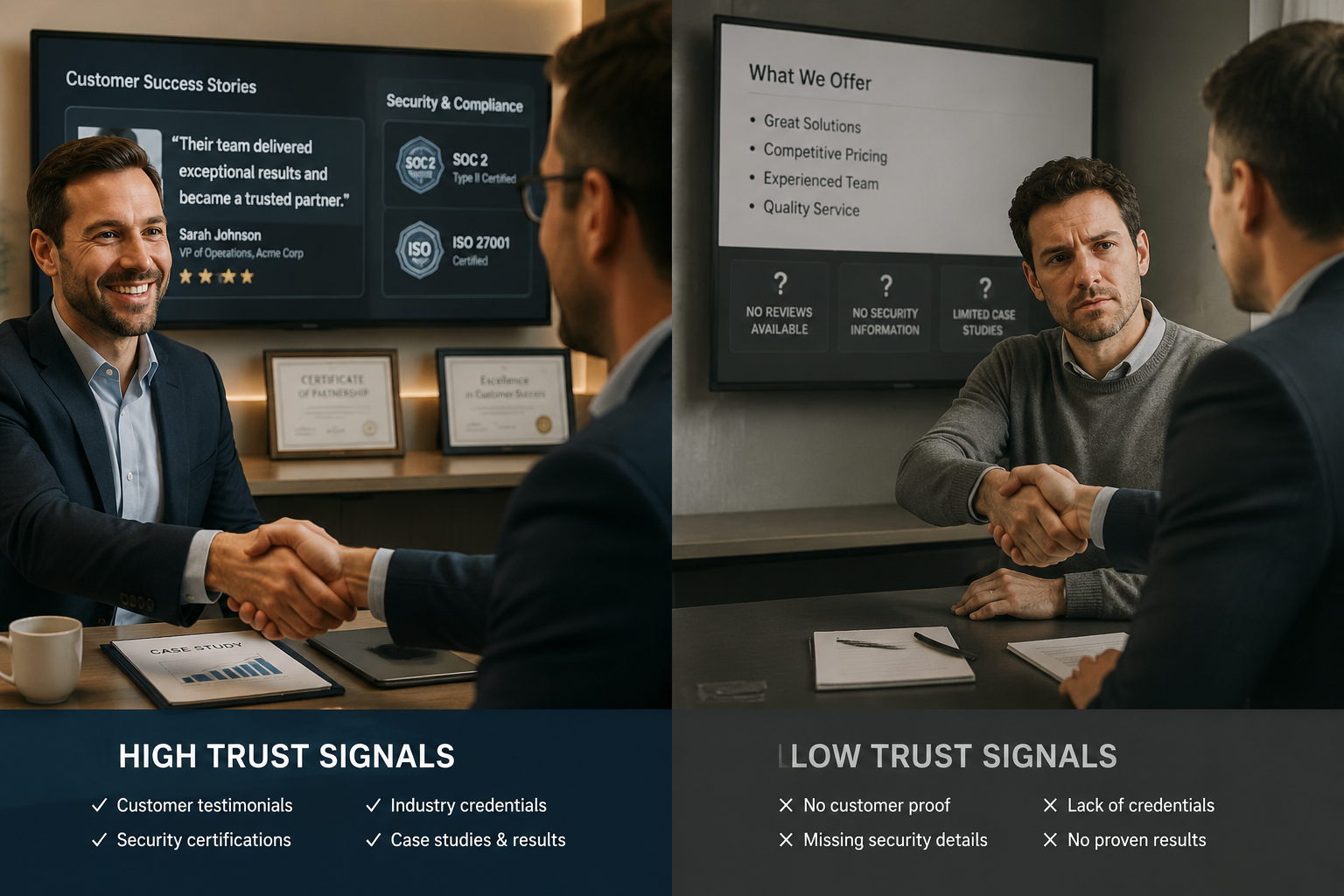
Customers abandon potential vendors due to red flags that signal risk, unprofessionalism, or poor service quality. These warning signs often appear during initial research phases, causing prospects to eliminate options before direct contact occurs.
Major red flags that drive prospects away:
Website and communication issues:
- Outdated content, broken links, or poor mobile experience
- Generic messaging that doesn’t address specific industry needs
- Missing contact information or difficult-to-find pricing
- Slow response times to inquiries or scheduling requests
Credibility concerns:
- Lack of client testimonials or verifiable case studies
- No clear team information or professional credentials
- Absent or negative online reviews and ratings
- Unprofessional social media presence or inactive profiles
Process and service warnings:
- Overly complex sales processes or excessive information requests
- Pushy sales tactics or pressure for immediate decisions
- Unclear service delivery timelines or expectations
- Poor communication during initial interactions
Avoid these red flags by maintaining a professional digital presence and implementing systems that actually work. Our all-in-one platform helps businesses present consistently professional experiences from the first website visit through service delivery.
What Do Our Competitors Do Better Than Us
Competitors who consistently win deals typically excel in three areas: clarity of communication, speed of response, and systematic follow-up processes. They make it easier for prospects to understand their value and take next steps toward engagement.
Common competitive advantages:
Superior positioning and messaging:
- Clear, benefit-focused value propositions
- Industry-specific case studies and testimonials
- Professional website design optimized for conversions
- Consistent branding across all touchpoints
Faster response and engagement:
- Automated lead capture and immediate follow-up
- Easy scheduling and streamlined initial consultations
- Quick proposal turnaround and clear next steps
- Proactive communication throughout the sales process
Better systems and processes:
- Leads captured and nurtured automatically through multiple touchpoints
- Professional proposals and presentation materials
- Systematic follow-up that maintains engagement
- Clear onboarding and service delivery processes
Most small businesses lose to competitors not because of inferior services, but because of inferior systems. We build the website and content that positions our clients as the obvious choice, plus automated follow-up systems that keep prospects engaged until they’re ready to buy.
Warning Signs a Potential Client Might Go With Someone Else
Several behavioral indicators suggest prospects are considering competitors or losing interest in your solution. Recognizing these warning signs early allows for course correction before losing the deal entirely.
Early warning indicators:
Communication pattern changes:
- Delayed responses to emails or calls
- Shorter, less detailed replies to questions
- Reduced enthusiasm or engagement during conversations
- Requests to “think about it” without specific timelines
Decision process signals:
- Questions about your competitors or their approaches
- Requests for references from very specific industries
- Concerns about implementation timelines or complexity
- Focus on price rather than outcomes or value
Engagement red flags:
- Cancelled or rescheduled meetings without clear alternatives
- Reduced stakeholder participation in discussions
- Vague responses about budget or decision authority
- Lack of follow-through on agreed next steps
Address these warning signs immediately with value reinforcement, social proof, and simplified decision processes. Our automated follow-up systems help identify engagement drops early and provide systematic responses that re-engage prospects before they choose competitors.
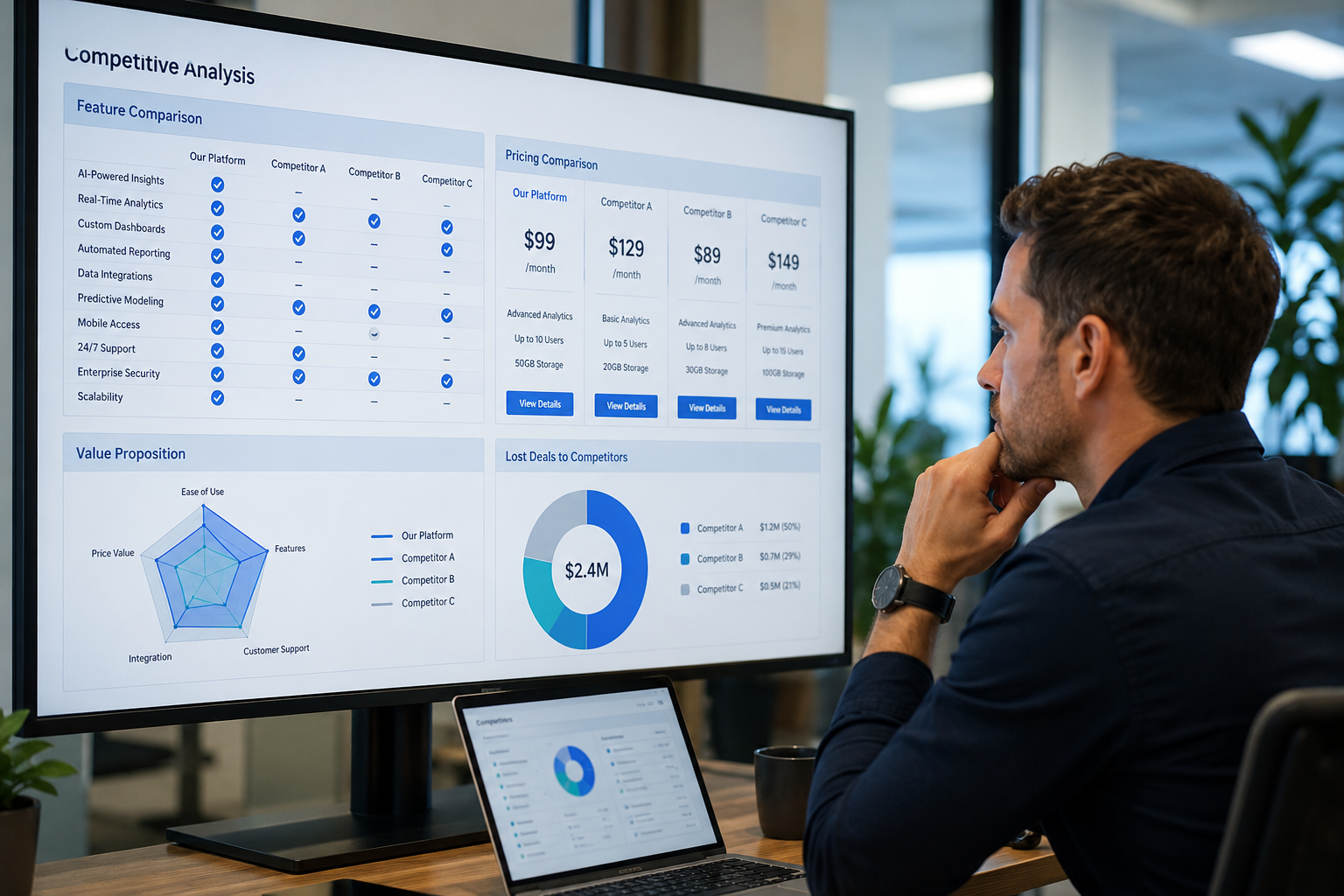
How to Understand Why We’re Losing Sales Deals
Understanding lost deals to competitors requires systematic analysis of your sales process, competitive positioning, and prospect feedback patterns. Most businesses never conduct this analysis, missing critical insights about customer decision factors.
Steps to analyze lost deals:
-
Track loss reasons systematically
- The document stated the reasons for all lost opportunities
- Identify patterns in timing, objections, and competitor choices
- Analyze which sales stage most losses occur in
-
Conduct post-loss interviews
- Contact lost prospects 30-60 days after decisions
- Ask specific questions about the decision criteria and process
- Understand what competitors offered that you didn’t
-
Evaluate your positioning
- Compare your website and materials to those of winning competitors
- Assess the clarity of the value proposition and differentiation
- Review testimonials and case study relevance
-
Analyze response and follow-up timing
- Measure time from inquiry to initial response
- Track engagement levels throughout the sales process
- Identify gaps in communication or follow-up
Most small businesses discover they’re losing deals due to poor first impressions, unclear value communication, or inadequate follow-up systems rather than inferior services. Our complete done-for-you system addresses these common loss factors with professional websites, clear messaging, and automated nurturing that keeps prospects engaged.
What Information Do Prospects Want That We’re Not Providing
Prospects seek specific information that reduces their decision risk and builds confidence in vendor selection. Missing information creates uncertainty that drives prospects toward competitors who provide clearer, more comprehensive details.
Critical information prospects need:
Service clarity and outcomes:
- Specific descriptions of what you do and how you do it
- Expected timelines and implementation processes
- Clear success metrics and outcome examples
- Pricing structure and investment requirements
Credibility and social proof:
- Relevant client testimonials and case studies
- Team credentials and industry experience
- Process explanations and quality assurance measures
- Guarantees or service level commitments
Decision-making support:
- Clear next steps and engagement process
- Comparison information addressing common alternatives
- Risk mitigation strategies and backup plans
- Implementation support and ongoing relationship details
Provide this information proactively through your website, proposals, and sales conversations. We build websites and content that address these information needs systematically, reducing prospect uncertainty and accelerating decision processes.
Differences Between Our Solution and Top Competitors
Understanding competitive differentiation helps prospects make confident decisions while positioning your business as the superior choice. Most businesses fail to articulate meaningful differences, allowing prospects to view all options as essentially equivalent.
Framework for competitive differentiation:
Service delivery approach:
- Your unique methodology or process
- Implementation timeline and support level
- Quality assurance and outcome guarantees
- Ongoing relationship and maintenance offerings
Expertise and specialization:
- Industry-specific experience and knowledge
- Team credentials and track record
- Technology or tools that enhance results
- Proprietary systems or intellectual property
Business model advantages:
- Pricing structure benefits for clients
- Service flexibility and customization options
- Communication and reporting processes
- Long-term partnership approach
Choose differentiation factors that matter to your target prospects and communicate them clearly throughout your marketing and sales process. Our all-in-one platform helps businesses identify and communicate their unique advantages while building systems that deliver on those promises consistently.
What Sales Objections Kill a Deal Before It Starts
Pre-emptive objections form in prospects’ minds before sales conversations begin, based on website content, pricing presentation, or initial interactions. These unspoken concerns eliminate your business from consideration without allowing you to address them directly.
Common pre-conversation deal killers:
Pricing and value concerns:
- Sticker shock from poorly presented pricing
- Unclear return on investment or outcome expectations
- Comparison disadvantage due to incomplete information
- Perceived overpricing relative to apparent expertise level
Trust and credibility gaps:
- Lack of relevant testimonials or case studies
- Unprofessional website or marketing materials
- Missing team information or credentials
- Negative or absent online reviews
Process and complexity fears:
- Overly complicated service descriptions
- Unclear implementation timelines or requirements
- Lengthy sales processes or excessive information requests
- Poor initial communication or response times
Address these objections proactively through clear positioning, professional presentation, and systematic follow-up. Our free smart website built for you includes social proof, clear value propositions, and a pricing presentation that minimizes pre-conversation objections.
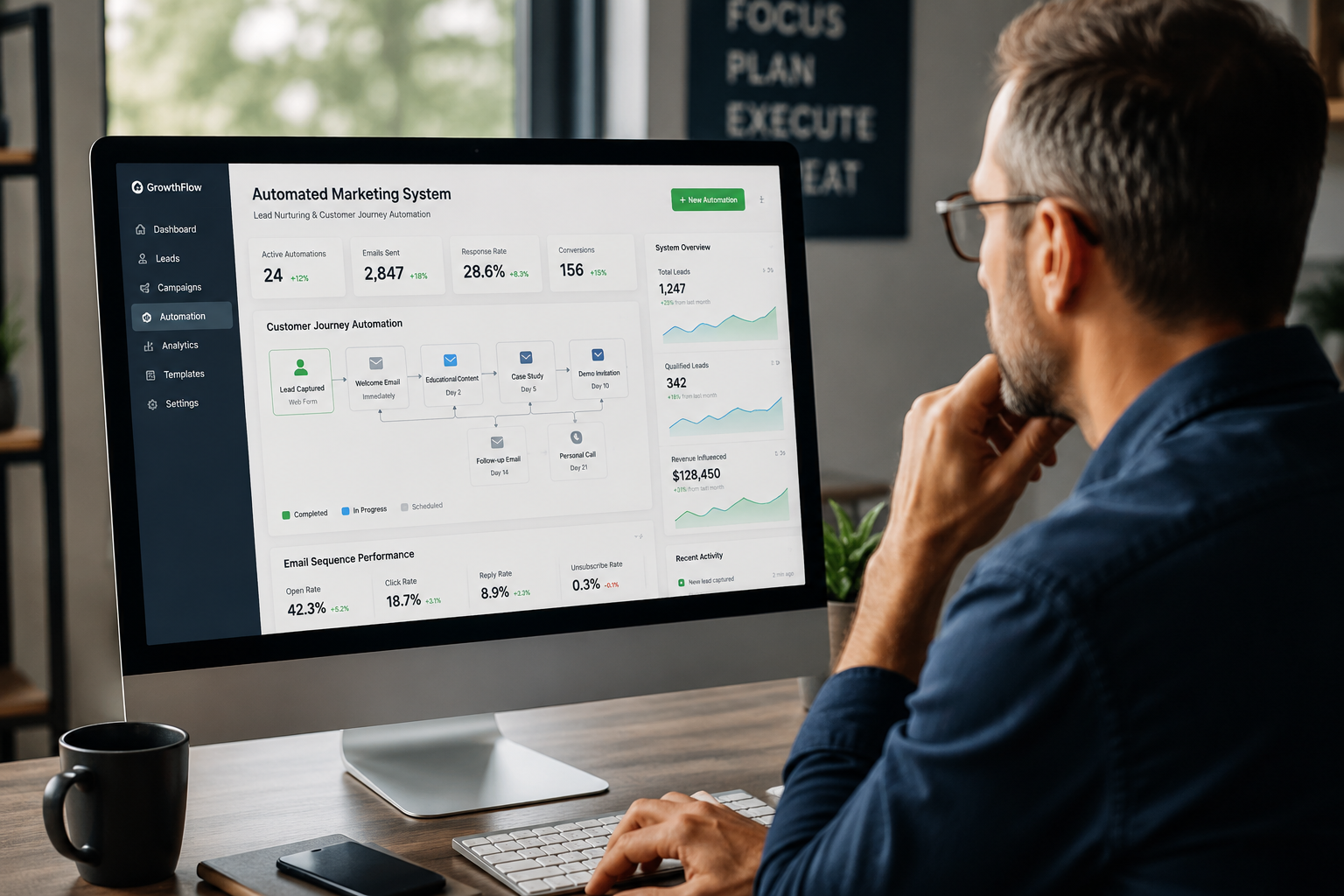
How Do Customers Actually Make Buying Decisions
B2B customers follow predictable decision-making patterns that prioritize risk reduction over feature optimization. Understanding these patterns helps position your business to align with natural buying psychology rather than fighting against it.
Typical B2B decision sequence:
- Problem recognition and initial research (online, referrals, recommendations)
- Vendor identification and preliminary screening (websites, reviews, social proof)
- Information gathering and comparison (proposals, conversations, references)
- Risk assessment and final evaluation (implementation concerns, relationship factors)
- Decision confirmation and commitment (contracts, onboarding, expectations)
Decision factors by priority:
- Risk mitigation and outcome confidence (40%)
- Relationship and communication quality (25%)
- Service capability and expertise (20%)
- Price and investment considerations (15%)
Most customers eliminate 60-70% of potential vendors during steps 1-2, before meaningful sales conversations occur. This makes a professional digital presence and clear positioning critical for staying in consideration.
We build systems that guide prospects through this natural decision process while building confidence at each stage. Our complete done-for-you system ensures you make positive impressions during those critical early evaluation phases.
Mistakes Businesses Make That Drive Customers to Competitors
Small businesses consistently make positioning and communication mistakes that push prospects toward competitors, often without realizing the impact on their sales pipeline. These errors compound over time, creating systematic competitive disadvantages.
Critical positioning mistakes:
Website and digital presence errors:
- Generic messaging that doesn’t address specific problems
- Poor mobile experience or slow loading speeds
- Missing or weak calls-to-action and contact information
- Outdated content that suggests an inactive or declining business
Communication and follow-up failures:
- Slow response times to inquiries and scheduling requests
- Inconsistent follow-up or gaps in prospect nurturing
- Overly technical or jargon-heavy explanations
- Failure to provide clear next steps or decision frameworks
Trust and credibility gaps:
- Insufficient social proof or irrelevant testimonials
- Lack of process transparency or outcome guarantees
- Poor presentation materials or unprofessional proposals
- Inconsistent branding across marketing touchpoints
Avoid these mistakes by implementing professional systems and consistent processes. Our all-in-one platform eliminates common errors through automated follow-up, professional presentation materials, and clear positioning that builds trust systematically.
What Hidden Factors Influence B2B Purchase Choices
Hidden psychological and emotional factors significantly influence B2B purchasing decisions, often outweighing logical feature comparisons or price considerations. These factors operate below conscious awareness but drive final vendor selection.
Key psychological influences:
Confidence and certainty factors:
- Perceived expertise and authority signals
- Social proof from similar businesses or industries
- Clear processes and predictable outcomes
- Professional presentation and communication quality
Risk perception elements:
- Implementation complexity and support availability
- Vendor stability and long-term relationship potential
- Guarantee or recourse options if outcomes disappoint
- Reference availability and verification ease
Decision ease considerations:
- Information accessibility and clarity
- Response speed and communication efficiency
- Process simplicity and next-step obviousness
- Stakeholder buy-in and consensus-building support
These hidden factors explain why prospects sometimes choose more expensive or seemingly inferior solutions. The vendor who reduces decision anxiety and builds confidence typically wins regardless of feature superiority.
Our systems address these psychological factors through professional positioning, clear processes, and automated nurturing that builds confidence throughout the decision journey. We understand that winning deals requires more than superior services—it requires superior prospect experience.
Frequently Asked Questions
Why do prospects ghost us instead of giving feedback about their decision?
Most prospects avoid confrontational conversations and choose the path of least resistance. They prefer to simply stop responding rather than explain their concerns or justify their choice of competitors. This behavior protects them from sales pressure while avoiding potentially uncomfortable discussions about their shortcomings.
How can we tell if price is the real objection or just an excuse?
Real price objections include specific budget constraints, approval processes, or cash flow timing issues. Price excuses typically involve vague statements like “too expensive” without context, comparisons to unrealistic alternatives, or immediate price focus without value discussion. Ask specific questions about budget parameters and decision criteria to distinguish between the two.
What’s the most important factor in preventing lost deals to competitors?
Professional first impressions through your website and initial communications have the highest impact on deal retention. Most prospects eliminate vendors within 30 seconds of website visits, so clear positioning, social proof, and easy navigation significantly reduce competitive losses before sales conversations begin.
How long should we wait before following up with prospects who go silent?
Follow up within 24-48 hours of silence, then use systematic intervals: 3 days, 1 week, 2 weeks, and monthly thereafter. Provide value in each follow-up rather than just checking in. Automated follow-up systems maintain consistent contact without appearing pushy or desperate.
Should we ask prospects directly about competitors they’re considering?
Yes, but frame it as helping them make the best decision rather than competitive intelligence gathering. Ask about their evaluation criteria, decision timeline, and what factors matter most. This positions you as a consultant rather than a salesperson while revealing competitive threats.
What’s the biggest mistake small businesses make when losing deals?
Failing to address unspoken concerns about credibility and risk. Small businesses often focus on features and price while ignoring trust-building elements like testimonials, case studies, and professional presentation. Prospects need confidence in your ability to deliver before they care about your capabilities.
How do we compete against larger, more established competitors?
Emphasize personalized service, faster implementation, and direct access to decision-makers. Position size as an advantage through flexibility, responsiveness, and customization capabilities that larger firms can’t match. Use local market knowledge and relationship focus as differentiators.
What role does timing play in why prospects choose competitors?
Timing affects both readiness to buy and competitive positioning. Prospects often choose vendors who engage them when they’re actively evaluating solutions. Early engagement through content marketing and systematic follow-up increases your chances of being top-of-mind when buying decisions occur.
How can we improve our win rate without lowering prices?
Focus on value communication, trust building, and decision ease rather than price competition. Improve website clarity, add relevant social proof, streamline your sales process, and implement faster follow-up systems. Most deals are won or lost on confidence and convenience, not price.
What’s the most effective way to gather competitive intelligence?
Monitor competitor websites, social media, and client testimonials regularly. Conduct post-loss interviews with prospects who chose competitors. Ask current clients about alternatives they considered and why they chose you. This provides insight into competitive advantages and positioning opportunities.
How do automated systems help prevent lost deals?
Automated systems ensure consistent follow-up, provide immediate responses to inquiries, and nurture prospects systematically until they’re ready to buy. They eliminate human errors like missed follow-ups or delayed responses that often push prospects toward more responsive competitors.
What should we do if we discover we’re consistently losing to the same competitor?
Analyze their positioning, messaging, and service delivery approach thoroughly. Identify specific advantages they communicate and develop counter-positioning that highlights your unique strengths. Consider whether you need to adjust your target market, pricing strategy, or service offerings to compete more effectively.
Conclusion
Understanding why prospects choose competitors without telling you requires looking beyond stated objections to examine the hidden factors that drive B2B purchasing decisions. Most lost deals to competitors happen during initial evaluation phases, before meaningful sales conversations occur, due to poor first impressions, unclear positioning, or inadequate follow-up systems.
The key customer decision factors—trust, clarity, and decision ease—often matter more than product features or price in final vendor selection. Prospects eliminate options quickly based on website experience, social proof availability, and communication quality rather than conducting thorough capability comparisons.
Business competition reasons frequently center on risk perception and confidence levels rather than logical feature analysis. The vendor who reduces decision anxiety while building trust through professional presentation and systematic follow-up typically wins regardless of price or capability advantages.
We help small businesses address these competitive challenges through our complete done-for-you system that includes professional websites, clear positioning, and automated follow-up processes. Our all-in-one platform ensures you make positive impressions during critical early evaluation phases while nurturing prospects systematically until they’re ready to buy.
Ready to stop losing deals to competitors? We build the website and content that positions your business as the obvious choice, plus automated systems that keep prospects engaged throughout their decision process. Contact us to learn how our predictable growth system can help you win more deals without competing on price.

