
High-Converting B2B Content That Drives Qualified Leads

The Real Problem with Most B2B Content Marketing
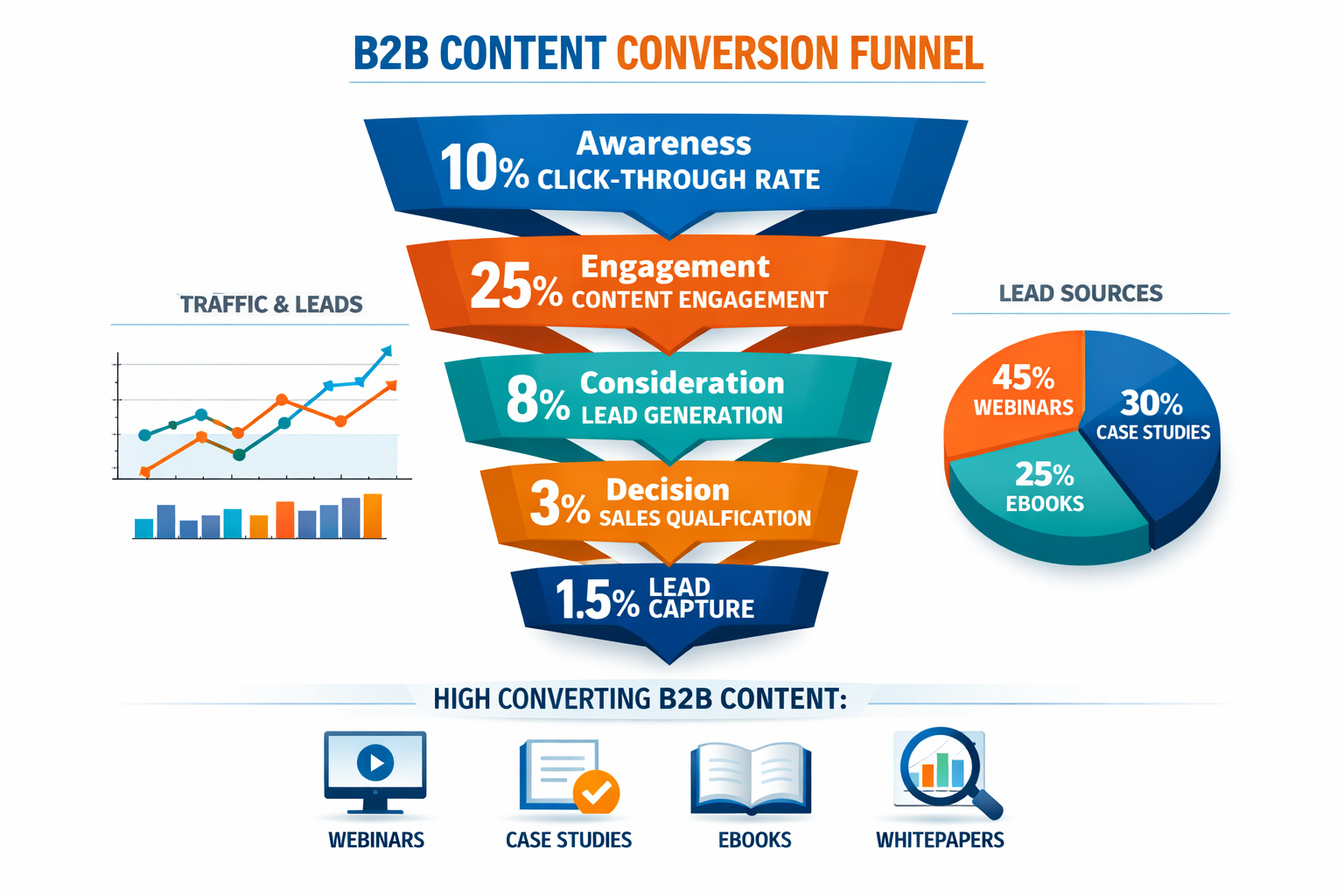
Here’s what I’ve learned after helping dozens of small B2B businesses transform their content strategy: most companies are playing the wrong game entirely. They’re optimizing for vanity metrics like page views and time on site, when they should be laser-focused on lead quality and conversion rates.
Last month, I worked with a Metro Atlanta consulting firm that was getting 5,000 monthly visitors to their blog but generating maybe two qualified leads per month from all that traffic. Their content was well-written and informative, but it wasn’t designed to convert. They had fallen into the classic trap of creating “educational” content that educated their prospects right out of buying from them.
The shift we made was simple but powerful: instead of just answering questions, we started creating content that identified problems, provided partial solutions, and then offered complete solutions through their services. Within 60 days, they were generating 15-20 qualified leads monthly from the same traffic volume.
What Makes High-Converting B2B Content Different
Intent-Based Content Strategy
High-converting B2B content starts with understanding where your prospects are in their buying journey. Are they just becoming aware of a problem? Are they actively researching solutions? Are they comparing vendors? Each stage requires different content approaches.
Early-stage prospects need educational content that helps them recognize and understand their challenges. But here’s the key: even educational content can include subtle lead capture opportunities. We do this by offering deeper resources, assessments, or tools that require contact information.
Mid-stage prospects are actively looking for solutions. This is where case studies, comparison guides, and detailed how-to content shine. These prospects are more willing to exchange contact information for valuable insights.
Late-stage prospects want proof and specifics. They need detailed case studies, ROI calculators, and direct consultations. Your content should make it easy for them to take the next step.
Strategic Lead Capture Points
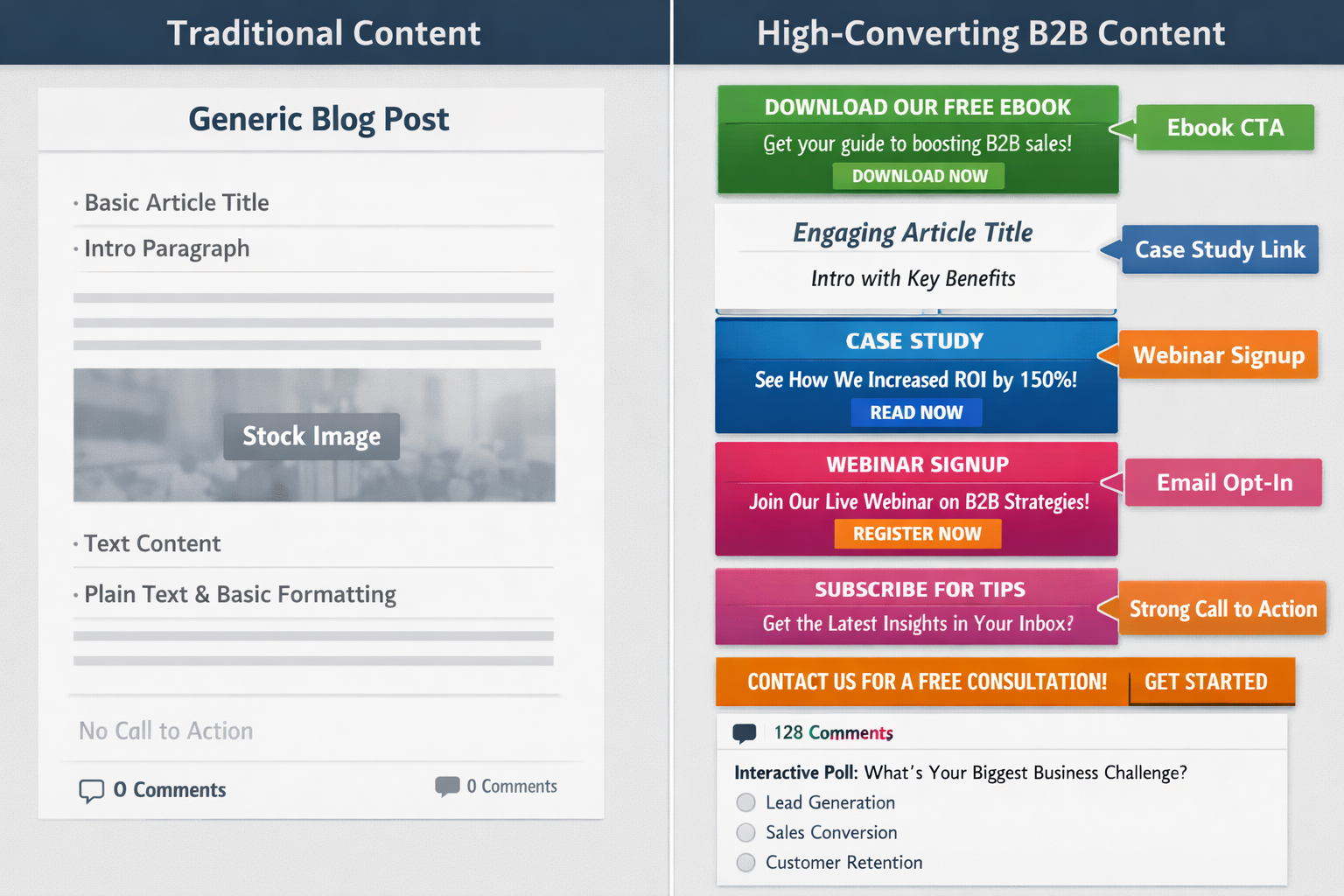
Most businesses make the mistake of only including one call-to-action at the end of their articles. High-converting B2B content includes multiple strategic touchpoints:
- Early hook (first 200 words): Offer a relevant resource or assessment
- Mid-article value add: Provide a downloadable template, checklist, or guide
- Problem/solution transition: Invite readers to discuss their specific situation
- Conclusion CTA: Clear next step aligned with the article’s main topic
The key is making each offer feel natural and valuable, not pushy or sales-focused.
Ready to Transform Your Content Strategy?
Stop creating content that just gets read. Start creating content that generates leads.
We build complete done-for-you systems that turn your expertise into a predictable lead generation engine. No tech knowledge required – we handle everything from your free smart website built for you to automated follow-up systems that nurture prospects while you focus on closing deals.
The Architecture of High-Converting B2B Content
Hook Them with Immediate Value
Your opening needs to do more than grab attention – it needs to demonstrate immediate value and relevance. I’ve found that starting with a specific, relatable scenario works better than generic statistics or broad statements.
Instead of: “Content marketing is important for B2B businesses…”
Try: “Your last three blog posts got great engagement, but when you checked your CRM, zero new leads came from them. Here’s why that’s happening and how to fix it.”
The second approach immediately identifies with your reader’s frustration and promises a solution. It also subtly positions you as someone who understands their challenges.
Structure for Scanners and Deep Readers
B2B decision-makers are busy. They scan first, then read deeply if you’ve earned their attention. Your content structure should accommodate both behaviors:
For scanners:
- Clear, descriptive subheadings
- Bullet points and numbered lists
- Bold key phrases and takeaways
- Visual breaks between sections
For deep readers:
- Detailed explanations and examples
- Supporting data and case studies
- Step-by-step processes
- Actionable insights they can implement
The Problem-Solution Bridge
This is where most content fails. You identify problems well, but you don’t bridge to solutions effectively. High-converting B2B content creates a natural progression:
- Identify the specific problem your prospect faces
- Explain why it’s happening (build your expertise)
- Provide actionable insights they can use immediately
- Introduce your complete solution as the logical next step
For example, if you’re writing about improving sales processes, don’t just list problems with current approaches. Show exactly how your methodology solves each issue, then invite them to see how it would work for their specific situation.
Content Types That Convert Best for B2B
Case Studies That Tell Complete Stories
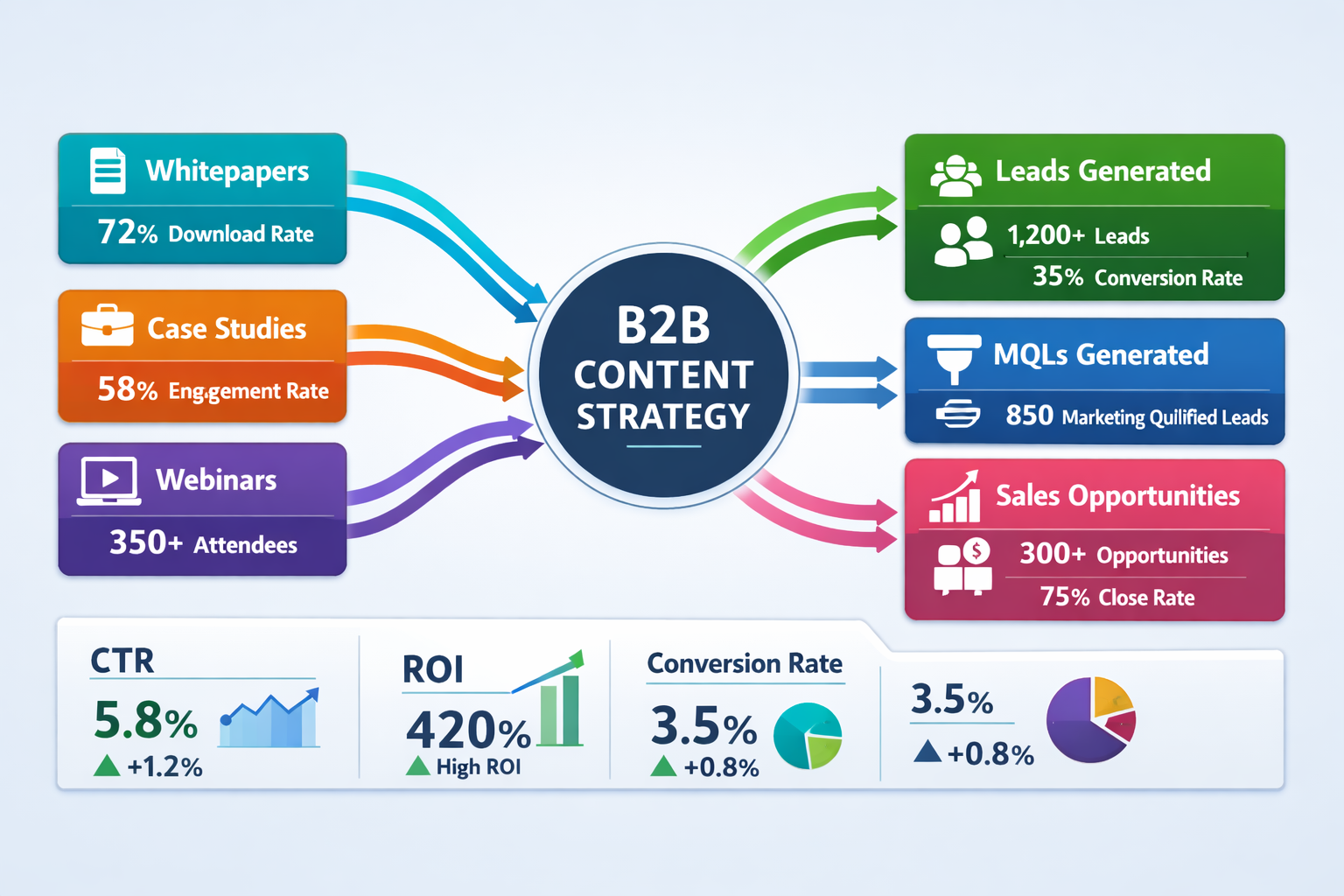
Case studies are content gold for B2B businesses, but most companies write them incorrectly. They focus on what they did instead of the client’s journey and transformation.
Effective case study structure:
- The situation: What challenges was the client facing?
- The stakes: What would happen if they didn’t solve this?
- The solution: How did you address their specific needs?
- The results: Quantified outcomes and ongoing benefits
- The invitation: How readers can achieve similar results
I recently helped a business automation company rewrite its case studies using this approach. Their previous case studies got minimal engagement. The new versions became their highest-converting content pieces, generating 40% of their qualified leads.
How-To Content with Strategic Gaps
Educational content can absolutely generate leads – if you structure it strategically. The key is providing genuine value while creating natural opportunities for deeper engagement.
The strategic gap approach:
- Teach something valuable that your prospects can implement
- Hint at additional complexities or advanced strategies
- Offer to help them navigate those complexities
- Provide easy ways to continue the conversation
For instance, if you’re explaining how to optimize a business process, walk them through the basic steps but mention that implementation varies significantly based on company size, industry, and existing systems. Then offer a consultation to help them create a customized approach.
Industry Insights and Trend Analysis
B2B decision-makers need to stay informed about industry changes. Content that helps them understand trends, regulations, or market shifts positions you as a trusted advisor.
Make insights actionable:
- Don’t just report what’s happening – explain what it means
- Provide specific steps businesses should take in response
- Offer to help them develop customized strategies
- Create urgency around taking action
Building Your All-in-One Content-to-Leads System
Integration is Everything
Here’s what I see constantly: businesses create great content and capture leads, but then those leads fall into a black hole. They don’t have systems that actually work to nurture and convert those prospects.
Your content marketing needs to connect seamlessly to:
- Lead capture systems that make it easy for prospects to engage
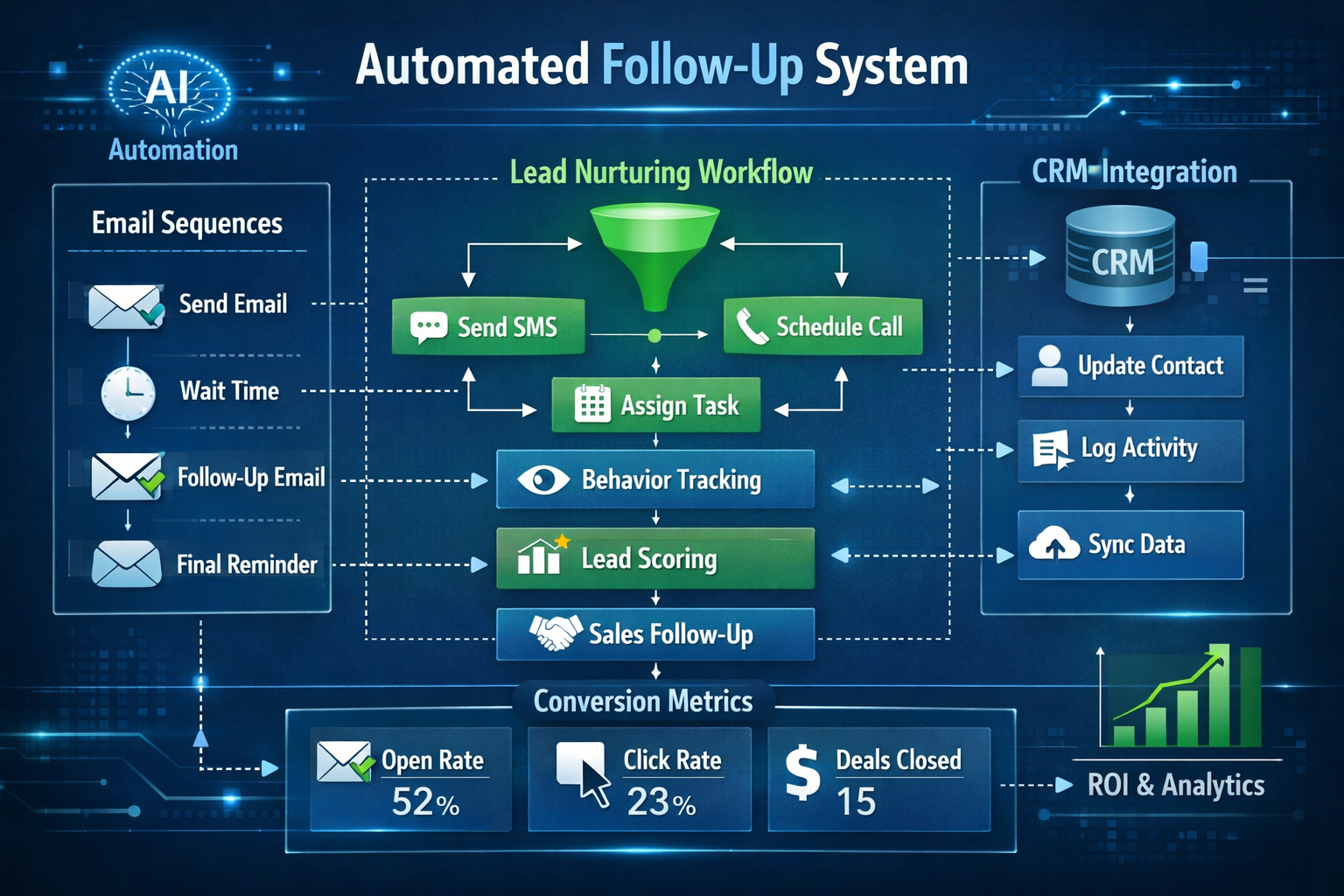
- Automated follow-up sequences that nurture leads without manual effort
- CRM integration so your sales team knows exactly who to call and when
- Analytics tracking so you know which content actually generates revenue
We’ve built this complete done-for-you system for our clients because we learned that great content without great systems just creates more work, not more sales.
Automated Follow-Up That Feels Personal
Once someone engages with your content, what happens next? Most businesses send a generic “thanks for downloading” email and then… nothing. Or they dump new leads into a generic newsletter that has nothing to do with what the prospect was originally interested in.
High-converting follow-up sequences:
- Reference the specific content that captured their interest
- Provide additional value related to that topic
- Share relevant case studies or examples
- Make it easy to take the next logical step
- Include multiple ways to engage (email, phone, calendar booking)
The goal isn’t to sell immediately – it’s to continue the conversation and build trust until they’re ready to buy.
Measuring What Actually Matters
Forget about measuring just traffic and engagement. High-converting B2B content requires different metrics:
Lead quality indicators:
- Conversion rate from visitor to lead
- Lead-to-opportunity conversion rate
- Average deal size from content-generated leads
- Sales cycle length for content leads vs. other sources
- Customer lifetime value by content source
Content performance metrics:
- Which topics generate the most qualified leads
- Which content formats convert best for your audience
- Optimal length and structure for your industry
- Best-performing call-to-action placement and messaging
This data helps you double down on what works and eliminate what doesn’t.
Common Mistakes That Kill Content Conversion
Waiting Until the End to Capture Leads
If your only call-to-action is at the bottom of a 2,000-word article, you’re missing most of your conversion opportunities. People leave websites constantly – they get distracted, interrupted, or simply find what they need before reaching the end.
Strategic CTA placement:
- Early engagement (first 300 words): A low-commitment offer like a relevant resource
- Value demonstration (middle): Higher-value offer after you’ve proven expertise
- Natural transition points: Wherever you mention a tool, template, or additional resource
- Conclusion: A clear next step that aligns with the article’s main topic
Making Everything About You
B2B buyers don’t care about your company history, your awards, or how great you think your services are. They care about their problems and whether you can solve them effectively.
Shift your content focus:
- From “We help companies…” to “You can achieve…”
- From “Our process includes…” to “Here’s how to…”
- From “We’ve been in business for…” to “Companies like yours typically see…”
Overcomplicating the Next Step
You’ve created great content and captured their interest. Don’t lose them with a complicated conversion process. Make it ridiculously easy for prospects to take the next step.
Simplify your conversion path:
- One clear primary action per page
- Minimal form fields (name and email are often sufficient initially)
- Clear value proposition for taking action
- Multiple ways to engage (form, phone, calendar link)
- Mobile-optimized experience
Your Ready-from-Day-One Content Strategy
Start with Your Best Client Problems
Instead of brainstorming random topics, start with the specific problems your best clients had before working with you. These become your highest-converting content topics because they attract similar prospects.
Content planning process:
- List the top 5 problems your ideal clients face
- Create content that addresses each problem specifically
- Include the solution approach you typically recommend
- Offer to help them implement that solution
- Track which topics generate the most qualified leads
Build Your Content-to-Conversion System
Creating individual pieces of content isn’t enough. You need a complete system that captures leads and nurtures them automatically:
Essential system components:
- Lead magnets aligned with each content topic
- Landing pages optimized for conversion
- Email sequences that continue the conversation
- CRM integration for seamless sales handoff
- Analytics setup to track performance
This is exactly what we build for our clients – a complete done-for-you system that turns their expertise into predictable lead generation. No tech knowledge required because we handle all the implementation.
Scale What Works
Once you identify which content topics and formats generate the best leads for your business, create more of that content. It sounds obvious, but most businesses keep experimenting instead of scaling their winners.
Scaling strategies:
- Repurpose high-performing content into different formats
- Create series or sequences around successful topics
- Update and refresh your best-performing pieces
- Use successful content as templates for new pieces
- Promote your highest-converting content more aggressively

